Brain Damage
56 pages • 1-hour read
Freida McFaddenBrain Damage
A modern alternative to SparkNotes and CliffsNotes, SuperSummary offers high-quality Study Guides with detailed chapter summaries and analysis of major themes, characters, and more.
Chapters 32-43Chapter Summaries & Analyses
Content Warning: This section of the guide contains discussion of graphic violence, physical abuse, emotional abuse, and substance use.
Chapter 32 Summary: “Eleven Months Before”
Flashing back to the “before” timeline, Charly visits her best friend, Bridget, for lunch and finds that her once immaculate apartment is now chaotic. Bridget is stressed and overwhelmed because of her new baby, Chelsea. The conversation turns to Charly’s life, and Bridget urges the 36-year-old to start a family with her husband, Clark, soon. Charly internally acknowledges that she wants a child, but harbors reservations about having one with Clark.
Chapter 33 Summary: “Eleven Months Before”
Charly and Clark go to dinner, and he drinks heavily. When she broaches the subject of starting a family, he reacts with shock, questioning the timing and their finances. He pushes back against her reminders that he previously agreed, suggesting that they wait until she’s 40. After a tense argument, he proposes a compromise: They’ll begin trying for a baby in exactly one year. Feeling relieved to have a short delay, Charly agrees.
Chapter 34 Summary: “Four and a Half Months After”
In the “after” timeline, at the rehab facility, Jamie’s friendly demeanor turns to horror when a woman approaches. It’s Karen, the mother of his son, Sam. She confronts Jamie, demanding to discuss custody, and mocks his physical limitations. When he calls her a “drug addict,” she retorts that she’s sober and vows to see Sam again, with or without Jamie’s permission.
Chapter 35 Summary: “Four and a Half Months After”
Full of new resolve, Jamie insists on using a cane and successfully walks across the gym. He explains to Charly and another patient, Angela, that his encounter with Karen is his motivation to prove that he can care for his son. He recounts his history with Karen, including gaining full custody after finding their son alone in a room with uncapped needles while she was unconscious from an overdose. Though Karen now has documentation of her sobriety, Jamie doesn’t trust her.
Chapter 36 Summary: “Four and a Half Months After”
In the Thinking Skills Group, the patient named Dr. Vincent interrupts a game to suggest that they try to figure out who shot Charly. The therapist, Amy, tries to redirect the group, but Charly insists that she wants to know. Dr. Vincent asks about her recurring dream, and Charly recalls a memory fragment of hearing a man’s voice say, “You deserve this” (228). Amy steers the group back to the game, but Charly remains preoccupied.
Chapter 37 Summary: “Four and a Half Months After”
In the “stroke group,” a patient named Alex (whose condition requires limited intake of water and is thus always thirsty) has an outburst and drinks from a sink before being restrained. Later, Charly’s aide, Valerie, struggles to help her get dressed. Valerie explains to Charly’s mother that the brain injury damaged Charly’s sense of “midline,” causing her to lean severely to the left. Valerie suggests using a mirror as a therapeutic tool to help Charly relearn her body’s center.
Chapter 38 Summary: “Nine Months Before”
The novel returns to the “before” timeline as Charly gets her mail after returning from a run. She finds an unmarked envelope containing a torn copy of a divorce decree for Kyle and Regina Barry. Shaken, she shows it to Clark, reminding him that Kyle is the man who threatened her at her clinic. Clark offers to call the police, but Charly refuses. Clark dismisses the letter as a scare tactic and tells her to forget about it.
Chapter 39 Summary: “Nine Months Before”
Charly arrives home to find Clark holding a GLOCK 19 pistol that he bought for their protection. She’s horrified, pointing out that having a gun in the house creates more risk than it does protection because an intruder could grab it. When she points out that the desk drawer where he puts it doesn’t lock, he promises to buy a lock. Internally, Charly resolves to get rid of the gun as soon as possible.
Chapter 40 Summary: “Five Months After”
In the “after” timeline, while Charly’s mother is helping her get dressed, Detective Simpson arrives. He announces they’ve arrested a suspect in Charly’s shooting: Kyle Barry. He details the evidence, including fingerprints and a full confession. When the detective has Charly look at a photo lineup and she sees Kyle’s picture, it triggers a complete memory of the attack, and Charly vividly recalls him standing in her apartment with the gun. Overwhelmed, she identifies Barry’s photo, wets herself, and then vomits.
Chapter 41 Summary: “Five Months After”
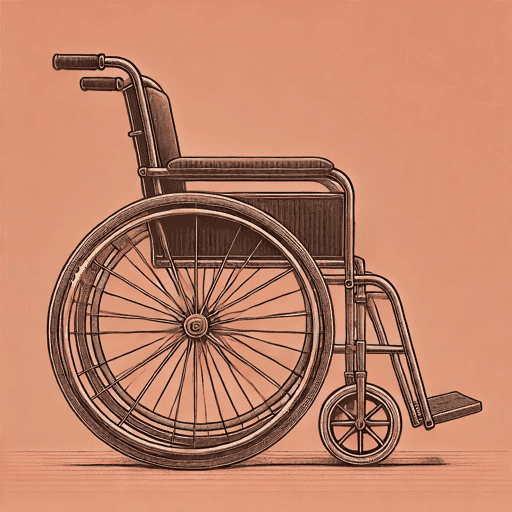
Clark makes an unexpected appearance at a family meeting where Charly’s physician, Dr. Greenberg, states that her progress has plateaued and her insurance will soon end. Her therapists report that because of severe left-side neglect, she requires total assistance. Dr. Greenberg suggests that a long-term nursing home is the most realistic option. As Charly begins to cry, Clark stuns everyone by announcing that he’ll take her home and become her full-time caregiver.
Chapter 42 Summary: “Five Months After”
On the hospital porch, Charly and her mother encounter Jamie, his father, and his son, Sam. Jamie says he has agreed to a trial period of supervised visitation for Karen. He and Sam begin playing catch, but Jamie’s aim is poor. Charly teases him, and he hands her the ball. She throws a perfect pitch to Sam, and her mother explains that Charly played softball in college. The group spends the next hour playing catch together.
Chapter 43 Summary: “Five Months After”
In the rehab facility’s gym, Charly tells Angela and Jamie that she’s going home with Clark, and they express surprise at his long absence. Clark then arrives for a transfer training session. His first attempt to move Charly from her wheelchair is clumsy, and he nearly drops her. After he improves, her therapist removes Charly’s protective helmet. Seeing the severe extent of Charly’s skull injury for the first time, Clark turns green and runs to the bathroom to vomit, and Charly realizes he hasn’t touched her with any affection since her injury.
Chapters 32-43 Analysis
The novel’s narrative structure magnifies The Fragility of Perception and Reality as a theme by pointing toward a false conclusion, demonstrating how both internal damage and external deception can manipulate reality. The flashbacks to the months preceding the shooting expose the foundation of Clark’s gaslighting. His dismissal of Charly’s desire for children and his strategic introduction of the gun under the guise of protection reveal a pattern of control. The novel then juxtaposes this context with the reality of the present timeline, where the central mystery appears to be solved when Kyle Barry confesses and Charly subsequently identifies him as the shooter. The text presents this moment as a breakthrough. However, it’s a constructed reality, shaped by the authority of Detective Simpson and Charly’s fragmented consciousness. This structural choice again uses left-side neglect as a metaphor for failure to realize the truth. The real truth of the crime (in which Clark was fully complicit) lies in the part of the story that Charly can’t yet perceive, though his behavior raises suspicion.
The character foils of Clark and Jamie help thematically align Clark with The Dangers of Misplaced Trust. The two men represent antithetical responses to human fragility. Clark stages his reappearance for effect, arriving at the family meeting to cast himself as the heroic husband, stepping in to save Charly from a nursing home. His declaration, “She is my wife, after all. I don’t know why you’re all acting so surprised” (255), is performative, designed to obscure his true intentions. His subsequent actions betray this performance: He’s clumsy while learning to transfer Charly from her wheelchair to her bed, and he reacts with undisguised physical revulsion at the sight of her skull without the helmet. His care is a strategy to gain control. Jamie, in contrast, offers a model of empathy rooted in shared experience. The scene on the porch, where they play catch, is a moment of authentic joy and mutual respect. Jamie sees her competence and past athleticism. His perspective starkly contrasts with that of Clark, who sees only her damage. Clark exploits Charly’s vulnerability as a means to an end, whereas Jamie’s bond with her is built from their shared challenges and frailties.
The opposing symbols of the gun and the helmet continue to chart Charly’s journey through trauma, from the destruction of her old life to the difficult process of recovery, underscoring the theme of Reconstructing Identity After Trauma. The flashback detailing Clark’s purchase of the gun establishes the weapon as a symbol of betrayal. He frames it as an instrument of security, but its presence signifies the internal threat within the marriage. The gun is the tool that shatters Charly’s identity. In the present, the helmet becomes the primary physical marker of her new, fractured self, symbolizing her dependence and fragility. Clark’s horrified reaction to seeing her unprotected head (“Your head…I didn’t realize that it looked…” [265]) reveals his inability to see past the physical damage. For Charly, however, the helmet’s removal offers a “rush of relief” (265), a brief liberation from the constant reminder of her condition. These differing reactions are crucial. While Clark’s disgust reinforces her brokenness, her memory of Jamie’s earlier, unfazed reaction to seeing her scalp offers a competing perspective that sees the person beyond the injury and hints at an identity not solely defined by trauma.
The flashback sequences in these chapters offer social commentary on the pressures of gender and age, providing context for Charly’s pre-injury vulnerabilities. Her visit with her friend Bridget, now a new mother, introduces the societal expectation of motherhood as an urgent life stage for a woman in her thirties. Bridget’s pronouncement, “Anything after thirty-five is late thirties by definition” (209), invokes the anxiety of the “biological clock,” a pressure that Charly internalizes. Clark weaponizes this anxiety during their conversation about having children, manipulating her into accepting a one-year delay, a tactic that takes advantage of her reticence to have children (given her prioritization of her career) while asserting his control over her future. This subplot is critical because it establishes the power dynamic in their marriage long before the physical violence occurs. Clark’s dismissal of Charly’s agency has undeniably become a pattern. This dynamic illustrates a key thematic component of The Dangers of Misplaced Trust, suggesting that the final, violent act was the culmination of his building their relationship on a foundation of subtle control.

Unlock all 56 pages of this Study Guide
Get in-depth, chapter-by-chapter summaries and analysis from our literary experts.
- Grasp challenging concepts with clear, comprehensive explanations
- Revisit key plot points and ideas without rereading the book
- Share impressive insights in classes and book clubs