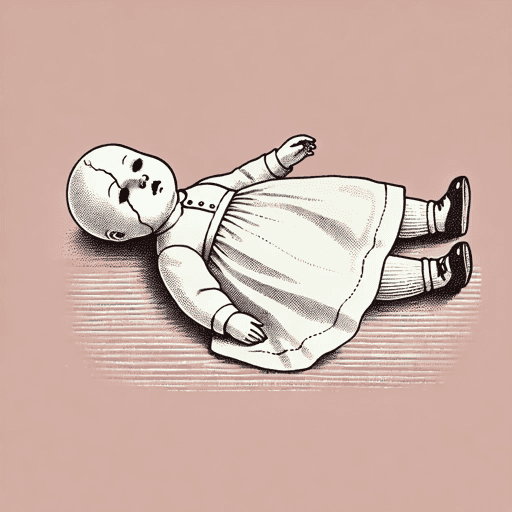
Bread of Angels: A Memoir
44 pages • 1-hour read
Patti SmithBread of Angels: A Memoir
A modern alternative to SparkNotes and CliffsNotes, SuperSummary offers high-quality Study Guides with detailed chapter summaries and analysis of major themes, characters, and more.
Background
Content Warning: This section of the guide includes discussion of illness and death.
Authorial Context: Patti Smith’s Memoirs
Bread of Angels, because it traces a cradle-to-late-life arc, represents both a continuation and an expansion of poet and rock musician Patti Smith’s memoir writing. Smith debuted in the autobiography space with her National Book Award-winning Just Kids (2010). Her second memoir, M Train (2015), is a more meditative, associative work organized around coffee shops and the slow accumulation of grief. These works, both of which are explicitly connected to the genre of memoir, were followed by the travelogue Year of the Monkey (2019), which pushes further into dreamlike, surrealist territory.
All of Smith’s books resist the conventions of mainstream literary autobiography; rather, she often allows form to mirror feeling. Drawing on her background as a lyric poet, Smith doesn’t prioritize narrative clarity over evocative imagery or digressive meditations. This goes against the genre’s central expectation that authors must organize their experiences into retrospective meaning. Smith is comfortable not making sense of her past, as she makes space for ambiguity and an absence of resolution. In Bread of Angels, this sensibility manifests through an elegiac structure that honors the dead, hoping that the act of writing conveys loyalty and allegiance. Bread of Angels portrays Smith’s life not as a story but as attentive art.
Sociohistorical Context: New York City Counterculture in the Second Half of the 20th Century
Smith is clear-eyed about the sociohistorical forces that have shaped her life. Born in 1946, she grew up in a United States defined by post-World War II optimism and unease: Economic expansion created the lowest level of inequality the country had ever experienced, yet Cold War anxiety and rigid mid-century moral codes structured everyday life. Smith’s working-class East Coast upbringing reflects these tensions. Her father labored in a factory; her mother waitressed; and the family consumed culture through paperback books, poetry, and the radio.
Smith registers the costs of having been an outlier in that climate. Her teenage pregnancy unfolded within a social sphere that harshly policed female sexuality, while her brother’s need to suppress gender nonconformity reflected mid-century heteronormative constraints. Smith felt like an outsider economically, spiritually, and artistically. In New York City in the late 1960s, she encountered a cohort alive with artistic ferment. Underground spaces like the Chelsea Hotel served as crucibles for would-be poets, musicians, and visual artists. There, Smith found her voice by combining the scene’s energy and possibility with the 1970s shift in the national mood. By the time she recorded Horses in 1975, widening cultural disillusionment fueled by Vietnam War trauma and Watergate-era distrust underpinned the rise of punk. Rejecting polish and institutional authority, the musical and artistic movement embraced urgency, minimalism, and raw authenticity. Smith’s work embraced this aesthetic rebellion, translating personal nonconformity into subversion.
The AIDS epidemic of the 1980s and 1990s devastated the artistic communities that had defined Smith’s adulthood. Again, personal tragedy was backgrounded by national events. Robert Mapplethorpe’s death in 1989, alongside that of many others in her circle, unfolded during government neglect and public stigma of this illness, intensifying both grief and political consciousness. The terrorist attacks of September 11, 2001, and the Afghanistan and Iraq Wars that followed fed Smith’s sense of collective fracture. Chronicling both Smith’s life and the emotional history of a nation repeatedly tested by violence and disillusionment, the memoir layers accumulated witness of cultural upheaval onto a quest for beauty within wreckage.

Unlock all 44 pages of this Study Guide
Get in-depth, chapter-by-chapter summaries and analysis from our literary experts.
- Grasp challenging concepts with clear, comprehensive explanations
- Revisit key plot points and ideas without rereading the book
- Share impressive insights in classes and book clubs