Bread of Angels: A Memoir
44 pages • 1-hour read
Patti SmithBread of Angels: A Memoir
A modern alternative to SparkNotes and CliffsNotes, SuperSummary offers high-quality Study Guides with detailed chapter summaries and analysis of major themes, characters, and more.
Chapters 1-3Chapter Summaries & Analyses
Content Warning: This section of the guide includes discussion of illness, death, animal death, and mental illness.
Chapter 1 Summary: “Prelude”
The poetic, stream-of-consciousness Prelude sets a dreamlike, introspective tone for the book. Smith begins with the physical sensation of writing: the pen scratching across the page, repeatedly forming the nonsensical phrase “rebel hump rebel hump rebel hump”(3). The pen questions the meaning of the words, and the wrist replies that it does not know, suggesting that meaning will emerge through the act of writing.
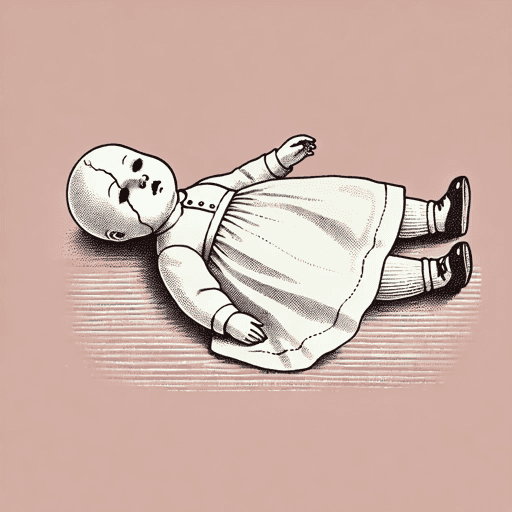
Smith imagines Charlotty, an abandoned porcelain doll left in the grass by a child who wandered off. As seasons pass, the doll becomes weathered and increasingly mythic. Her porcelain face fades, but her marble eyes retain a steady, impassive gaze. Smith wonders why this porcelain doll haunts her imagination. She connects the image to a longing for outmoded luxury goods now encountered only in books, such as linen waistcoats, kid gloves, and soft leather boots. Considering loss, memory, and the passage of time brings Smith to dwell on forgotten things and a future without loved ones. She is writing for the cast-off lamb or an overturned hourglass where each grain of sand is a word erupting into moments.
Chapter 2 Summary: “Age of Reason”
Smith’s earliest memory of defiance is the moment she knocked a Bugs Bunny toy from her highchair. Even as a toddler, she pushed against limits, always testing what the world would allow.
Smith was born in 1946, the eldest daughter of Beverly and Grant Smith. The working-class family’s post-WWII years were marked by economic instability, her father’s lingering war trauma, frequent relocations, and economic precarity. She formed intense bonds with her siblings Linda and Todd and sought refuge in the world of imagination. Fantasy also became her primary form of agency. Smith was frequently ill as a child, as tuberculosis, measles, bronchitis, and fevers kept her bedridden for weeks at a time. During those long stretches of isolation, she read everything she could find and told herself stories to fill the silence.
An elderly neighbor named Aggie once told her an Irish fairy tale. When Aggie died without warning, Smith experienced grief for the first time. When her mother gave her a poetry collection called Silver Pennies, Smith tore through the pages looking for actual coins; eventually, she understood that the words themselves were the treasure. Poetry became her private religion. Smith describes literature as the anchor of her youthful identity. During one visit to a local bookstore, she picked up Lewis Carroll’s Alice’s Adventures in Wonderland (1865), captivated by Alice’s curiosity and her questioning of the magical world’s rules.
School gave Smith routine and rules, and she excelled in writing, but she never felt like she belonged there. She was a natural leader among neighborhood children, inventing games and keeping an eye on her siblings. One time, she fiercely defended Todd from a bully. When she stole a pin from her sick classmate Stephanie, Smith was haunted by remorse and unable to return the pin.
When another prolonged illness confined her to bed once more, public-health authorities labeled all her belongings as contaminated and destroyed them. The loss was sudden and irrevocable; possessions that Smith had held dear were removed and disposed of without sentiment—a stark lesson in sacrifice and impermanence.
Chapter 3 Summary: “Gardens”
Smith’s family moved from an apartment in a neighborhood of Philadelphia, Pennsylvania, nicknamed “the Patch” to a modest ranch house in rural New Jersey. At first disoriented by the new house, Smith gradually became absorbed by the surrounding landscape. She wandered alone through marshes and tall grasses, developing an almost mystical bond with the land. The insects, snakes, and trees she saw nourished her imagination.
Family dynamics added complexity to Smith’s life. Her father, who worked long hours, carried unresolved trauma from his WWII service. Her mother grew increasingly devoted to the Jehovah’s Witness faith, bringing her daughter to Bible study and immersing her in apocalyptic teachings.
Illness continued to interrupt Smith’s childhood. She had scarlet fever, measles, mumps, chicken pox, and a severe tuberculosis-like infection. During one drawn-out fever, she floated in and out of consciousness while the Giacomo Puccini opera Madama Butterfly (1904) played. The opera stayed with her long after the fever broke; its mixture of beautiful music and tragedy was permanently woven into her artistic sensibility.
As she matured, Smith’s awareness of the wider world expanded. A school project on Tibet sparked her fascination with global events, particularly the exile of the Dalai Lama. When Smith’s beloved dog, Bambi, was struck and killed by a truck, the loss devastated her and sharpened her awareness of mortality. Not long after, her mother gave birth to her youngest sister, Kimberly. Patti frames her sister’s birth as both a beginning and an ending. She recalls retreating alone to a forbidden marsh near her home and feeling her “rebel hump” break free from its husk: Her childhood innocence had given way to a deeper, more complex consciousness.
Chapters 1-3 Analysis
The Prelude establishes the memoir’s recurring tendency toward self-reference. Smith imagines her pen and wrist conversing; she repeats the as-yet unexplained phrase “rebel hump,” which will become an important symbol but initially remains an evocative but ambiguous image. This self-reflexive opening insists that creation precedes understanding and that the writer does not know what she is making while making it. Smith’s desire to write a book so complete that readers are immersed inside a single recorded day highlights her devotion to the idea of radical attention to memory: Recovering the past becomes evidence of a life actively lived.
The theme of Imagination as a Survival Tool is a core part of this section. Smith’s childhood freedom to fantasize pushed against the encroachment of boundary systems like school, religion, medicine, public health, and institutional authority. She did not find belonging in school but was an informal leader of neighborhood children in unstructured time. To acclimate to the new house in New Jersey, she drifted around the rural landscape, letting her mind wander while taking in nature. While, as Chapter 2’s title suggests, growing up means entering “The Age of Reason,” Smith ironizes the narrowing of perspective that this suggests through her prose style. Rejecting a “reasoned” approach, her sentences privilege sensory impressions and imaginative leaps over linear causality.
Smith’s description of her bouts of illness intensifies the importance of inner creative life to cope with external stressors. Her isolating and confining infections—tuberculosis, scarlet fever, measles, and prolonged fevers—became portals into altered states of consciousness and ways to escape her unpleasant physical conditions. Bedridden, she turned toward books, music, and imagined worlds. Her feverish state often distorted time, space, and proportion, enabling visions and hallucinations—for example, drifting in and out of consciousness while listening to the opera Madama Butterfly, an aesthetic experience that Smith paints as profoundly influential artistically.
In Chapter 3, “Gardens,” nature develops Smith’s skill of Seeing the Transcendent in the Mundane. As a child, she imbued what she saw with moral dimension, fantastical danger and adventure, and mythological and religious resonances influenced by her mother’s Jehovah’s Witness faith. The monstrous coexisted with the beautiful, as snakes, mosquitoes, mud, and quicksand shared the landscape with butterflies, peach blossoms, and strange birds. The New Jersey wetlands became a private space where she could contextualize the identity shaped by parental authority, religious doctrine, and social expectation with her own emerging sense of herself. The incongruous phrase from the Prelude here acquires meaning: Smith retreated alone to the forbidden marsh to feel her “rebel hump” break free from its husk. The image evokes the natural imagery she has observed, calling to mind snakes shedding their skin, caterpillars cocooning into butterflies, and flowers emerging from buds. The sensation of the “rebel hump” also feeds into Smith’s insistence that the divine flickers within the everyday—that the ordinary world is porous and constantly opening into something larger.
The memoir uses a collage-like technique to portray Smith’s inner life developing in response to both her personal situation and to the American mid-century moment. As Smith’s worldview expanded with age, she absorbed not only her father’s unresolved war trauma and her mother’s apocalyptic faith but also new and old cultural products like fairy tales, poetry, and comic books, as well as large historical forces and events like Cold War anxiety and televised news of the Dalai Lama’s exile. Smith does not separate imagination from history; instead, Finding One’s Artistic Identity here meant reconciling her private created world with all these external influences to become part spiritual seeker, part working-class kid reaching toward something she could not yet name.

Unlock all 44 pages of this Study Guide
Get in-depth, chapter-by-chapter summaries and analysis from our literary experts.
- Grasp challenging concepts with clear, comprehensive explanations
- Revisit key plot points and ideas without rereading the book
- Share impressive insights in classes and book clubs