Bread of Angels: A Memoir
44 pages • 1-hour read
Patti SmithBread of Angels: A Memoir
A modern alternative to SparkNotes and CliffsNotes, SuperSummary offers high-quality Study Guides with detailed chapter summaries and analysis of major themes, characters, and more.
Summary and Study Guide
Overview
Bread of Angels (2025) is the third memoir by American musician Patti Smith, following Just Kids (2010), which won the National Book Award, and M Train (2015). Best known for her 1975 debut album Horses, Smith is a poet, visual artist, and songwriter; her art addresses her interests in language, memory, and the act of witnessing. Bread of Angels, which was released on November 4, the anniversary of Smith’s husband Fred “Sonic” Smith’s death and the birthday of her lifelong artistic collaborator Robert Mapplethorpe, spans Smith’s entire life, including her working-class childhood, her emergence as a poet and performer, her relationships, and her seven-decade creative life.
Bread of Angels features lyrical, nonlinear prose that is part elegy and part spiritual meditation. It explores themes of Seeing the Transcendent in the Mundane, Imagination as a Survival Tool, and Finding One’s Artistic Identity.
This guide refers to the 2025 Random House edition.
Content Warning: The source material and guide feature depictions of illness, death, animal death, and mental illness.
Summary
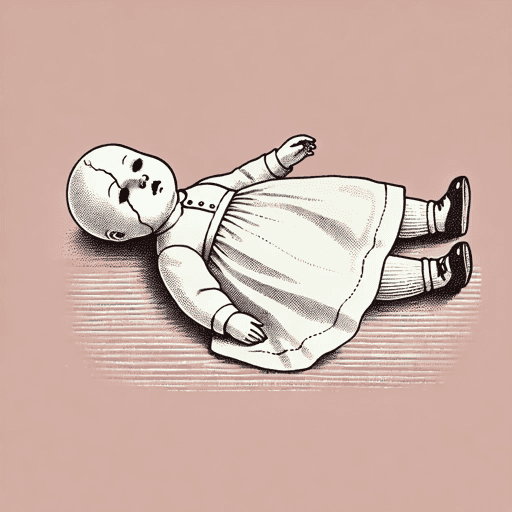
The Prelude describes a pen moving across the page, repeatedly producing the phrase “rebel hump,” the meaning of which is not clear even to Smith herself. Smith has a dreamlike meditation about a porcelain doll named Charlotty, abandoned in the grass; while weather and seasons gradually erode her face, her marble eyes remain eerily intact.
Smith describes her childhood. Born in 1946 into a working-class family, she was often ill enough to be repeatedly confined to her bed. These periods intensified her interior life; she read obsessively, drifted into heightened states, and learned that isolation can be both frightening and generative. During one prolonged fever, she slipped in and out of consciousness while listening to Giacomo Puccini’s 1904 opera Madama Butterfly, an experience that imprinted onto her artistic sensibilities.
When the family relocated to a ranch house in rural New Jersey, the landscape expanded Smith’s imaginative terrain. At the same time, her mother’s Jehovah’s Witness faith filled Smith’s mind with apocalyptic visions of judgment and renewal. Smith remembers visiting the Philadelphia Museum of Art; standing before a painting by Picasso, she realized that she was meant to pursue art. When Jehovah’s Witness elders insisted that artistic creation was anathema, Smith pulled away from institutional religion. Instead, art became her chosen form of spirituality; she found her patron saint in the 19th-century French Symbolist poet Arthur Rimbaud, whose prose-poetry collection Illuminations (1886) she treasured.
As she grew older, Smith took drawing lessons, wrote constantly, and inwardly committed to becoming an artist. She enrolled in teachers’ college, but during her third year, she got pregnant and chose adoption for her child. This loss clarified her vocation and precipitated her move to New York City in the late 1960s with little money but fierce resolve. In New York, she met Robert Mapplethorpe, a fellow artist who became her constant companion, romantic partner, artistic counterpart, and fellow believer in beauty and transgression. Together, they inhabited the city’s creative underground: the Chelsea Hotel, St. Mark’s Church, secondhand shops, and cafés.
As Mapplethorpe turned increasingly toward photography, Smith gravitated toward performance and music. Encouraged by playwright Sam Shepard and guitarist Lenny Kaye, she fused her poetry with rock music, eventually signing with Clive Davis’s Arista Records. Although Smith’s debut album, Horses, became a massive success, she saw herself not as a star but as a soldier within a larger cultural movement, speaking to outsiders for whom art is survival.
While touring during the US Bicentennial, Smith met guitarist Fred “Sonic” Smith of the MC5. Their connection was immediate, and they began a long-distance relationship. During a concert in Tampa, Florida, Smith fell from the stage, suffering a skull fracture and spinal injuries. After recovery, she returned to music, recording the album Easter (1978) with producer Jimmy Iovine. When one of its tracks, “Because the Night,” co-written with Bruce Springsteen, was a breakout hit, fame intensified pressure on Smith. While she was touring in Europe, as political activists projected their revolutionary expectations onto her, Smith was overwhelmed by having symbolic leadership thrust upon her. She resisted, ultimately withdrawing from the limelight to settle down in Detroit, Michigan, with Fred.
The couple built a nearly anonymous life near Lake St. Clair. They married privately and traveled before settling down. They had a son, Jackson, and a daughter, Jesse, and their home became a disciplined creative space structured around music and books. Yet losses intruded into their domestic sphere. Mapplethorpe died of AIDS, and Fred’s health deteriorated. Fred died on Mapplethorpe’s birthday, a coincidence that shattered Smith, leaving her unmoored. Her brother, Todd, became her lifeline, but he had a stroke and died soon after. In the aftermath, friends and fellow artists Jimmy Iovine, Allen Ginsberg, and Bruce Springsteen offered support and restored Smith’s connection to art and community. She returned to creative work, recording Gone Again (1996) as a tribute to Fred.
Smith’s memoir shifts into a nonlinear mode. In Chapter 9, “Grant,” she writes about her father, meditating upon his ideals, disappointments, and death. She remembers him as an intellectual and spiritually searching man who filled their home with opera, jazz, and books, exposing Smith to the larger world. She describes visiting him as he neared death and reflects on how her father is both human and mythic in her memory. She also notes how she carries forward his doubt, love, and longing for transcendence.
Chapter 10, “Peaceable Kingdom,” is about New York City in the aftermath of the terrorist attacks of September 11, 2001. The altered skyline felt like a physical wound, merging Smith’s personal grief with that of the collective. Her mother died in the early 2000s; Smith imagines her as reunited with Todd. Amid the escalating geopolitical unrest, Smith protested the invasion of Iraq but was disillusioned by the failure of mass demonstrations to halt violence. Confronted with a situation she couldn’t alter, Smith turned again to art: writing laments, recording music with Jesse, and touring. She also determined to fulfill a promise to Mapplethorpe, completing her memoir Just Kids.
In Chapter 11, “A Drop of Blood,” Smith describes how, during a trip to Philadelphia, Pennsylvania, her sister Linda revived long-held doubts about Smith’s paternity. Her resemblance to her mother’s uncle Joe reopened the terrifying suspicion that she may have been the product of incest. DNA testing revealed that Smith and Linda are half-sisters and that Grant, the man who raised her, was not her biological father. Further testing overturned her fears about Joe: Smith discovered that she has Ashkenazi Jewish ancestry and learned that her biological father was a man named Sidney. Seeing his photograph brought immediate, almost mystical recognition. She reconstructed the details of her mother’s affair, situating her origins within the broader history of the Jewish people’s migration, displacement, and survival.
In the closing chapter, “Vagabondia,” Smith confesses doubt and spiritual fatigue. Using travel as a metaphor, she describes moving through New England, Martha’s Vineyard, Italy, Eastern Europe, France, and Bogotá. Illness reminded her of mortality, yet she continued to write. In Nice, France, overlooking the Bay of Angels, Smith experienced a surge of ecstasy. The memoir loosens into visionary imagery of revolutionaries, saints, and mythical figures; through pilgrimage, the vagabond becomes a seeker recognizing that what endures is love. The memoir closes with a child’s voice repeating the refrain, “I am you” (44), suggesting acceptance that doubt and devotion, and rebellion and responsibility, all coexist within one life.

Unlock all 44 pages of this Study Guide
Get in-depth, chapter-by-chapter summaries and analysis from our literary experts.
- Grasp challenging concepts with clear, comprehensive explanations
- Revisit key plot points and ideas without rereading the book
- Share impressive insights in classes and book clubs