Breathe and Count Back from Ten
Breathe and Count Back from Ten
A modern alternative to SparkNotes and CliffsNotes, SuperSummary offers high-quality Study Guides with detailed chapter summaries and analysis of major themes, characters, and more.
Summaries & Analyses
Quizzes
NEWReading Tools
Symbols & Motifs
Mermaiding and Swimming
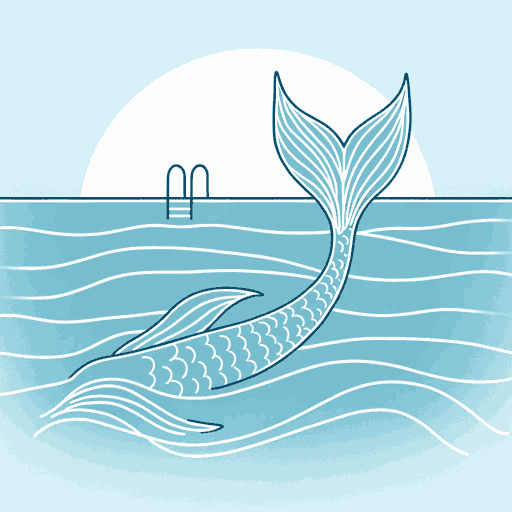
Mermaiding and swimming are Verónica’s greatest passions in life. They bring her closest to herself, to freedom, and to the Personal and Sexual Autonomy she craves as she nears adulthood. Verónica went to Mermaid Cove with her family for the first time when she was seven and was still in a cast from a surgery. Watching the mermaids perform and move with the water in a seemingly effortless fashion inspired awe in Verónica, and she knew she wanted to be a mermaid one day. Verónica’s mother bought her a wax mermaid statue to commemorate the day. Verónica started swimming soon after when the doctor recommended she swim to gain strength in her legs. Gravity is weaker in the water, Verónica points out, and metaphorically speaking, this refers to the fact that she feels less weighed down by the world and by her disability while she is in the water. Verónica also meets Alex at the pool, and many other significant events take place there. It becomes a romantic spot for the two of them to discover one another and fall in love: “Maybe I’ll show him my favorite places and we’ll swim until out fingertips turns soft as clay. Until we melt into each other, waiting for the sun to make us solid again” (75). Verónica doesn’t consider mermaiding a fantasy; instead, she considers it a way to become closer to her true self: “Being a mermaid isn’t about pretending to be something I’m not. It’s about being who I really am” (122).
After a week of practicing, Verónica makes the team at Mermaid Cove. She is complimented for her perfect arabesque and asked to demonstrate. For the first time, she feels validated for the way she uses her legs and the way they perform. The more time Verónica spends at Mermaid Cove, however, the more the illusion falls. She starts to see that the mermaid fantasy encourages harmful ideas, such as hiding from pain and inconvenience, the idea that “mermaids are perfection in the flesh” (307). She also can’t ignore the sexism and racism that have thrived there. Still, the show is important to her because she has the chance to create and tell her story. She and Geoff use the performance to break boundaries and express the fluidity and freedom that resonate so deeply with them. The show also allows her to adapt the legend of la Huacachina, an aspect of her Peruvian culture that resonates with her. In the end, Verónica decides to leave the cove and go back to where she is most happy: in her apartment pool with her friends.
Immigration
Verónica’s family immigrated from Peru when Verónica was only a year old. They didn’t receive permanent resident status until she was 17, and ever since, Verónica’s parents have been on edge about losing it. Verónica’s life and actions are largely influenced by her immigrant status and the obligation she feels to her parents as a result of it:
Subconsciously you’re always measuring comparing, asking, am I doing enough to justify what they gave up to come here? You carry all their dreams into your future which is somehow also theirs, wrapped up in their past and present. You fear making mistakes. You dread coming up short of their expectations. And you can think of nothing worse than disappointing them (51).
Verónica’s mother is enthusiastic about participating in American culture and in speaking English, but Papi is resistant, calling the mermaids tacky and trying to keep his daughters away from anything that might bring any sort of trouble. The family establishes Florida as their new home but maintains a deep connection to their roots in Peru. This connection is particularly evident in their speaking of Spanish and in Mami’s retelling of the Huacachina legend. Verónica feels connected to Peru despite not remembering it and feels that both Peru and Florida are her homes. She learns to assert herself in a healthy manner with her parents, so that she may achieve Personal and Sexual Autonomy despite their concerns and desire to protect her from the world.
Palmview Lakes
Palmview Lakes is the name of the complex where Verónica lives and spends most of her time. Her family moved there when she was a child, and her doctor recommended that she swim to recover muscle mass in her leg after surgery. The complex offered affordable apartments with amenities like a large swimming pool, tennis and racquetball courts, and beautiful views. Verónica describes the complex as somewhat run down and points to the lack of wheelchair ramps, the unforgiving late payment policy, and the lack of guest parking. The apartment units are being renovated, but Verónica’s family lives in an older unit, while Alex lives in a new one. Verónica finds it interesting that hers and Alex’s apartments are the same but reversed. When Verónica has a chance to show Alex around the complex, she takes him to all her favorite spots and admires his interest in seeing her home from her point of view: “No one’s ever looked at this place and seen my stories in it” (75). One night, she meets him in the racquetball court, a secluded spot that she often visits to be alone. The complex’s pool is like a sanctuary for Verónica as well; it is the place where the story begins and ends, because it is where she feels most at home. It is at the pool that Verónica spends time with Leslie, Dani, and Alex, and where she is allowed to be a mermaid in her own way on her own terms.

Unlock the meaning behind every key symbol & motif
See how recurring imagery, objects, and ideas shape the narrative.
- Explore how the author builds meaning through symbolism
- Understand what symbols & motifs represent in the text
- Connect recurring ideas to themes, characters, and events