Bridge of Sighs
63 pages • 2-hour read
Richard RussoBridge of Sighs
A modern alternative to SparkNotes and CliffsNotes, SuperSummary offers high-quality Study Guides with detailed chapter summaries and analysis of major themes, characters, and more.
Symbols & Motifs
Content Warning: This section of the guide contains depictions of death and cursing.
The Cayoga Stream
The Cayoga Stream is a symbol representing the central paradox of Thomaston: What sustains the community is also what destroys it. For over a century, the local tannery’s fueled the town’s prosperity. The dyes dumped into the water created a beautiful but toxic spectacle. Though residents knew the dye was toxic, they saw the unnatural colors of the stream as a sign of economic health. As Lucy Lynch reflects, “When I was a boy, people were afraid only when the stream didn’t change color, because that meant layoffs and hard times would soon follow” (11). This dependency illustrates the theme of fragile postwar American optimism, where progress comes at a hidden, deadly cost. The community’s acceptance of the pollution in exchange for economic security reveals a willful blindness that ultimately proves unsustainable as the town’s cancer rates soar even after the tannery ceases operations. The stream’s history, marked by the Cayoga Massacre that turned its waters red with blood during the Revolutionary War, deepens its symbolic weight, linking the town’s violent origins to its slow, toxic decline. This legacy of pollution embodies the theme of The Inescapable Influence of the Past on Identity, as the industrial sins of previous generations manifest as illness and economic decline in the present. Lucy voices this tragic irony directly, asking, “Can it be that what provides for us is the very thing that poisons us?” (11). This question encapsulates the stream’s symbolic function as the source of both life and death, a poisoned inheritance from which the characters cannot escape.
Division Street
Division Street functions as a visual symbol of the rigid social and economic hierarchies that determine the characters’ identities and destinies. It is the literal and figurative line that bisects Thomaston, separating the working-class West End from the middle-class East End, creating invisible walls that shape opportunity and self-perception. Lucy notes, “Like Gaul[, Thomaston] is divided into three parts […] The two largest sectors are located on opposite sides of—if you can believe it—Division Street” (11). This explicit division provides a foundation for the novel’s exploration of class, geography, and destiny. The Lynch and Marconi families’ moves across this street from the West to the East End are pivotal events representing their pursuit of the American Dream, though Big Lou and Mr. Marconi’s careers as “route men” subsequently pull them in opposite directions: Big Lou’s “plum route” in the affluent Borough and Mr. Marconi’s route in the “Gut,” the worst part of the West End, reinforce their perceived class statuses and fuel their quiet rivalry, symbolizing economic pressures that lift Big Lou and the Lynch family while dragging the Marconis back down to the lower socioeconomic rung they’ve just left. Each man’s path is circumscribed by the town’s geography, his identity tied to the neighborhood he serves. Tessa Lynch’s theory of “clean fingernails” further explains the social psychology Division Street enforces, where people align themselves with those who have more, not less. Ultimately, the street symbolizes a predetermined destiny that characters struggle against.
The Bridge of Sighs
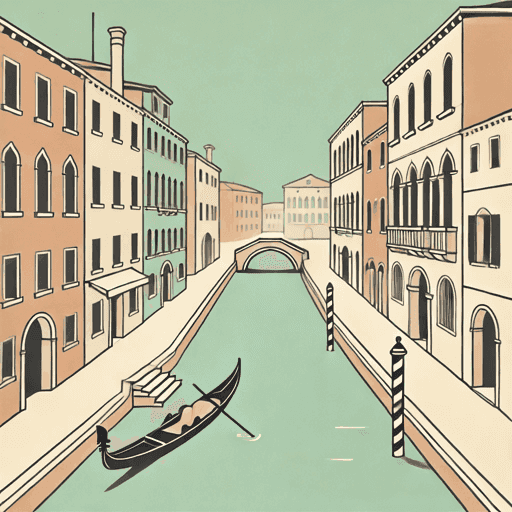
The titular Bridge of Sighs is a multifaceted symbol representing a reckoning with the past, self-judgment, and the inescapable connections between lives lived differently. It links the novel’s dual settings of Thomaston and Venice, serving as a symbolic bridge between Lucy Lynch and Robert Noonan. For Lucy, who has never left his hometown, the planned trip to see the bridge in Venice symbolizes a momentous journey to confront his past, particularly his unresolved friendship with Robert. For Robert, an artist living in self-imposed exile, the bridge appears as a dark, background image within a self-portrait. His art dealer, Hugh, initially misinterprets the image, stating, “It looks like a fucking gallows” (45). This observation is grimly perceptive, as the historical bridge led prisoners to their fate, and for Bobby, it represents a deep-seated guilt and a judgment on the life he has lived since fleeing Thomaston. The bridge thus embodies The Inescapable Influence of the Past on Identity. It connects Lou’s circumscribed, duty-bound life with Robert’s life of flight, suggesting that both men are, in their own ways, prisoners of a shared history. By bridging two continents and two lifetimes, the symbol forces a confrontation with memory, regret, and the paths not taken, making it the central metaphor for the novel’s exploration of identity.

Unlock the meaning behind every key symbol & motif
See how recurring imagery, objects, and ideas shape the narrative.
- Explore how the author builds meaning through symbolism
- Understand what symbols & motifs represent in the text
- Connect recurring ideas to themes, characters, and events