Brigands & Breadknives
62 pages • 2-hour read
Travis BaldreeBrigands & Breadknives
A modern alternative to SparkNotes and CliffsNotes, SuperSummary offers high-quality Study Guides with detailed chapter summaries and analysis of major themes, characters, and more.
Themes
Content Warning: This section of the guide features depictions of graphic violence and illness or death.
The Illusion of the “Fresh Start”
In Brigands & Breadknives, Fern’s hope for a “fresh start” appears appealing but eventually reveals itself as an illusion during her search for relief from her growing emptiness. The book questions the idea that a new place can repair a damaged inner life and shows that real change grows out of moments that interrupt routine and bring a person face-to-face with uncomfortable truths. Fern’s failed move to Thune frames this idea. Her attempt to rebuild her life through a careful plan—plotting a course similar to Viv and her Legends & Lattes shop—falls apart in practice, which makes space for a different kind of transformation that develops through disorder rather than design.
Fern’s experience in Thune brings these limits into focus right away. She sells her longtime bookshop and travels across the Territory convinced that a new city, a new store, and renewed time with Viv will quiet the unease inside her. Thistleburr Booksellers thrives, and her friendship with Viv settles into an easy rhythm. Nonetheless, her life feels even heavier. Fern describes a “hollowed-out feeling of dissatisfaction that had steadily eroded her center” (26), and her breakdown, when she cries “I fucking hate it!” (26), shows how sharply her planned reinvention has failed. Her distress exposes the gap between her outward success and her internal state. The book presents her crisis as something rooted in her own sense of self, which means her surroundings cannot solve it.
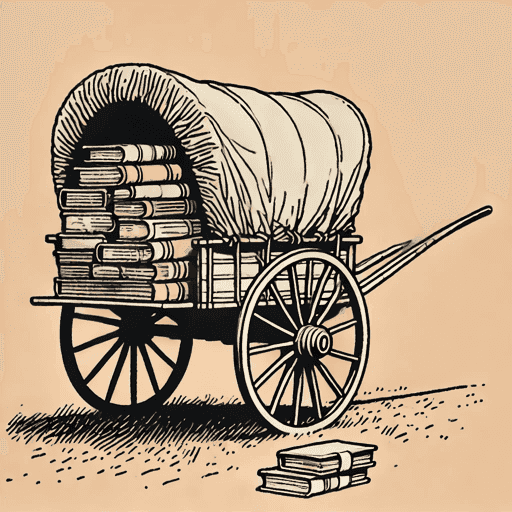
The contrast between her deliberate arrival in Thune and the unscripted launch of her actual journey shapes the next stage of her arc. After a strained attempt to talk honestly with Viv, Fern accidentally stows away in the cart of Astryx One-Ear, put on an adventurous path by her sheer inability to confront uncomfortable truths about what she wants. The moment is disorienting and painful, but it breaks the pattern she kept returning to with her bookshop. The chaos of the road with Astryx pulls her into immediate problems that she cannot sidestep, and the lack of control reshapes how she responds to her life.
Fern’s final choice settles the theme. After traveling together, Astryx asks her to become a squire, which gives Fern a new title and a stable future if she wants it. Fern turns down the offer, and she also refuses to rebuild her old life in Thune. Instead, the epilogue shows her writing a book drawn from her journey. This shift reveals a new relationship to change. Fern stops trying to land in a finished identity and accepts an open path that keeps moving. Rather than trading in other people’s stories as a bookseller, she pens her own, representing her choice to have agency over her life and make her own way. Her choice to write, which grows out of her own experiences rather than a prescribed role, marks the moment when she accepts a life shaped by discovery rather than a rigid plan.
Redefining the Self Beyond Vocation
Professions can anchor a sense of direction, but in Brigands & Breadknives, Travis Baldree shows how easily a job can swallow an entire identity. Fern’s slow loss of passion for bookselling pushes her into a crisis, and her struggle reveals how fragile a person becomes when a single role defines every part of life. The book follows characters who cling to their work because it feels familiar and compares them to others who view labor as only one piece of a wider existence. This contrast frames Fern’s search for an identity that belongs to her rather than to her job.
Fern’s collapse begins when she realizes her bookselling no longer excites her. She moves to Thune and opens Thistleburr Booksellers because she hopes that a more polished version of her old shop will steady her. When the business prospers, her despair worsens. This development shows that she rejects the belief that her vocation can save her, even if she’s not yet willing to accept the unpredictability of changing her life. Her whole sense of adulthood grew around that work, and when it stops giving her purpose, she feels unmoored. She asks Cal, “what the hells do I do if I’m not doing…this? Who would I even be?” (28). That question opens a path toward an identity that does not depend on her trade.
Other characters echo her conflict. Astryx One-Ear has lived as an adventurer for a thousand years, and her skill defines her. Fern presses her about this unwavering commitment, and Astryx replies that her life feels like a tool she knows well but cannot imagine putting away. She asks, “If I put it down, what other tool is there to hand?” (150). Her wording exposes how closely her identity ties to her job. Quillin, a traveler they meet, offers a different view. Quillin tells Fern that work is “the stuff that holds the rest of it together. It’s like describing a house by talking about the nails” (139). This line challenges the idea that a job needs to reflect the whole self.
However, when Fern tries to confront Astryx with this perspective, Astryx pushes back, pointing out how equally stagnant and dissatisfied Fern is with her choices. Fern’s final change grows out of that challenge. She steps away from Astryx’s offer to become a squire, which would hand her a new profession and another label. Instead, the epilogue shows her writing a book about her adventures and exploring new areas with Quillin. She turns her love of books into a creative act rather than a commercial one. The shift allows her to treat her vocation as something she shapes rather than something that shapes her.
The Unpredictable Nature of Found Family and Friendship
Brigands & Breadknives portrays lasting connection as something that grows from surprise and shared difficulty rather than careful preparation. The contrast between Fern’s reunion with Viv and her unplanned bond with Astryx and Zyll brings this idea into focus. Fern seeks comfort in her old friendship with Viv, but the unpredictable community she forms on the road transforms her in ways she never expects. These relationships build a sense of belonging that feels alive rather than fixed.
Fern’s attempt to reconnect with Viv shapes the early chapters. She travels to Thune hoping to rebuild their friendship, yet the idea terrifies her. She hesitates outside Viv’s coffee shop because she cannot bear the weight of the expectations she has attached to the reunion. Viv and her group welcome her warmly, but their calm and settled lives highlight Fern’s distress. Their support cannot help her navigate the turmoil she carries, which reveals the limits of planned connection.
Her bond with Astryx and Zyll forms under very different conditions. Fern becomes an accidental stowaway in Astryx’s wagon, and Zyll enters the group as a bounty. Their early interactions carry suspicion and irritation. As they travel, they face assassins, injury, duels, and strange creatures. These moments shift how they relate to one another. Zyll, who first seems unpredictable and troublesome, grows into a source of steady help. She gives Fern healing herbs, destroys the bridge to stop Tullah’s pursuit, and stands beside Fern in the fight against the verdigaunt. Their shared danger pulls the trio together. This comradery is repaid when Fern sets off to singlehandedly rescue Zyll from Staysha, despite having no combat skills, even though she doesn’t stand to gain anything from securing the bounty; her only guiding principle is that Zyll doesn’t deserve to be imprisoned. Unexpected connections thus force individual characters onto paths that strengthen their relationships and change them for the better, as demonstrated most definitively with Astryx.
Fern’s deepening friendship with Astryx becomes the emotional core of this found family. Astryx begins distant and guarded, but time on the road softens her. Their expectations of each other are constantly challenged, and they only begin to truly understand one another as the chaos they face together forces them to be vulnerable. She tells Fern that their friendship is the first one in a long time that has “mattered,” and she later admits that she wants “to keep this one” (278). Her invitation for Fern to become her squire offers permanence to what began as a brief alliance. Fern declines, yet the offer still marks the value Astryx places on their bond. Their journey shows that connection often arrives without warning and grows through the unpredictable paths people travel together.

Unlock every key theme and why it matters
Get in-depth breakdowns of the book’s main ideas and how they connect and evolve.
- Explore how themes develop throughout the text
- Connect themes to characters, events, and symbols
- Support essays and discussions with thematic evidence