Broken Country
71 pages • 2-hour read
Clare Leslie HallBroken Country
A modern alternative to SparkNotes and CliffsNotes, SuperSummary offers high-quality Study Guides with detailed chapter summaries and analysis of major themes, characters, and more.
Character Analysis
Beth Johnson (née Kennedy)
Content Warning: This section of the guide includes discussion of death, child death, graphic violence, suicidal ideation, and addiction.
Beth is the complex protagonist of Broken Country, a woman caught between two loves and haunted by loss. As a teenager, she falls passionately in love with Gabriel Wolfe, but their relationship ends due to misunderstanding and his mother’s interference. When Beth discovers that she’s pregnant with Gabriel’s child, Bobby, she marries Frank Johnson, who raises Bobby as his own. Beth demonstrates resilience and adaptability, transforming from an aspiring poet with Oxford dreams into a capable farmer who finds fulfillment in rural life. Her character embodies the novel’s exploration of how The Unrelenting Grip of the Past, as her unresolved feelings for Gabriel resurface when he returns to their village years after Bobby’s death.
Beth’s greatest struggle is Enduring the Weight of Grief and Loss following her son’s tragic death. The loss creates distance between her and Frank, leaving her vulnerable to rekindling her relationship with Gabriel. Hall portrays Beth with compassion and nuance, showing how her choices emerge from genuine emotional needs rather than selfishness. Throughout the novel, Beth demonstrates self-awareness about her flaws, taking responsibility for her actions while constantly trying to protect those she loves. Her ultimate decision to remain with Frank, bearing his child, Grace, while he serves a prison sentence for a crime he didn’t commit, reveals Beth’s capacity for growth and her recognition that love manifests in many forms beyond romantic passion.
Frank Johnson
Frank embodies quiet strength, selfless love, and unflinching loyalty throughout the novel. A skilled farmer deeply connected to his land, Frank has loved Beth since they were teenagers and accepts her pregnancy with another man’s child without hesitation, raising Bobby as his own son. Frank’s character is defined by his profound capacity for forgiveness and sacrifice. After Bobby’s death in a tree-felling accident that Frank blames himself for not preventing, he carries crushing guilt that emotionally distances him from Beth. When he discovers her affair with Gabriel, he reacts not with rage but with surprising acceptance, born of his belief that he deserves punishment for failing to protect Bobby.
Frank’s most defining act comes when he takes responsibility for Jimmy’s death to protect Leo, demonstrating extraordinary moral courage that transcends jealousy and resentment. His willingness to serve an eight-year prison sentence for a crime he didn’t commit represents the ultimate sacrifice, made partly for Leo’s sake and partly because he sees it as a way to compensate for his failure to save Bobby. Frank serves as the novel’s moral center, a man who consistently puts others before himself. His final return to his family and farm in the novel’s closing scene—lifting his daughter, Grace, and declaring, “I AM HOME” (302)—offers a powerful image of redemption and the possibility of renewal after profound loss.
Gabriel Wolfe
Gabriel represents both passionate possibility and the inescapable pull of the past. A successful novelist from a privileged background, Gabriel returns to his childhood home of Meadowlands with his son, Leo, after his divorce, reigniting his long-dormant relationship with Beth. While Frank embodies steadfast devotion and connection to the land, Gabriel acts as a foil for him, representing worldliness and the road not taken. His character exists in a state of perpetual longing—for Beth, for creative fulfillment, and ultimately for the son he never knew was his. Though initially portrayed as somewhat entitled, Gabriel demonstrates growth through his genuine care for Leo and his eventual understanding of Frank’s sacrifice.
Gabriel’s character embodies the novel’s theme of how past decisions create ripples that extend far beyond their immediate consequences. His teenage relationship with Beth, cut short by misunderstanding and his mother’s interference, alters both their life trajectories irrevocably. When he learns that Bobby was actually his biological son—a son he never had the chance to know—his anguish manifests in a primal howl, and he says, “You cheated [Leo] out of a brother. And me out of a son” (278). Despite his role in the affair that catalyzes the novel’s tragedy, Gabriel ultimately acts honorably by supporting Frank’s legal defense, visiting him in prison, and helping Leo process his guilt. His move to California with Leo at the end of the novel represents not an escape but a hard-won acceptance that some wounds cannot be healed.
Bobby Johnson
Bobby exists as the emotional center around which the entire narrative orbits, though he dies before the novel’s main events take place. A spirited nine-year-old farm boy who thrives in nature, Bobby’s character is constructed through memories and anecdotes that reveal his exuberance, sensitivity, and deep connection to the farm. Beth recounts how “he sang so much when he was little [they] called him Elvis” and describes him as “a golden boy” who “wore shorts right the way through winter and no coat” (11). Through these glimpses, Bobby emerges as a fully realized character whose death creates the fracture in Beth and Frank’s marriage that allows Gabriel to re-enter Beth’s life.
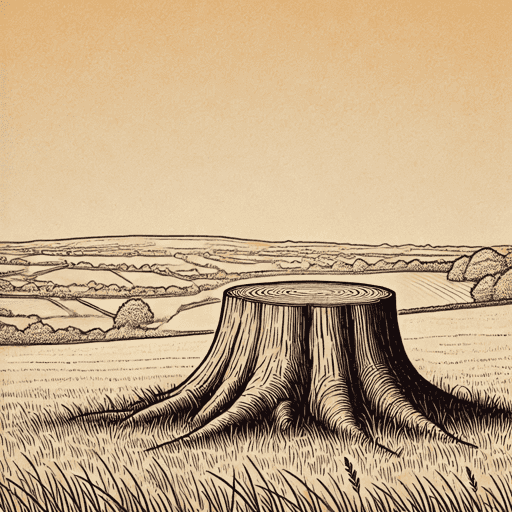
The revelation that Bobby was Gabriel’s biological son adds another dimension to the novel’s exploration of love, loss, and sacrifice. Bobby becomes the physical manifestation of the connections between Beth, Frank, and Gabriel—a child raised by one man but fathered by another, neither of whom knew the truth for years. His death beneath the oak tree becomes the gravitational center of the narrative and the tragedy from which all other conflicts flow. Bobby’s continued presence in Beth’s life—through her constant carrying of his photograph and her stories to Leo—demonstrates how the dead remain woven into the fabric of the living, influencing relationships and decisions long after they’re gone.
Jimmy Johnson
Jimmy, Frank’s younger brother, serves as his more volatile and emotional counterpart, a foil to Frank’s calm nature. While Frank embodies restraint and steadfastness, Jimmy struggles with alcohol addiction and emotional regulation, often requiring his brother’s protection. The novel establishes their close bond early when Jimmy delivers Bobby during a storm, demonstrating unexpected capability in crisis. His relationship with Nina brings him genuine happiness, evidenced during their wedding celebration, but he remains haunted by Bobby’s death. Frank observes, “It all goes back to Bobby. Jimmy’s never been right since he died” (157), capturing how grief has destabilized Jimmy’s already fragile emotional equilibrium.
Jimmy’s role in the novel’s climactic tragedy stems from his fierce loyalty to Frank and his difficulty with processing complex emotions. When he discovers Beth’s affair with Gabriel, his rage manifests in threats and ultimately in a confrontation with a shotgun. Though Jimmy’s death creates the novel’s central conflict, his character is portrayed with compassion rather than judgment. His stag night conversation with Frank—confessing that “he d[oes]n’t think he [i]s any good at living” and that they would “be better off without him” (157)—reveals his deep-seated pain and foreshadows the tragedy to come. Jimmy represents how grief can fracture even the most resilient individuals when they lack healthy coping mechanisms.
Leo Wolfe
Leo, Gabriel’s son, is both an innocent victim of adult conflicts and a subtle reflection of Bobby, his unknown half-brother. Sensitive and struggling to adjust to rural life after his parents’ divorce, Leo forms a significant bond with Beth, who becomes a surrogate mother figure while his own mother lives in America. His character demonstrates how children absorb the emotional undercurrents around them, as he becomes fixated on Bobby through Beth’s stories and even steals Bobby’s photograph. Leo states with poignant insight, “I’ve seen your face when you look at the photo of him in your bag” (85), showing his perceptiveness about adult emotions.
In the novel’s climactic scene, 11-year-old Leo shoots Jimmy to protect his father, an act that becomes the novel’s central tragedy. His subsequent trauma and guilt mirror the cycle of suffering that runs throughout the narrative. When Frank takes responsibility for Jimmy’s death, he does so partly to protect Leo from the legal and psychological consequences of his actions. Leo’s growth throughout the novel involves coming to terms with what he’s done and understanding the sacrifices made on his behalf. The revelation that Bobby was his half-brother gives meaning to his inexplicable connection to a boy he never met and completes the intricate web of relationships that forms the novel’s emotional core.
Nina Johnson
Nina brings vitality and joy to the Johnson family through her vibrant personality and genuine warmth. Introduced as Jimmy’s girlfriend and later wife, she works at the local pub and forms a close friendship with Beth. Nina’s character is marked by her distinctive style—“a glorious-looking girl with her reddish-blond hair, back-combed tonight into an immaculate beehive” (35)—and her ability to dance, teach Bobby dance steps, and generally infuse life into the somber Johnson household. Her engagement to Jimmy represents a moment of happiness before tragedy strikes, with her confident affirmation when asked if she’s in love establishing her as someone who embraces emotion wholeheartedly.
After Jimmy’s death, Nina initially cuts ties with Beth and Frank but eventually testifies at Frank’s trial in a moment of compassion. Her testimony that “there isn’t a person in the world who loved Jimmy more than Frank” provides essential character evidence for Frank’s defense (263). Nina’s pregnancy with her new partner’s child at the novel’s end represents renewal after tragedy, paralleling Beth’s pregnancy with Grace. Her reconciliation with Beth suggests the possibility of healing even after profound betrayal and loss, demonstrating the novel’s theme that while the past cannot be erased, it can be integrated into life in ways that permit growth rather than stagnation.
Tessa Wolfe
Tessa, Gabriel’s mother, embodies class prejudice and maternal manipulation. Though she appears briefly in the narrative, her actions have profound consequences that echo throughout the characters’ lives for decades. Described as “astonishing to look at” (66), with her elegance, jewelry, and scarlet lips, Tessa represents the social elite to which Beth can never belong. During Beth’s dinner at Meadowlands, Tessa deliberately undermines her through subtle social cues, remarking when Beth tries to help clear the table, “We don’t stack here, we leave that to the school dinner ladies” (69). Her dismissal of Beth as unsuitable for Gabriel—“Boys like Gabriel don’t tend to end up with girls like you” (82)—reveals both her snobbery and her determination to control her son’s life.
Tessa’s most consequential action occurs when she discovers Beth’s pregnancy with Gabriel’s child and pays her to keep the baby’s paternity secret. This intervention alters the trajectories of multiple lives—Beth marries Frank instead of contacting Gabriel, Bobby grows up never knowing his biological father, and Gabriel remains unaware that he has a son until after Bobby’s death. Tessa represents how privilege can enable damaging interference in others’ lives without accountability, developing the theme of Navigating Class Conflict and Social Division. Though she appears in just a few scenes, her character demonstrates how past choices—particularly those motivated by prejudice and control—create ripples that extend far beyond their immediate consequences.
Grace Johnson
Grace, Beth and Frank’s daughter, represents the possibility of renewal and second chances. Though she appears primarily in the novel’s final chapter, her significance to the story’s themes is profound. Named by Frank in a gesture that acknowledges the forgiveness and grace that has allowed their marriage to survive, she embodies hope amid tragedy. Grace’s arrival eight months after Frank’s trial provides him with a powerful motivation to endure his prison sentence and gives Beth purpose during his absence. Her existence proves that new life can emerge even from the darkest circumstances.
In the novel’s final scene, five-year-old Grace demonstrates the same affinity for farming that Bobby had, talking to the sheep and helping with lambing. This connection to the land and the farming tradition suggests continuity and healing after loss. When Frank returns home unexpectedly, Grace’s joyful reaction—running to him across the field, being lifted into his arms, and joining his shouted declaration of “I AM HOME” (302)—creates a powerful image of family reunification and the triumph of love over tragedy. Though little of Grace’s character development happens on the page, her symbolic function as the embodiment of hope and new beginnings makes her essential to the novel’s resolution.
David Johnson
David, Frank and Jimmy’s father, represents the farming tradition and deep connection to the land that defines the Johnson family. After his wife Sonia’s accidental death during milking, David raised his sons alone, though Frank often took on a parental role toward Jimmy. Initially portrayed as emotionally reserved—when Beth first meets him, “he barely look[s] up from his copy of Farmers Weekly” (151)—David develops a close relationship with Bobby, teaching him about the farm’s wildlife and taking him on the tractor despite Beth’s concerns. Through David’s eyes, “Blakely Farm is coming alive” for Beth (122), demonstrating how his knowledge enriches her understanding of the land. David’s character embodies the stoic resilience typical of the farming community, representing both the wisdom accumulated through generations of working the land and the emotional constraints that can prevent healing after trauma.
Eleanor Kennedy
Eleanor, Beth’s older sister, provides unwavering support while representing the life that Beth might have led had she not become pregnant with Bobby. Unlike Beth, who abandoned her Oxford ambitions to marry Frank, Eleanor pursued her career, becoming “a hotshot solicitor” in London “after fighting her way to the top of the firm she first joined as a secretary” (149). Their relationship embodies sisterly loyalty despite their different paths; as teenagers, they would lean out of Eleanor’s bedroom window “sharing cigarettes filched from [their] father’s packet of Benson & Hedges, spinning daydreams for one another” (19). Eleanor’s critical view of Gabriel—referring to him as “a bit of an entitled prat” and reminding Beth that “[b]oys like him cannot be trusted” (197)—demonstrates her protective instincts.
During Frank’s trial, Eleanor becomes Beth’s rock, accompanying her to court daily and using her legal knowledge to help them understand the proceedings. Though Eleanor has little patience for Gabriel, she respects Frank’s sacrifice and supports Beth’s decision to stand by him. Her character exemplifies how family bonds can persist despite different life choices, providing crucial support during a crisis.
Beth’s Parents
Beth’s parents exemplify unconditional love and practical support throughout their daughter’s hardships. When they learn of her pregnancy, they react with acceptance rather than judgment. Beth’s mother even acquires a diaphragm for her before she knows that Beth is sleeping with Gabriel, telling her, “Men have lovers before they marry, why shouldn’t women?” (57). This progressive attitude contrasts with the conservative rural setting and establishes Beth’s parents as allies rather than obstacles in her life. Though they move to Ireland for her mother’s teaching position, they immediately return when Frank is imprisoned, demonstrating their commitment to family above career.
Their transformation upon returning to help run Blakely Farm reveals their adaptability and strength. Beth observes that her mother, “whom [she] couldn’t have imagined without her books and her marking, is out with [them] in the fields all day” in “an old pair of [her] father’s cords” with “a permanent outdoor tan” (297-98). Her mother’s discovery and perfection of a cheese recipe that becomes a substantial income source shows her resourcefulness, while her father’s monthly prison visits to Frank demonstrate compassion and forgiveness. They represent how parental support can provide stability amid chaos and how adapting to unexpected circumstances can lead to new forms of fulfillment.

Unlock analysis of every major character
Get a detailed breakdown of each character’s role, motivations, and development.
- Explore in-depth profiles for every important character
- Trace character arcs, turning points, and relationships
- Connect characters to key themes and plot points