Broken Country
71 pages • 2-hour read
Clare Leslie HallBroken Country
A modern alternative to SparkNotes and CliffsNotes, SuperSummary offers high-quality Study Guides with detailed chapter summaries and analysis of major themes, characters, and more.
Part 2Chapter Summaries & Analyses
Part 2: “Bobby”
Part 2, Chapter 23 Summary: “Before”
Content Warning: This section of the guide includes discussion of death, child death, suicidal ideation, substance use, and sexual content.
Bobby is born on the kitchen floor during a violent storm that cuts the farm off from outside help. When Beth’s labor begins rapidly, the phone lines are down and a fallen telegraph pole blocks the road, leaving her alone until 13-year-old Jimmy arrives home from school. Jimmy calmly takes charge, helping Beth through the delivery with surprising capability, comparing it to his experience with lambing. Despite his youth, he knows to turn the baby over, slap its bottom for the first cry, and assist with the afterbirth.
Frank returns home to find Beth sitting on the floor with their newborn son and Jimmy beside them. The three share a moment of wonder at what they’ve accomplished together. As Frank holds his son for the first time, his face transforms with elation, and Beth sees the same pure love that she felt upon meeting their child.
Part 2, Chapter 24 Summary: “1968”
In 1968, Nina’s father hosts an engagement party with an open bar at the pub to celebrate Nina and Jimmy’s upcoming wedding. The villagers celebrate enthusiastically, with many congratulating Frank as well since he’s well respected in the community for his generosity and helpfulness. Frank announces that everyone is invited to the wedding at the farm, and the village immediately offers contributions including a marquee, trestle tables, and food.
The celebration is interrupted when Gabriel unexpectedly enters the pub. When he orders drinks, explaining that Leo is waiting in the car, Jimmy confronts him aggressively, telling Gabriel that he isn’t welcome. As Jimmy draws back his fist to punch Gabriel, local police officer Andy Morris restrains him and takes him outside to calm down. Nina expresses concern about Jimmy’s drinking, while Beth is left watching Gabriel walk away. She feels her husband’s eyes on her and wonders how much longer the three of them can continue before something catastrophic happens.
Part 2, Chapter 25 Summary: “The Trial”
In 1969, Police Detective Sergeant Andy Morris testifies at Frank’s trial. When questioned by the prosecutor, he acknowledges knowing the brothers for years through Jimmy’s minor troublemaking as a youth, though he emphasizes that they weren’t close friends. He describes how Jimmy was involved in occasional fights and drunk-driving incidents, but nothing serious.
Morris recounts receiving a call at 9:37 pm on September 28 about a shotgun accident at Blakely Farm with one deceased victim. Though he initially didn’t suspect murder, as farming accidents are common, the facts didn’t add up. Looking directly at Frank in the dock, he states that within 24 hours, he knew that they were dealing with a murder investigation, rather than an accident. At this point, the identity of the victim remains a mystery.
Part 2, Chapter 26 Summary: “Before”
Beth observes how Bobby’s arrival has transformed the Johnson men. Frank has become an enthusiastic father who wants to participate in every aspect of childcare, holding Bobby tightly against him each night when he returns from the farm. Frank’s father, David, a reserved, quiet man, has become a doting grandfather who sings old songs to the baby and reads newspapers to him in a soothing voice that instantly calms Bobby when he cries. Even Jimmy has gained confidence following his role in Bobby’s birth.
When Bobby is still small, Beth begins taking him around the farm in a sling, talking to him about the land that will one day be his. David joins them on these walks, teaching Beth to identify birds, butterflies, and other wildlife. Though Beth worries when David starts taking Bobby on tractor rides across the farm, Frank reassures her that his father would never let anything happen to their son. Beth adores seeing Bobby growing up immersed in farm life, learning the wisdom passed through generations of Johnson men.
Part 2, Chapter 27 Summary: “1968”
Beth discovers that her favorite photograph of Bobby—showing him bottle feeding an orphan lamb—is missing from her bag. While she frantically searches for it, Gabriel and Leo arrive at the door. Leo confesses that he took the photo from Beth’s bag because he likes looking at Bobby, leaving Frank shocked by this revelation.
After Gabriel and Leo leave, Frank confronts Beth, insisting that the photo should stay in their house from now on. He expresses his displeasure that strangers now have a connection to their son, saying, “He was our boy. […] And he’s gone. Why should they have anything to do with him?” (125). Frank criticizes Beth’s decision to work at Meadowlands and asks how she thinks the situation is going to end.
Part 2, Chapter 28 Summary: “Before”
On Bobby’s third birthday, the village buzzes with details about Gabriel and Louisa’s lavish society wedding, which is taking place at Meadowlands the same day. Village workers report on the extravagance: 300 guests, including Hollywood stars and aristocracy, a dress by a famous designer, a swing band from America, and a French chef. Meanwhile, Beth and Frank celebrate their son’s special day more modestly, beginning with Bobby joining the men for morning milking in his new navy overalls.
Beth decides to take her son to spy on Gabriel’s wedding. They hide behind a yew tree in the cemetery as Gabriel and Louisa emerge from the church with their toddler son. Though Beth feels a momentary pang of jealousy at seeing Gabriel in his fine wedding clothes, she feels a rush of love for Bobby when he calls the groom “fancy-pants,” like Frank would. As she watches Gabriel with his new family, Beth realizes that she has everything she needs with Bobby and Frank. She reflects that there’s a pleasing symmetry in the fact that they are both now families of three.
Part 2, Chapter 29 Summary: “1968”
After the incident with Bobby’s photograph, Gabriel invites Beth for a private conversation at Meadowlands. He explains that Leo has become obsessed with Bobby, seeing him as a perfect child he can never live up to, partly due to his feelings of displacement following his parents’ divorce. Gabriel apologizes for raising the sensitive topic but suggests that Beth might want to limit how much she talks about Bobby to Leo.
When Gabriel expresses interest in learning about Bobby himself, his and Beth’s relationship begins to shift. Beth starts staying later at Meadowlands, sharing an evening glass of wine with Gabriel. She recounts stories of Bobby’s life while Gabriel listens attentively, beginning with his dramatic birth during the storm. Beth finds these conversations deeply comforting because they keep Bobby’s memory alive, but she also feels guilty knowing how hurt Frank would be if he discovered that she was sharing intimate details about their son with Gabriel.
Part 2, Chapter 30 Summary: “Before”
David asks Beth if she plans to have another child now that Bobby is in school. The question surprises her, as it’s the most personal thing her father-in-law has ever asked. Later, Beth discovers that David has been talking to Frank about it too. Frank brings up the subject in bed, suggesting that they stop using birth control. Though part of Beth craves another baby, she worries about how it might affect her relationship with five-year-old Bobby.
She explains to Frank that while it feels like the right time, she isn’t ready to change her close relationship with Bobby. She knows that having a new baby would mean less attention for him, and she’s not prepared for that yet. Frank immediately understands, pulling her close and saying, “We got the best one. Why risk it with another?” (140). They have sex with unusual intensity, laughing together afterward at the emotional experience and affirming their decision not to change their current family dynamic.
Part 2, Chapter 31 Summary: “1968”
In 1968, Leo’s mother, Louisa, arrives unexpectedly at Meadowlands, delighting her son, who runs to embrace her. After their emotional reunion, Louisa proposes taking Leo to London for a few days. That evening, Louisa calls Beth and invites her to meet at the pub, where she orders gin and tonics for them both.
During their conversation, Louisa confides that her marriage to Gabriel failed because he never truly loved her, having been in love with Beth throughout their relationship. Louisa describes herself as “an obvious rebound” and says that it was “endlessly demoralizing” knowing that Gabriel loved someone else (147). As Beth processes this revelation, Louisa reaches for her hand and says, “It’s not too late” (148), implying that Beth and Gabriel could still have a future together. This leaves Beth conflicted about her feelings for both Gabriel and Frank.
Part 2, Chapter 32 Summary: “Before”
On Bobby’s seventh birthday, Beth’s parents announce that they’re moving to Ireland for a few years because her mother accepted a headteacher position there. Though initially shocked at the thought of her parents leaving their grandson, Beth encourages them to take this adventure while they’re still young enough to enjoy it. The celebration is also significant because Jimmy introduces his new girlfriend, Nina, to the family for the first time.
Nina immediately charms everyone, especially Bobby, with her vibrant personality and perfect gift of blue suede boots that match his Elvis obsession. She also teaches Bobby to dance Elvis-style, winning his devoted admiration. As the evening progresses, Bobby innocently asks Nina if she’s in love with Jimmy and might marry him. When Nina confidently answers that she’s in love, Jimmy flushes with joy.
Part 2, Chapter 33 Summary: “1968”
Frank returns from Jimmy’s bachelor party at the pub visibly troubled, waking Beth as he gets into bed. When Beth asks if something happened, Frank reveals that Jimmy became extremely drunk and broke down crying on the drive home, saying that he wasn’t good at living and that everyone would be better off without him, including Nina. Frank explains that Jimmy has never been right since Bobby died, and he’s concerned by his brother’s dark thoughts.
Beth comforts Frank, telling him that it was just drunken talk and that Jimmy will be fine, especially with his upcoming wedding to Nina. The couple holds each other close, with Beth whispering reassurances until Frank falls asleep. Their intimate moment of mutual concern for Jimmy briefly bridges the growing distance between them as Beth continues her emotional affair with Gabriel.
Part 2, Chapter 34 Summary: “Before”
When Bobby is nine, Beth and Frank host his entire class for an afternoon at the farm. Bobby proudly shows his classmates the milking machine and introduces them to the sheep before they have a picnic beneath the oak tree. The event gives the children a chance to see Bobby in his element, in contrast to his restlessness in the classroom, where he spends hours gazing out the window, missing the outdoors.
The afternoon ends with target shooting, and the children use air rifles under David’s strict supervision. When William, a socially awkward boy, jokingly points his loaded rifle at the other children, David knocks it from his hand, injuring William’s foot. When William’s mother, Alison, arrives, instead of addressing her son’s dangerous behavior, she criticizes the Johnsons for allowing children to use guns and calls them reckless, ominously predicting that “something bad will happen” on their farm (162).
Part 2, Chapter 35 Summary: “The Trial”
At Frank’s trial, Alison Jacobs takes the witness stand. When questioned by the prosecutor about why she came forward late as a witness, she claims that she realized she had relevant information about the people at Blakely Farm that would help the jury.
Alison gives a heavily embellished account of the Johnson family, describing them as “feral” and claiming that they don’t follow a normal code of conduct. She mentions Bobby witnessing a calf being shot when he was five and recounts the air rifle incident with her son, portraying the Johnsons as dangerously negligent. Even the prosecutor seems disdainful of her testimony, as she concludes by recalling how village parents had predicted that there would be a fatality at Blakely Farm, adding smugly that it came sooner than expected.
Part 2, Chapter 36 Summary: “1968”
Jimmy and Nina’s wedding becomes a joyful community celebration, held in a refurbished barn at the farm. After a small registry office ceremony attended only by Frank and Beth, the couple holds another ceremony with the entire village participating. During the reception, Frank delivers a heartfelt best man speech, highlighting how Nina has been Jimmy’s rock through difficult times. For their first dance, Jimmy and Nina choose “I Can’t Help Falling in Love” and invite Frank and Beth to join them on the dance floor.
Later in the evening, Beth notices Gabriel watching her from across the room. He signals her to follow him outside, where he reveals that he never slept with Louisa while he and Beth were together. When Beth asks why he didn’t tell her the truth back then, Gabriel admits that he was too proud and angry about what she said about his mother. After acknowledging their wasted years apart, Beth initiates a passionate kiss.
Part 2, Chapter 37 Summary: “Before”
In early June, the oak tree on Blakely Farm is pronounced dead. Though Bobby is upset about losing the tree, which has always been special to the family, David explains that it’s dangerous to leave it standing, as falling branches could be deadly. The men plan to fell it on Saturday, with Frank, Jimmy, and David handling the job themselves, following instructions from a tree surgeon.
Beth is concerned about Bobby’s safety during the tree removal, but Frank assures her that they’ll watch him. She has plans with Helen that day, and he encourages her to keep them. When Beth returns to the farm, she finds the crown of the tree already removed, but the trunk is still standing. As the men prepare the final cut, Beth sees Bobby running in front of the tree’s path just as it begins to fall. The tree crashes down, killing Bobby instantly. In the devastating aftermath, Beth cannot bear Frank’s touch, feeling that he broke his promise to watch their son.
Part 2 Analysis
The narrative structure of these chapters amplifies the theme of The Unrelenting Grip of the Past through its alternation between the “Before” and “1968” sections. Bobby’s birth on the farmhouse floor during a storm becomes a formative moment that binds the Johnson family together in a sacred pact. This structural juxtaposition creates emotional tension as readers witness Bobby’s vibrant life alongside Beth’s affair with Gabriel, knowing the devastating loss that connects these timelines. The storm during Bobby’s birth symbolically foreshadows the emotional tempests to come and illustrates the isolation of the Johnson family and its members’ intimate connection to each other, as Jimmy demonstrates unexpected capability: “I’ve birthed loads of lambs and I reckon it’s the same thing. We are mammals, after all” (111). This comparison between humans and animals also establishes the novel’s naturalistic perspective on life cycles—birth, death, and regeneration—that permeates the rural setting. The structural parallels between Bobby’s dramatic arrival and his eventual tragic death reveal how pivotal moments forever alter character trajectories and family dynamics.
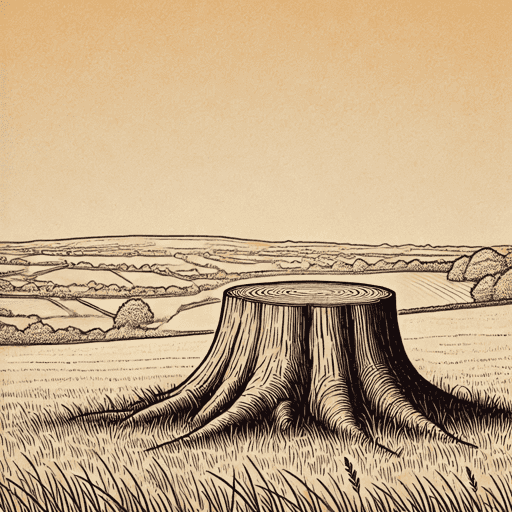
The oak tree operates as a dominant symbol throughout Part 2, embodying the novel’s exploration of permanence, heritage, and destruction. Initially representing continuity and family tradition, the tree marks significant moments, as Beth recalls, “It is where Frank asked me to marry him” (159). At this point, the image of the living tree promises a new life together for Beth and Frank, but by the end of Part 2, the oak tree transforms into a deadly instrument, as it’s felling results in Bobby’s death. The transformation of the oak tree’s significance demonstrates how quickly security can become danger. The remaining stump becomes a physical manifestation of grief—unmovable, inescapable, and rooted deeply in the land.
Beth’s gradual emotional reattachment to Gabriel illuminates the theme of Navigating Class Conflict and Social Division as their reconnection creates ripples throughout the village. Their affair begins not through physical attraction alone but through Gabriel’s willingness to discuss Bobby, something that Beth’s husband cannot bear to do; as she tells Gabriel, “[N]o one else asks me about him, ever. It’s like Bobby is a ghost everyone has forgotten” (135). This intellectual and emotional connection highlights the fundamental differences in how the farming community is presented as processing grief (through stoic silence) versus Gabriel’s more articulated approach. The village’s reaction to Gabriel entering the pub, with “voices dipping, a few people turning to stare” (116), demonstrates how class boundaries remain rigid despite the characters’ attempts to cross them. Jimmy’s hostile response to Gabriel when he says, “Why don’t you go back to London or wherever you came from? No one wants you here” (116), reflects the broader theme of territorial protection and resentment toward outsiders who threaten established social patterns and family structures.
The novel explores The Cycle of Love, Betrayal, and Reckoning through Frank and Beth’s disintegrating marriage and its contrast to Jimmy and Nina’s burgeoning romance, engagement, and then wedding. The wedding scene becomes particularly poignant as Beth contemplates her failing marriage while witnessing a celebration of love. Frank’s best man speech acknowledges how “this family has been through difficult times. Nina has walked every step of the way with Jimmy. She is his rock, his soulmate” (168), creating a painful contrast with Beth’s ambivalence toward her own marriage. The weight of unresolved grief drives characters to seek comfort through different means—Frank through work, Jimmy through alcohol, and Beth through an affair with Gabriel. Beth and Gabriel’s reunion kiss outside the wedding tent marks a pivotal moment of betrayal: “A kiss that feels like everything all at once. Unhinged. Tender. Too much, too much, nowhere near enough. Teeth snagging lips, hands caught in hair, every second of every year we’ve been apart in this kiss” (171). This moment of passion stands against the backdrop of community celebration, heightening the ethical complexity of their actions and foreshadowing the eventual violent consequences.
Bobby’s death fundamentally alters all relationships within the Johnson family, demonstrating the Enduring the Weight of Grief and Loss and how grief functions as both destroyer and unifier. The profound shifts in the Johnson men after Bobby’s birth are painfully mirrored by the transformations following his death. Frank’s promise to watch Bobby during the tree felling becomes the breaking point in their marriage, as Beth reflects, “He promised me he would watch Bobby. He promised he’d keep him safe” (175). Beth’s rejection of Frank’s touch in the immediate aftermath, when she warns him, “Don’t touch me. Please” (175), creates a physical distance that reflects their emotional estrangement. The disintegration of their marriage illustrates how shared grief can either bind people together or drive them irrevocably apart. Jimmy’s deterioration following Bobby’s death reveals another manifestation of grief: “He said he didn’t think he was any good at living. Sometimes he thought we’d be better off without him” (157). These varied responses to tragedy demonstrate the novel’s nuanced exploration of grief as a force that reshapes identities and relationships in unpredictable, often devastating ways.

Unlock all 71 pages of this Study Guide
Get in-depth, chapter-by-chapter summaries and analysis from our literary experts.
- Grasp challenging concepts with clear, comprehensive explanations
- Revisit key plot points and ideas without rereading the book
- Share impressive insights in classes and book clubs