Broken Country
71 pages • 2-hour read
Clare Leslie HallBroken Country
A modern alternative to SparkNotes and CliffsNotes, SuperSummary offers high-quality Study Guides with detailed chapter summaries and analysis of major themes, characters, and more.
Part 3Chapter Summaries & Analyses
Part 3: “Jimmy”
Part 3, Chapter 38 Summary: “The Trial”
Content Warning: This section of the guide includes discussion of child death, animal death, substance use, and sexual content.
Beth, her mother, and her sister, Eleanor, sit in the front row of the public gallery as her father takes the stand as a character witness for Frank. Beth notices how much her father has aged, but once he begins speaking, his confidence as a teacher shows. During the initial examination, he provides a glowing reference for Frank, describing how close the Johnson brothers were. When prosecutor Donald Glossop takes over questioning, he asks about Beth’s relationship with Gabriel Wolfe and suggests that Frank harbored jealousy.
Beth reflects that she feels constantly ashamed about the impact that their love triangle—the farmer, his wife, and the famous author—has had on her family. The prosecutor pushes Beth’s father to admit that Frank must have felt jealousy while his wife was having an affair, though her father maintains that if Frank felt jealous, he hid it extremely well. Beth observes that the sensationalized newspaper coverage of their situation doesn’t really matter anymore—nothing does.
Part 3, Chapter 39 Summary: “Sunday”
The day after Nina and Jimmy’s wedding, Nina asks Beth if she and Frank are all right while they wash dishes together. Beth considers how to answer, her mind conflicted about her feelings for both Gabriel and Frank. Nina mentions that she noticed Beth crying during their wedding dance when Elvis played, painfully reminding Beth of Bobby.
Throughout the day, villagers come to collect their belongings and stay to help clean up while sharing stories from the wedding celebration. Beneath the gossip and laughter, Beth’s mind keeps returning to her secret kiss with Gabriel from the night before—a forbidden moment that both confuses her and makes her long for more.
Part 3, Chapter 40 Summary: “Monday”
Beth drives to Meadowlands to see Gabriel before she can change her mind. When he opens the door, they immediately embrace passionately. They end up having sex in the library, and afterward, Beth begins to cry, realizing that she’s going to lose Frank. Gabriel suggests that they could continue their affair secretly, believing that their relationship deserves a second chance. Beth acknowledges that what they had before was special and something most people never experience.
Beth understands how the village works—secrets are not safe, as gossip filters through lanes, the churchyard, the school, and the shop. Despite knowing this, she decides to continue the affair with her “eyes wide open” (188), fully aware of the potential consequences.
Part 3, Chapter 41 Summary: “Monday Night”
When Beth returns home, Frank confronts her in bed, saying that he saw her with Gabriel at the wedding. Beth feigns ignorance, pretending that she barely spoke to Gabriel. Frank describes seeing how she looked at Gabriel and apologizes for sounding jealous. Beth reassures him that he has nothing to worry about, and they kiss. Beth feels uncomfortably adept at pretending, already finding it effortless to lie.
Beth reflects that this is “a love story with too many beginnings” (190), between her childhood romance with Gabriel, her marriage to Frank after Gabriel, and now the rekindled affair. She deliberately refuses to think about how it might end, focusing only on the present moment.
Part 3, Chapter 42 Summary: “Tuesday”
Beth recalls how after Bobby died, she temporarily moved to Ireland to stay with her parents, not wanting to return. She came back because of Jimmy, who was struggling with Bobby’s death and drinking heavily. Nina traveled to Cork to explain that Jimmy was falling apart, partly because he blamed himself for not watching over Bobby and feared that Frank would lose his wife too.
Today, Beth and Gabriel’s lovemaking is slow and deliberate as they rediscover each other. They talk about his writing career, her abandoned poetry, his failed marriage to Louisa, and concerns about Leo. After school, Beth plays cards with Leo, who is delighted when Gabriel joins them. Beth feels a surge of contentment with her “borrowed family,” imagining that every day could be like this.
Part 3, Chapter 43 Summary: “Tuesday Evening”
Beth returns home to find that Frank is out again, presumably at the pub with Jimmy. She contemplates how strange it feels to be in their familiar home while she’s completely changed, living a double life between her husband and her lover. She wishes that she could confide in someone but realizes that there’s no one suitable—not Eleanor, who distrusts Gabriel; not her parents, who adore Frank; and not anyone in the village, where Frank is universally beloved.
Nina arrives with wine, and they build a fire together. Nina reveals that she’s stopped using birth control because she and Jimmy want to start a family. Beth is initially hurt, as the idea of having another child around the farm feels as if they are replacing Bobby, but she then recognizes that she is genuinely happy for them and hopes that a baby might help Jimmy get his life together. Beth thinks about all the families who have shared good news by this ancient hearth while hiding her guilt about her affair.
Part 3, Chapter 44 Summary: “Wednesday”
Beth arrives at Meadowlands to surprise Gabriel but hears him talking to a woman. Gabriel introduces her to Flora Hughes, a journalist from The Times interviewing him for a feature. During the interview, Beth learns that Gabriel’s new novel centers around a sexually adventurous young woman during a time of sexual revolution. When Gabriel references his past conversations with Beth about gender inequality, Beth becomes uncomfortable, and Flora senses that there’s history between them.
After Flora leaves, Beth and Gabriel have sex, but Beth can’t relax. The intrusion of the journalist has unnerved her, making their secret universe feel less sacred and safe. Beth worries about being discovered and what might happen if Frank found out.
Part 3, Chapter 45 Summary: “Wednesday Evening”
Frank leaves for the pub immediately after dinner, continuing his pattern of avoidance. Beth tries to speak with him before he leaves but can only manage to say, “Have a good time” (206). She notices that they are already becoming strangers to each other, and Frank’s absence speaks volumes about his awareness of her affair.
Alone, Beth struggles with conflicting thoughts about betraying Frank, “a man who has loved [her] from the very beginning” (206). She questions how she can be so cruel to him yet still longs to see Gabriel again in the morning. Beth describes herself as having “the blackest of hearts” for continuing to hurt Frank while anticipating her next encounter with Gabriel (207).
Part 3, Chapter 46 Summary: “Thursday”
Beth and Gabriel continue their passionate affair, wondering when their intense feelings might diminish. They decide to spend time at the lake where they first met as teenagers. While Gabriel picks Leo up from school, Beth daydreams about the life they might have had together—as Oxford students, successful writers, and eventually parents with their own little boy.
Gabriel returns with Leo and a picnic basket. The three enjoy their afternoon by the lake, with Gabriel learning bird calls from Leo. Beth watches the father and son together, feeling like part of a perfect family unit. When Leo says that spending time together is “the best” (211), both Beth and Gabriel agree with evident emotion, creating a moment of connection between all three of them.
Part 3, Chapter 47 Summary: “Friday Morning”
Nina confronts Beth about being at Meadowlands when Leo was at school. She reveals that Flora Hughes, the journalist, had been asking questions about Beth at the pub. When Frank overheard, he angrily told the journalist to leave his wife alone. Beth creates a half-truth, claiming that she’s been helping Gabriel brainstorm ideas for his novel, but Nina remains suspicious.
Beth calls Gabriel, explaining that she can’t risk coming over until she speaks with Frank, who seems to know about their affair. She admits to Gabriel that she’s scared of hurting Frank and losing Gabriel. Gabriel tells her that he loves her and that he hopes they’ll get a second chance, but he also says that he’ll understand if this is the end. He confesses that their time together has made him realize what a fool he was to let her go the first time.
Part 3, Chapter 48 Summary: “Friday Afternoon”
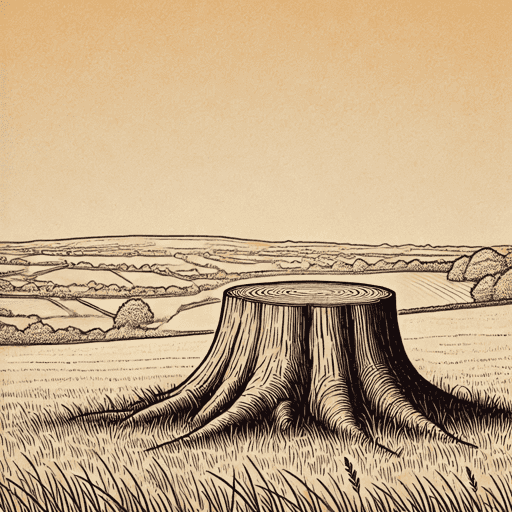
Beth sees smoke in the distance and runs across the farm to find Frank burning Bobby’s tree stump with paraffin. She protests, asking about the birds that Bobby loved, but Frank responds coldly that “his birds are long gone” (218). Frank states that “it’s over”—the tree, Bobby, and their marriage. He reveals that he’s known about her affair since the wedding, having seen how she looked at Gabriel.
When Frank asks if she loves Gabriel, Beth hesitates but admits she does. Frank tells her that he won’t stand in her way, adding, “You know why” (219), suggesting that his guilt over Bobby’s death is influencing his decision to let her go. Frank picks up the paraffin cans and walks away across the field.
Part 3, Chapter 49 Summary: “Friday Night”
Frank and Beth are in bed when Jimmy bursts into their bedroom, drunk and angry. He confronts Beth about the affair, which is being discussed throughout the village. Frank defends Beth despite everything, telling Jimmy that this is between them. Jimmy becomes emotional, asking how Beth could betray the family after everything they’ve been through, especially after Bobby’s death.
Jimmy threatens to confront Gabriel, reaching for the whisky bottle, but Frank smashes it on the floor. Jimmy collapses against his brother in defeat, and Frank wraps his arms around him protectively. Frank silently motions for Beth to go upstairs, still trying to shield her from Jimmy’s anger despite his heartbreak. Beth acknowledges that she has never deserved Frank’s kindness less than at this moment.
Part 3, Chapter 50 Summary: “Saturday Morning”
Beth spends the morning moving aimlessly around the kitchen, reflecting on how she’s betrayed everyone. She worries about Jimmy’s emotional state and his tendency to regress when faced with change, recalling how Frank always understood that Jimmy never fully matured after their mother’s death.
Beth contemplates that her reconnection with Gabriel was inevitable, as their story was “incomplete” with “too many questions” (224). She finds her and Frank’s dusty wedding photo and remembers their perfect small wedding with just their immediate family present. Looking at how young they were, Beth reflects on their journey together and all she stands to lose.
Part 3, Chapter 51 Summary: “Saturday, Late Afternoon”
Frank returns to the farmhouse at dusk, looking for Jimmy, who has gone missing. He tells Beth that Jimmy seemed unwell, as if “something had snapped in him” (226), and one of the shotguns is missing. Frank worries that Jimmy might go to Meadowlands to harm Gabriel, based on his angry threats from that morning. Frank shares his concern that they’ve all pretended that Jimmy was all right when he clearly wasn’t.
When Beth suggests calling the police, Frank refuses, asking what they would say considering that Jimmy is drunk, armed, and wants to hurt his brother’s wife’s lover. Instead, Frank instructs Beth to call Gabriel and warn him while he goes out searching for Jimmy. Beth notices Frank’s emotionless tone, suggesting that, in his mind, their marriage is already over.
Part 3, Chapter 52 Summary: “Saturday, Early Evening”
Beth walks to Meadowlands to warn Gabriel in person after failing to reach him by phone. Gabriel initially misinterprets her arrival as meaning that she’s left Frank, but Beth quickly explains that Jimmy is missing, drunk, and armed. Leo overhears them and becomes frightened. Gabriel tries to reassure his son, while Beth suggests that they lock the doors.
Suddenly, Jimmy fires a shotgun through the kitchen window. Gabriel pushes Leo under the table for safety and goes outside to confront Jimmy, despite Beth’s protests. Beth stays with the terrified Leo, who wets himself in fear. Leo tells Beth that Jimmy is a killer because “he killed [his] dog” (231). Beth regrets not going after Gabriel, knowing that her decision to stay hidden will “turn all our lives into a horror show” and haunt her with endless “if onlys” (230).
Part 3 Analysis
The theme of The Unrelenting Grip of the Past emerges as a dominating force in these chapters, showing how unresolved history continues to shape present relationships. Beth’s affair with Gabriel isn’t merely a new connection but a return to an unfinished narrative; as Beth notes, “This is a love story with too many beginnings” (190). The novel portrays their renewed relationship as simultaneously nostalgic and destabilizing; when they have sex, Beth says that “it is pure, unadulterated nostalgia and there is nothing more intoxicating than that” (193). The lake at Meadowlands functions as a potent symbol of their shared history, a place where “once upon a time, it all began” (209). Beth’s interior reflection that their story was “incomplete” with “too many questions” demonstrates how past events can lie dormant but never truly disappear (224). This unresolved history eventually collides with the present, triggering the chain of events that culminates in Jimmy’s violent reaction.
The psychological complexity of infidelity is rendered through Beth’s self-aware yet contradictory interior monologue. Even as she betrays Frank, Beth berates herself for what she considers moral transgressions: “I hate myself for the way my family is unraveling” (224). The text also examines how infidelity creates a psychologically compartmentalized existence, as Beth observes that she has become “alone, marooned in the endless cycle of thoughts” (186), yet finds herself “too good at this. Already [she] can pretend, effortlessly” (189). This duality is further emphasized when she reflects on how quickly she adapted to her double life. Through this nuanced portrayal, the narrative reveals infidelity as a complex negotiation between competing desires, unresolved past attachments, and present commitments, creating what Beth calls her “duplicitous life.”
Part 3 develops the theme of The Cycle of Love, Betrayal, and Reckoning through the intertwined relationship dynamics across the rural community. Beth’s affair creates ripple effects that extend far beyond her immediate relationships with Gabriel and Frank. Nina’s reaction represents the broader village response, as she pointedly asks, “Why were you there?” (213), while Frank’s stoic acceptance contrasts sharply with Jimmy’s volcanic rage. The narrative demonstrates how betrayal in a close-knit rural community magnifies consequences, as “[s]ecrets are not safe here” where gossip “filters beneath doors, behind windows” and eventually “splinter[s] lives with a perfectly timed, needlepoint precision” (188). This exploration shows how private choices reverberate through community bonds, transforming personal betrayal into collective trauma.
Bobby’s tree stump continues to be a dominant symbol representing the intersection of grief and memory and developing the theme of Enduring the Weight of Grief and Loss. When Frank sets the stump aflame, the act becomes a multifaceted metaphor for both destruction and potential release. His declaration that “it’s over” applies simultaneously to the tree, Bobby, and their marriage, collapsing these separate losses into a single symbolic gesture. The burning represents Frank’s desperate attempt to exorcise the physical reminder of tragedy that has, through “snow, through rain and scorching sun, […] remained to remind” them (218). Beth’s immediate concern for the birds that Bobby loved reveals how differently they process grief: She preserves Bobby’s memory through continuation, while Frank seeks closure through elimination. This dichotomy illuminates the deeply personal nature of grief and memory’s role in both healing and perpetuating pain.
The narrative structure of these chapters creates mounting tension through a progressive narrowing of time frames, moving from months and weeks to specific days and then hours, signaling the impending violent climax. Hall employs space and setting effectively to illustrate the psychological states of her characters: The open lake representing freedom and possibility contrasts sharply with the claustrophobic farmhouse kitchen where confrontations occur.
The novel also examines the double standard facing Beth as a woman in a rural community, where women who have extramarital affairs face heightened scrutiny. Though set in the 1960s during what Gabriel calls “a sexual revolution” (204), the narrative shows how traditional gender expectations still govern social responses, as Beth faces considerably more judgment than Gabriel for their affair. The journalist Flora’s presence amplifies this scrutiny, bringing the outside world’s judgments to bear on what Beth had imagined as a private transgression, foreshadowing how their actions will ultimately prove impossible to contain within their “secret universe.”

Unlock all 71 pages of this Study Guide
Get in-depth, chapter-by-chapter summaries and analysis from our literary experts.
- Grasp challenging concepts with clear, comprehensive explanations
- Revisit key plot points and ideas without rereading the book
- Share impressive insights in classes and book clubs