Bruno, Chief of Police: A Novel of the French Countryside
44 pages • 1-hour read
Martin WalkerBruno, Chief of Police: A Novel of the French Countryside
A modern alternative to SparkNotes and CliffsNotes, SuperSummary offers high-quality Study Guides with detailed chapter summaries and analysis of major themes, characters, and more.
Chapters 1-8Chapter Summaries & Analyses
Content Warning: This section of the guide includes discussion of graphic violence, racism, substance use, and death.
Chapter 1 Summary
On an early May morning, Benoît “Bruno” Courrèges, the town’s chief of police, looks out on St. Denis, a rural village in the Périgord region of France. Realizing it is market day, he calls a local hotelier to ask about a rumored visit from EU hygiene inspectors, whom he’s heard may be in the area. When the hotelier confirms it, Bruno drives into town to warn the market vendors of a surprise inspection and help them hide non-compliant goods to protect local, traditional practices that don’t comply with modern EU hygiene regulations.
Chapter 2 Summary
Bruno arrives at the market and gives photos of the EU inspectors to Jeanne, the market fee collector, for distribution. As he warns vendors to hide their products, Jeanne reports that the inspectors have arrived in a Renault Laguna. Bruno radios the car’s description to neighboring police chiefs and calls a retired colleague to prevent vandalism to the inspectors’ vehicle, but learns a plan is already in motion. He spots the new gendarme captain, Duroc, and suspects a trap. A local café owner, Karim, reports that someone has jammed a potato into the inspectors’ exhaust pipe, disabling the car.
Chapter 3 Summary
On May 8, Bruno oversees the town’s victory parade. Veterans carry flags to the war memorial, where Mayor Gérard Mangin gives a speech. A British veteran’s grandson plays The Last Post, prompting a silent, shared moment between two lifelong rivals, Jean-Pierre and Bachelot—former members of two different Resistance groups in France during World War II. At the formal lunch that follows, the local priest mentions seeing Karim’s reclusive grandfather in church. Claire, the mayor’s secretary, flirts with Bruno as she serves.
Chapter 4 Summary
Two days later, Captain Duroc confronts Bruno about the inspectors’ sabotaged car. Bruno deflects, suggesting local kids were responsible, and smooths things over with homemade vin de noix (walnut wine). Duroc agrees to let him handle it. Just then, Karim calls, distraught, reporting that he has found his grandfather murdered. Bruno instructs Karim not to touch anything, informs Duroc, dispatches emergency services, and heads to the scene with him.
Chapter 5 Summary
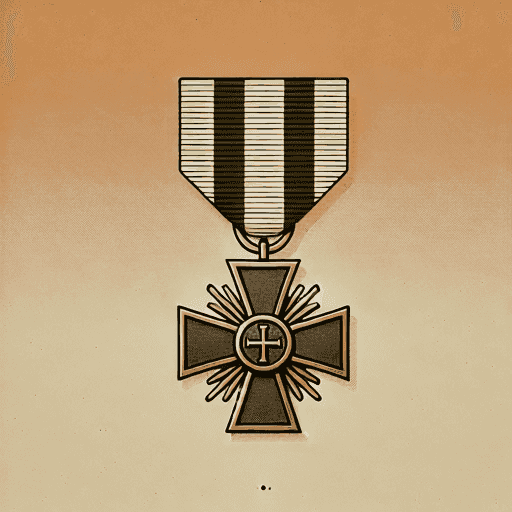
Bruno and Duroc arrive at a cottage and find the body of Hamid Mustafa al-Bakr, an elderly Harki. The victim has been disemboweled and has a swastika carved into his chest. The fire chief reports Hamid’s hands were tied, and Karim says his grandfather was a decorated war hero. Inside, they note that Hamid’s Croix de Guerre medal and a framed photo of his old soccer team are missing from the wall. A photo of the 1998 French national soccer team hangs askew.
Chapter 6 Summary
Bruno questions the neighbors. He finds no one at the first house and proceeds to the home of Pamela Nelson, an English expatriate. He finds her playing tennis with her friend Christine Wyatt, a history professor. Both women provide alibis and report seeing nothing unusual, though Pamela mentions she knew Hamid. After a brief conversation, Bruno departs.
Chapter 7 Summary
That evening, Bruno visits the victim’s son, Momu al-Bakr, to offer condolences. A family friend blames racists for the murder, citing the swastika. Mayor Gérard Mangin arrives, calms the room, and speaks with Bruno privately. Mangin agrees to obtain Hamid’s military records and appoints Bruno as the official liaison for the incoming Police Nationale team.
Chapter 8 Summary
The Police Nationale, led by Chief Detective Jean-Jacques “J-J” Jalipeau, sets up a headquarters in town. Inspector Isabelle Perrault shares surveillance images of far-right activists, and Bruno recognizes Richard Gelletreau, a local doctor’s son. A forensics report shows Hamid was badly beaten before his murder and had €20,000 in his bank account. Isabelle discovers Richard skipped school with a suspicious sick note, and the girl in the photos with him is identified as Jacqueline Courtemine. J-J orders a raid on Jacqueline’s house.
Chapters 1-8 Analysis
Walker sets his story in the fictional French town of St. Denis, where local life is shaped by gastronomy, tradition, and lingering tensions from World War II. The novel’s opening chapters establish Bruno as the embodiment of St. Denis’s communal identity, foregrounding the novel’s thematic engagement with The Importance of Preserving Cultural Identity and Heritage. Bruno’s policing philosophy is rooted in the preservation of local customs and social harmony. His orchestrated resistance to the European Union hygiene inspectors—complete with an early-warning system and a coordinated sabotage—is framed as a defense of heritage against an impersonal, homogenizing bureaucracy. His loyalty is explicitly to his community and its traditions, which he sees as threatened by what he terms “the nuisances of Brussels” (10). Walker frames this conflict as a cultural battle over gastronomy, with Bruno acting as the guardian of centuries-old practices. The detailed inventory of his van, which contains not only police equipment but also fresh eggs, tennis rackets, and homemade vin de noix, serves as a concise portrait of a man whose official duties are inseparable from his integration into the rhythms of local life. He represents a form of authority that derives its legitimacy from relationships rather than from the distant power of the state.
Through the motif of commemorative parades, the narrative introduces its thematic exploration of The Impact of the Past on the Present. The victory parade in Chapter 3 functions as both a ritual of patriotic unity and a stage for repressed historical traumas to resurface. The silent, intense stare between the two feuding Resistance veterans, Jean-Pierre and Bachelot, that Bruno misinterprets as reconciliation, actually marks the mutual decision to commit the novel’s central murder. This gap between the public performance of unity and the private reality of unresolved conflict establishes the central tension that will drive the murder plot. The ceremony brings together disparate elements of French history—Gaullist and Communist Resistance fighters, a British veteran, and Hamid al-Bakr, a Harki veteran whose presence complicates any simple narrative of national identity. This layering of historical experience within a single communal ritual demonstrates that the past is not a settled matter but an active, contested space where old animosities persist.
The setting of St. Denis is anchored by the weekly market—a symbol of The Importance of Preserving Cultural Identity and Heritage. As the social and economic heart of St. Denis and the primary arena for its cultural self-defense, the market is a site of historical continuity and social cohesion. The conflict with the EU inspectors is fought on this ground, transforming the act of selling local produce into a form of cultural resistance. Specific local products, from crottins of goat cheese to confits, are commodities and artifacts of a regional identity that Bruno is sworn to protect. Communal meals, such as the lunch following the parade, further reinforce the role of food in cementing social bonds. Food serves as the tangible expression of the town’s values, connecting the present-day community to a long heritage of agricultural and culinary practice. In this context, the impersonal regulations from Brussels are perceived as an assault on the essence of Périgord life.
The narrative deliberately juxtaposes the idyllic, routine-bound depiction of St. Denis with the sudden intrusion of Hamid’s murder, a structural choice that underscores the fragility of the town’s peace. The first three chapters construct a world defined by gentle conflicts, such as pranks against inspectors and 60-year-old silent standoffs between neighbors. This established tranquility is shattered by Karim’s frantic phone call at the end of Chapter 4. The subsequent discovery of the crime scene presents a brutal contrast to the preceding pastoral imagery. The description of Hamid’s body and the swastika carved into his chest introduces a level of violence that is alien to the community’s established norms. This stark tonal shift highlights the violent potential concealed within the town’s unresolved history and immediately misdirects the investigation. The swastika, a symbol associated with racial hatred and white supremacy due to its appropriation by the Nazi regime, prompts an immediate assumption of a racist, politically motivated hate crime, as voiced by a family friend who blames “racists, fascists […] those Front National swine” (63). This initial interpretation, which prompts the police to investigate far-right activists, is a key element of narrative misdirection, masking the crime’s true origins.
Walker uses a third-person limited perspective that closely follows Bruno, shaping the narrative’s understanding of events and justice. This point of view aligns the reader with Bruno’s pragmatic and community-centric worldview, presenting his circumvention of formal laws as a higher form of justice, introducing the novel’s thematic interest in The Limitations of Traditional Law Enforcement in Delivering Justice. His internal monologue reveals a clear hierarchy of loyalties in which the well-being of his neighbors supersedes the abstract decrees of distant authorities. This perspective is essential for establishing the moral framework within which the novel’s ultimate resolution will operate. Bruno’s manipulation of Captain Duroc, convincing him that the market sabotage was the work of “just kids” (37), demonstrates his skill as a controller of narratives. Conversely, the rapid spread of news about the swastika highlights the uncontrollable nature of rumor and its potential to ignite social tension. This dual focus on controlled and uncontrolled information establishes the complex social dynamics that the official investigation must navigate.

Unlock all 44 pages of this Study Guide
Get in-depth, chapter-by-chapter summaries and analysis from our literary experts.
- Grasp challenging concepts with clear, comprehensive explanations
- Revisit key plot points and ideas without rereading the book
- Share impressive insights in classes and book clubs