Bruno, Chief of Police: A Novel of the French Countryside
44 pages • 1-hour read
Martin WalkerBruno, Chief of Police: A Novel of the French Countryside
A modern alternative to SparkNotes and CliffsNotes, SuperSummary offers high-quality Study Guides with detailed chapter summaries and analysis of major themes, characters, and more.
Chapters 17-25Chapter Summaries & Analyses
Content Warning: This section of the guide includes discussion of graphic violence, racism, substance use, death, and sexual content.
Chapter 17 Summary
The next day, local businessmen complain to the mayor about the negative press, demanding tax relief and Captain Duroc’s transfer. Newspapers run a photo of Bruno shielding women during the violence, earning him praise. Bruno defends Duroc’s actions. The mayor learns Duroc has arrested Karim for assault during the riot. They discuss how a conviction could cost Karim his tobacco license. The mayor goes to comfort Karim’s mother while Bruno heads to the gendarmerie.
Chapter 18 Summary
Residents praise Bruno for his actions during the riot. At the gendarmerie, he learns Magistrate Tavernier is questioning Karim based on video evidence. Bruno alerts the mayor, intercepts a furious Momu outside the station, and asks a local notary to act as Karim’s representative. Inside, he confronts Tavernier and negotiates Karim’s release. The crowd cheers, and after an angry outburst about past injustices, Momu apologizes to Bruno.
Chapter 19 Summary
Bruno has dinner with Pamela and Christine at Pamela’s home. Christine’s research reveals that Hamid’s old soccer team was the Oraniens, an immigrant league team from the 1940s, and provides the contact information for an expert. Grateful for their help, Bruno promises to cook for them in return.
Chapter 20 Summary
At home, Bruno reads through Christine’s research and notes that the Oraniens’ coach was Giulio Villanova. The next day, he investigates Jacqueline’s alibi. A campground owner and a garage attendant confirm she was with Dutch motocross fans on the day of the murder. This places her away from the murder scene, though Bruno suspects it links her to drug traffickers.
Chapter 21 Summary
Bruno briefs Isabelle on Hamid’s connection to the Oraniens and Jacqueline’s new alibi. Isabelle agrees that it clears Jacqueline. She compliments Bruno’s investigative skill and suggests he join the Police Nationale, but Bruno affirms his commitment to St. Denis. Later, while Bruno teaches his children’s tennis class, Christine offers to research Hamid and Villanova at the Resistance archive in Bordeaux. Bruno accepts.
Chapter 22 Summary
Bruno takes Isabelle on a date to the Sorcerer’s Cave. Inside, she is moved by the ancient cave paintings, and they kiss. Afterward, they have a picnic at a ruined castle, where Bruno cooks over an open fire. They have sex and spend the night together.
Chapter 23 Summary
Bruno receives the Oraniens’ team lineup; Hamid’s name is not on it, but the captain is listed as Hussein Boudiaf. Momu confirms Boudiaf is a family name and says the photo of Hussein looks identical to his father, Hamid. J-J reports that Jacqueline has confessed to her involvement with drug traffickers but not the murder. While this weakens the case against Richard, his release is not yet secured and depends on the magistrate’s decision. Hamid’s military pay book arrives from the expert Christine recommended, and its photo and thumbprint match Boudiaf’s records. Christine calls from Bordeaux with another discovery: Villanova and Boudiaf served in the Force Mobile, a brutal Vichy Milice unit that hunted and brutalized suspected Resistance fighters and their families—information that reframes Hamid’s past and suggests a motive of wartime revenge.
Chapter 24 Summary
Studying material on the Force Mobile, Bruno learns that Villanova commanded the unit, which terrorized the Resistance. He concludes Hamid was Hussein Boudiaf and briefs the mayor. Together, they list local families victimized by the unit. Bruno, Isabelle, and J-J drive to the archive in Bordeaux, where records confirm Hamid’s identity as Boudiaf. They find that Boudiaf’s unit raided farms near St. Denis in May 1944. Bruno recalls Resistance veterans Bachelot and Jean-Pierre reacting to Hamid at the victory parade and confirms that both their families were victims of those raids, giving them a motive.
Chapter 25 Summary
On the drive back from Bordeaux, J-J tells Bruno that Isabelle is being transferred to Paris. They present their findings to Magistrate Tavernier, who cites political sensitivity, suspends the investigation, and formally releases Richard. That night, Isabelle tells Bruno her transfer is delayed until September. The next day, Bruno informs the mayor that the case is closed. Later, at the parade commemorating Charles de Gaulle’s first public address following the French defeat during the Battle of France in 1940, which catalyzed the French Resistance, Bruno quietly confronts Bachelot and Jean-Pierre. When he indicates that he knows they killed Hamid for his wartime crimes, they acknowledge his implication with defiant pride before taking their places in the parade. The murder remains officially unsolved.
Chapters 17-25 Analysis
The concluding chapters subordinate the procedural mechanics of the murder investigation to emphasize The Limitations of Traditional Law Enforcement in Delivering Justice. The official legal system, personified by the ambitious magistrate Tavernier, is framed as an external force more concerned with political optics than with moral truth. Tavernier’s pursuit of Karim for assault, based on decontextualized video evidence, demonstrates a legalistic approach that ignores communal realities. Bruno’s intervention, leveraging local alliances, succeeds not by proving innocence but by creating a political problem for Tavernier. This dynamic culminates in the resolution of Hamid’s murder. Once Hamid is revealed as the war criminal Hussein Boudiaf, Tavernier’s primary concern is not prosecuting the killers but containing the political fallout of a trial that would celebrate two Resistance heroes for executing a Nazi collaborator. The formal suspension of the investigation is a deliberate act of legal abdication, where the state chooses political stability over the letter of the law. This resolution suggests that institutional justice is incapable of resolving deeply embedded historical wounds, forcing a return to a more primitive form of retributive justice enacted by the victims themselves.
This resolution underscores The Impact of the Past on the Present by depicting historical trauma as an active agent in the present. The entire murder investigation pivots away from contemporary motives to a crime rooted in the events of 1944. The archival discovery of Hamid’s true identity as Hussein Boudiaf, a commander in the collaborationist Force Mobile, reframes the narrative from a modern hate crime to an act of long-delayed vengeance. This revelation is constructed through the use of historical documents—pay books, mission reports, and photographs—narrative devices that unearth a buried history. The physical evidence from the past becomes the key to unlocking the truth of the present-day violence. The narrative further broadens this theme through Momu’s outburst about past injustices, which connects the Vichy-era atrocities to a continuum of unresolved historical conflict and racial hatred. The swastika carved into the victim’s chest undergoes a symbolic inversion from an emblem of the killers’ ideology to a brand that re-inscribes the victim’s hidden identity as a collaborator, transforming the crime from an act of neo-Nazism into a vigilante execution of a war criminal.
Against the backdrop of historical discovery and political maneuvering, the relationship between Bruno and Isabelle provides a counter-narrative of personal connection. Their developing intimacy, particularly during their visit to the Sorcerer’s Cave and a picnic at a ruined castle, juxtaposes the violence and trauma of the community’s wartime past with new, emerging intimacy and romance. The ancient paintings in the cave serve as a touchstone for a shared humanity that predates the political hatreds driving the central conflict. However, their relationship also mirrors the novel’s central tension between local loyalty and national ambition. Their differing life goals become explicit when Isabelle suggests Bruno join the Police Nationale, leading to her observation that their lives “will take different trajectories” (219). This phrase encapsulates the core divergence between Bruno’s deep-rooted commitment to St. Denis and Isabelle’s drive for advancement within a centralized system. While their romance offers a space for optimism, this fundamental difference underscores the broader thematic conflict between the defense of a specific locality and the demands of a larger state apparatus.
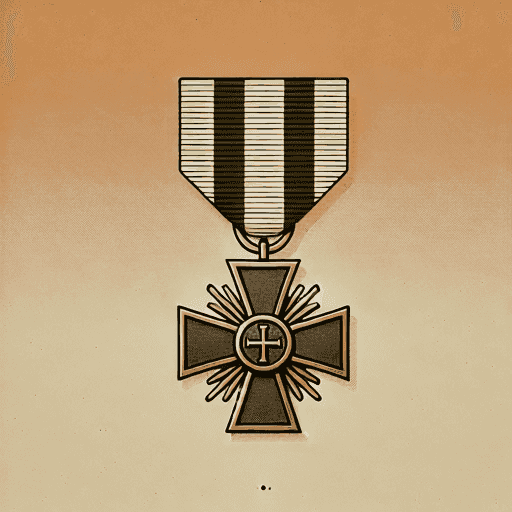
Walker bookends the narrative with the motif of commemorative parades to explore the complex relationship between public memory and private truth. The novel opens with the May 8 victory parade, a ceremony intended to celebrate national unity, which functions ironically as the catalyst for the murder. During this public ritual, Jean-Pierre and Bachelot recognize Hamid and form their unspoken pact. What Bruno initially misreads as a moment of reconciliation between the two rival Resistance fighters is in fact the reignition of a 60-year-old conflict. The novel concludes with the June 18 Resistance Day parade, another ritual of remembrance. Here, Bruno confronts the two veterans, not to arrest them but to achieve a form of unofficial closure. Their defiant, shared proclamation of “Vive la France” (273) is deliberately ambiguous, serving as both a patriotic slogan and a tacit confession. This final scene crystallizes the novel’s argument that official histories and public ceremonies often conceal more than they reveal. The Croix de Guerre functions in parallel as a symbol of this deceptive official narrative. Initially representing Hamid’s heroic French identity, its theft signals a hidden history, and its meaning is ultimately inverted to represent the duality and deception of his character.
Ultimately, the structure of the resolution reinforces the primacy of communal well-being over abstract legal retribution. The narrative deliberately leaves the official murder investigation unresolved, shifting the climax to the quiet, extralegal confrontation between Bruno and the two veterans. This structural choice validates a form of justice that operates outside of the state. Bruno’s deliberate lie to Momu and Karim, in which he fabricates a new direction for the investigation to protect them from the devastating truth of their patriarch’s past, represents a moral calculus in which Bruno, as the guardian of St. Denis, prioritizes the family’s honor and the community’s social cohesion over the principle of full disclosure. Momu’s reflection that some problems are “beyond human solution, but none beyond human kindness” (268) provides the ethical framework for Bruno’s deception. By withholding the truth, Bruno performs an act of well-meant, if paternalistic, kindness, ensuring that the legacy of a war criminal does not destroy the lives of his innocent descendants. This act solidifies Bruno’s role as a steward of his community’s delicate social fabric.

Unlock all 44 pages of this Study Guide
Get in-depth, chapter-by-chapter summaries and analysis from our literary experts.
- Grasp challenging concepts with clear, comprehensive explanations
- Revisit key plot points and ideas without rereading the book
- Share impressive insights in classes and book clubs