Bruno, Chief of Police: A Novel of the French Countryside
44 pages • 1-hour read
Martin WalkerBruno, Chief of Police: A Novel of the French Countryside
A modern alternative to SparkNotes and CliffsNotes, SuperSummary offers high-quality Study Guides with detailed chapter summaries and analysis of major themes, characters, and more.
Chapters 9-16Chapter Summaries & Analyses
Content Warning: This section of the guide includes discussion of graphic violence, racism, substance use, and death.
Chapter 9 Summary
The police raid a house party at Jacqueline’s home in Lalinde, finding teenagers drinking and using drugs. Upstairs, Isabelle and Bruno find Jacqueline asleep in bed with Richard, whose wrists are consensually tied to a bed, while Nazi pornography plays and a camera records. J-J’s team seizes drugs and cash. He orders the arrests of Richard, Jacqueline, and others, noting their links to the Front National. Afterward, Bruno shares his personal history, including his service in Bosnia, with J-J, who warns that the case has drawn attention from Paris and a special magistrate will take charge.
Chapter 10 Summary
Bruno plays his weekly tennis match with the town’s informal leaders, including the Baron, the village’s largest landowner, Xavier, the deputy mayor, and Michel, head of the public works department. As they play, they’re joined by Rollo, the school headmaster, and his friend, Dougal. The conversation turns to the recent arrests, and the Baron discusses his experience commanding Harkis, like Hamid, in the Algerian War. Rollo recalls an old school fight between Richard and Momu al-Bakr’s nephew, adding that Momu later invited Richard to dinner to settle the matter.
Chapter 11 Summary
At the Saturday market, Bruno overhears vendors voicing anti-immigrant views. Mayor Mangin gives him new information: The stolen photograph was of Hamid’s 1940s youth soccer team. They also discuss a planned solidarity march in the village to protest hate crimes. Captain Duroc and the hygiene inspectors arrive to arrest Karim’s nephew for sabotaging their car during the victory parade. Bruno intervenes, challenging their authority. The boy is freed and explains he learned the potato trick from his great-grandfather, a Resistance fighter.
Chapter 12 Summary
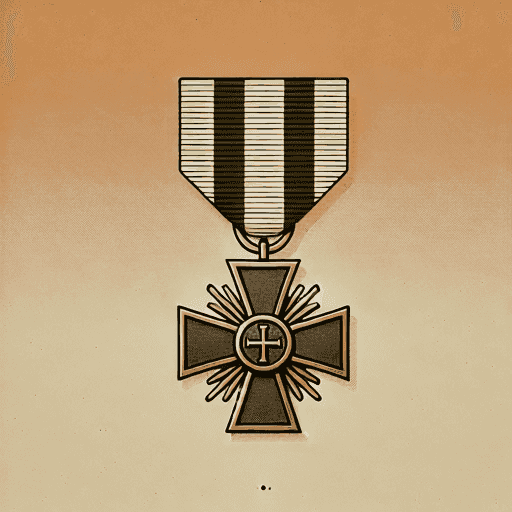
Dr. Gelletreau, Richard’s father, visits Bruno, convinced of his son’s innocence. Bruno offers him guidance. The conversation makes Bruno reflect on how the community helped him restore his cottage, making him feel a part of the town. As he leaves, Dr. Gelletreau mentions that Richard admired Hamid as a winner of the Croix de Guerre. The remark unsettles Bruno, as the missing medal is not public knowledge, and he notes it as a potential lead.
Chapter 13 Summary
Isabelle arrives at Bruno’s cottage with supper. She notices a photo from his past in Bosnia and a book she once gave him, admitting she has read his army file. Isabelle reports that there is no forensic evidence linking Richard or Jacqueline to the murder, though their alibi remains weak. Bruno shares what he learned about Richard’s knowledge of the medal. To follow up on the lead, Bruno calls Momu, who confirms he told Richard about it years ago, resolving the suspicion. After Isabelle leaves, Bruno reflects on his past and regrets not asking her to stay.
Chapter 14 Summary
Bruno and the Baron play a game of mixed doubles tennis against Pamela and Christine. Pamela recalls seeing Richard and Jacqueline emerge from the woods bordering her property, next to Hamid’s cottage, the previous summer. Bruno investigates the woods and finds a clearing overlooking Hamid’s home with signs of past meetings. Realizing its relevance, he decides to call in a forensics team.
Chapter 15 Summary
Bruno, J-J, and Isabelle meet with Lucien Tavernier, a magistrate from Paris. Tavernier asserts his authority, pushing to charge Richard and Jacqueline quickly based on their weak alibi and political affiliations. He dismisses the missing items as distractions, making it clear that the politics of the investigation are a priority. Later, Isabelle presents Hamid’s military file, which shows no record of him before August 1944 and no mention in Resistance archives. A skeptical J-J asks Bruno to discreetly question Hamid’s family about his past.
Chapter 16 Summary
During a solidarity march, Front National supporters stage a counter-protest, waving flags and shouting anti-Arab insults. The local rugby team confronts them, and a brawl erupts. Bruno gets the schoolchildren to safety and wades in to protect a group of women. He takes blows until Isabelle arrives and disables his assailants using martial arts training. Bruno rallies police, orders the protesters’ buses immobilized, and restores order. He gives a statement blaming outside extremists for the violence.
Chapters 9-16 Analysis
These chapters intensify the novel’s central conflict, pitting the insular, relationship-based world of St. Denis against a series of external forces, foregrounding both the challenges and The Importance of Preserving Cultural Identity and Heritage. The confrontation at the weekly market serves as a microcosm of this struggle. Bruno’s deconstruction of the hygiene inspectors’ authority is a defense of communal practice against impersonal, top-down regulation. The scene’s climax—the revelation that the potato-in-the-exhaust-pipe trick was a Resistance tactic—connects contemporary bureaucratic overreach to the historical German occupation, framing the town’s defiance as a continuation of a patriotic struggle. This pattern is reinforced by the arrival of the Parisian magistrate, Tavernier, a figure who represents the political ambitions of the central government. His dismissive attitude toward local complexities highlights the disconnect between the state’s agenda and the nuanced reality of life in St. Denis. The riot at the march of solidarity following Hamid’s death solidifies this tension. Bruno immediately frames the chaos not as an internal failing but as an invasion by “a bunch of outside extremists” (174), reinforcing the idea of St. Denis as a cohesive entity whose primary threats are foreign.
Walker deepens his characterization of Bruno through the personal history that fuels his devotion to St. Denis and his guarded interiority in his developing relationship with Isabelle. His confession to J-J about his past as an orphan and his traumatic service in Bosnia reframes his role as chief of police as a vocation rooted in a profound need for the stability and belonging that his early life denied him. His memories of building his cottage, an endeavor made possible only through the collective effort of the community, undergird his loyalty to the town that has given him a job, a home, and an identity, making his defense of it intensely personal. Inviting Isabelle to his home forces an intersection of his public and private selves, as her knowledge of his military file and her intuitive handling of his personal space—noting a photograph from his past and a book she had given him—breach his emotional defenses. His subsequent reflection, in which he “deeply regretted his tame acceptance of Isabelle’s departure” (141), marks a significant crack in his self-imposed isolation, suggesting a conflict between his desire for connection and protective instincts forged by past trauma.
While the investigation into Hamid’s murder initially focuses on contemporary political extremism, the narrative methodically layers clues that emphasize The Impact of the Past on the Present. Walker portrays historical trauma as an active force shaping present events. The Baron’s monologue on his experience commanding Harkis during the Algerian War, for example, introduces the complex history of French colonialism and betrayal, establishing a thematic parallel to the even more deeply buried trauma of the Vichy era. This historical resonance is echoed in details such as the use of Resistance-era sabotage tactics in the modern market. A crucial structural clue emerges from the official records themselves: Hamid al-Bakr’s military file shows he has no documented existence before August 1944. This literal gap in the state-sanctioned narrative functions as a metaphor for the suppressed aspects of France’s wartime history. The official record is shown to be incomplete, pointing toward a truth that exists only in memory and hidden identities. The motif of commemorative parades is weaponized in this section, as the planned solidarity march, intended as a ceremony of healing, instead becomes the stage for a violent reenactment of historical hatreds.
The formal investigation, particularly after Tavernier’s arrival, serves as a critique of institutional power, advancing the theme of The Limitations of Traditional Law Enforcement in Delivering Justice. Walker depicts the legal and police procedures as a performance susceptible to political pressure and personal ambition rather than an objective pursuit of truth. Tavernier embodies this deficiency, arriving with a preconceived narrative that fits the political objectives of his minister. He actively dismisses evidence that complicates this narrative, such as the missing photograph and medal, because it does not align with the convenient story of right-wing extremists murdering a Muslim veteran. His interpretation that “these young fascists from the Front National would detest the idea of an Arab being a hero of France” (156) highlights the ways the legal system co-opts evidence to fit a script. This approach stands in stark contrast to the methodical instincts of J-J and the local knowledge of Bruno. The symbol of the Croix de Guerre becomes central to this critique. Its meaning is fluid and contested: For Richard’s father, it is proof of respect for military valor; for Tavernier, it is the motive for a racist crime. Its physical absence, however, is a void in the narrative that the official investigation is structurally incapable of exploring because it requires a deeper historical understanding that transcends legal procedure.

Unlock all 44 pages of this Study Guide
Get in-depth, chapter-by-chapter summaries and analysis from our literary experts.
- Grasp challenging concepts with clear, comprehensive explanations
- Revisit key plot points and ideas without rereading the book
- Share impressive insights in classes and book clubs