Bruno, Chief of Police: A Novel of the French Countryside
44 pages • 1-hour read
Martin WalkerBruno, Chief of Police: A Novel of the French Countryside
A modern alternative to SparkNotes and CliffsNotes, SuperSummary offers high-quality Study Guides with detailed chapter summaries and analysis of major themes, characters, and more.
Character Analysis
Content Warning: This section of the guide includes discussion of graphic violence, racism, substance use, and death.
Benoît “Bruno” Courrèges
As the protagonist of the novel, Benoît Courrèges, universally known as Bruno, functions as the guardian of the small town of St. Denis. He is a round and largely static character whose values of community, tradition, and nuanced justice are tested throughout the novel but ultimately reaffirmed. As the municipal police chief, his professional identity is deeply intertwined with his personal life, positioning him as the primary vehicle for Walker’s thematic exploration of The Importance of Preserving Cultural Identity and Heritage. Bruno’s defining attribute is his role as a protector of the St. Denis way of life. He prioritizes the well-being of his community over the rigid enforcement of state laws. For example, he establishes an “early-warning system” (10) to help local market vendors avoid fines from European Union hygiene inspectors, an act that frames him as a defender of local gastronomic culture and economic survival against bureaucratic overreach.
Walker reinforces Bruno’s commitment to St. Denis through his deep love of local gastronomy and respect for its terroir. His van contains not just police equipment but also eggs from his hens, garden peas, tennis rackets, and a picnic hamper, suggesting that his role in the village encompasses a broader stewardship of the community’s social fabric beyond his position in law enforcement. In the novel’s opening chapter, Walker implicitly links St. Denis’s local vendors and their culinary rituals to Bruno’s way of life: “He enjoyed the continuity [his] morning movements represented. They were rituals to be respected—rituals such as the devotion with which each family bought its daily bread only at a particular one of the town’s four bakeries, except on those weeks of holidays when they were forced to patronize another” (8). Bruno’s personal history as an orphan who found a home and purpose in St. Denis deepens this commitment, framing his defense of the town as a mission that is both personally and professionally motivated.
Walker presents Bruno as a man deeply rooted in the terroir, or the unique character of his region. His life is a celebration of the Périgord’s traditions. He is an avid hunter, makes his own vin de noix, cooks with local ingredients, and is deeply connected to the landscape. Food and gastronomy serve as a recurring motif that underscores this connection; his days are structured around meals and the weekly market, symbols of social cohesion. While he is described as the town’s “most eligible bachelor” (28), his primary connections are communal rather than romantic, channeled through his roles as a coach for the youth rugby and tennis teams and as a friend to nearly everyone in town. This deep integration makes him an effective policeman and the moral center of the narrative. His actions consistently affirm the idea that a community’s health depends on nurturing personal relationships and respecting local traditions, even when it means quietly subverting the impersonal authority of the state.
Bruno’s morality is pragmatic and context-sensitive, shaped by his military experience in Bosnia and his deep understanding of his community. He operates in a moral gray area where formal statutes and true justice do not always align, a conflict central to the theme of The Limitations of Traditional Law Enforcement in Delivering Justice. He clashes with Captain Duroc, a foil who represents an inflexible, by-the-book approach to policing. While Duroc demands names and arrests regarding the vandalism of the inspectors’ car, Bruno navigates the situation with diplomacy and local knowledge, understanding that a heavy-handed response would disrupt the town’s delicate social balance. This nuanced perspective culminates in his handling of Hamid al-Bakr’s murder. Upon discovering that the killers are two elderly Resistance veterans, Jean Pierre and Bachelot, avenging wartime atrocities, Bruno implicitly allows their act to stand as a form of justice. By not pursuing their arrest, he acknowledges that the institutional legal system is insufficient to address such deep historical wounds, and that a form of communal, unwritten law has instead restored a moral equilibrium.
Hamid al-Bakr/Hussein Boudiaf
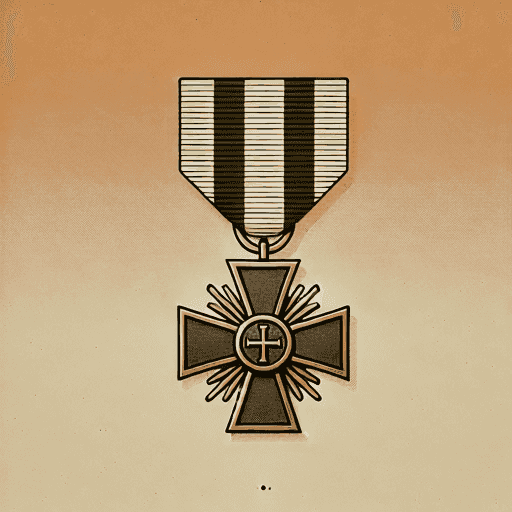
Hamid al-Bakr is a local, reclusive war veteran whose death acts as the inciting incident that drives the plot. He is a posthumously developed round character, initially presented as a decorated war hero, a Harki who fought for France, only to be revealed as a war criminal with a dark and violent history. This gradual uncovering of his past transforms him from the victim of a hate crime into a complex symbol of historical trauma and the deceptive nature of official narratives. The Croix de Guerre medal, which he keeps on his wall, symbolizes his attempts to hide his fraught past behind the mask of French patriotism and valor. He keeps to himself, rarely venturing into the village, and remains devoted to his son, Momu, and his grandson, Karim. He gives every appearance of being a quiet old man seeking peace in his final years. This perception aligns with the official narrative of Harkis as loyal soldiers who were often marginalized and poorly treated by the nation they served. His brutal murder, which includes a swastika carved into his chest, initially positions him as the victim of a racist hate crime, reinforcing the image of him as a sympathetic war hero.
Bruno’s investigation systematically deconstructs this identity, emphasizing the novel’s thematic interest in The Impact of the Past on the Present. The discovery that Hamid al-Bakr is an alias for Hussein Boudiaf, a former soccer player who became a squad leader in the Vichy regime’s brutal Force Mobile, redefines his character as a war criminal and the murder as a calculated act of vengeance carried out by Resistance veterans whose families he once terrorized. The discovery inverts the Croix de Guerre from a symbol of heroism to one of deception. Hamid’s arc suggests that the present is not separate from the past, but directly impacted by it. His decision to return to the very region where he committed his crimes, driven by a desire to be with his family, proves to be a fatal miscalculation, suggesting that historical debts eventually come due.
Captain Duroc
Captain Duroc of the gendarmerie serves as a foil to Bruno and an antagonist to the community of St. Denis. As a flat and static character, he represents the rigid, impersonal, and ultimately ineffective nature of centralized state authority when confronted with local specificity. An outsider from Normandy who seems to do everything “by the book” (17), Duroc’s approach to policing is based on formal rules and hierarchy, contrasting sharply with Bruno’s relationship-based methods. This clash highlights the limitations of Duroc’s approach, underscoring the inadequacy of his style of law enforcement. He attempts to crack down on the “damned hooliganism” (34) of the market vandals by demanding names and arrests, but Bruno easily outmaneuvers him by appealing to the practical consequences of such an approach. During the riot at the victory parade, Duroc’s response is to protect the dignitaries and retreat into the Mairie, while Bruno takes command of the chaotic situation among the people in the square. Duroc’s actions, or lack thereof, demonstrate a failure to understand or effectively manage the community he is assigned to police, underscoring the cultural differences between Paris and rural France.
Isabelle Perrault
Inspector Isabelle Perrault of the Police Nationale functions as both a professional ally and a romantic interest for Bruno. As a round and static character, she embodies a modern, capable, and ambitious form of French law enforcement that contrasts with the more traditional environment of St. Denis. Her arrival introduces an external perspective on the murder investigation and provides Bruno with an intellectual equal. Isabelle is defined by her competence. She is an intelligent and efficient detective, adept at using technology and navigating the police bureaucracy. Her professionalism is matched by her physical strength and athletic prowess, demonstrated when she uses martial arts to rescue Bruno during the riot.
Initially, Isabelle’s urban sophistication and by-the-book training align her more with Duroc’s world than Bruno’s. However, she quickly comes to appreciate Bruno’s methods, recognizing that “[l]ocal knowledge is a wonderful thing” (74). This mutual respect forms the basis of their effective partnership and budding romance. Isabelle acts as a bridge between Bruno’s world and the official investigation, and her presence helps draw out Bruno’s personal history, particularly his memories of Bosnia, offering him a chance for a new romantic connection after a long period of emotional solitude.
The Mayor (Gérard Mangin)
Gérard Mangin, the mayor of St. Denis, is a mentor figure for Bruno and the political guardian of the town. A former political operative in Paris with deep connections to the national government, he is a savvy and effective leader who embodies the ideal of a local patriarch. Like Bruno, he is a protector of the town’s identity and traditions, using his political influence to secure grants for St. Denis and shield it from negative outside forces, highlighting the importance of preserving cultural identity and heritage. He fully supports Bruno’s extralegal efforts to protect the market vendors from EU regulations and demonstrates a nuanced understanding of justice. His relationship with Bruno is akin to that of a father and son, as he hired Bruno on the recommendation of his own son, a former army comrade of Bruno’s. The mayor’s political acumen and Bruno’s on-the-ground knowledge prove a successful alliance.
Momu and Karim al-Bakr
Mohammed “Momu” al-Bakr and his son Karim are minor characters who represent the integration of North African immigrants into French provincial life. Momu is a respected mathematics teacher, and Karim is the town’s rugby star and the owner of the Café des Sports. They are well-liked and fully embedded in the social fabric of St. Denis. Their lives are thrown into turmoil by the murder of their father and grandfather, Hamid, revealing a hidden legacy of war crimes. Their grief and confusion point to the inherited nature of historical trauma by subsequent generations. Bruno’s ultimate decision to conceal the truth about Hamid’s past is an act of protection, aimed at preserving Momu and Karim’s secure and respected place within the community and preventing them from being tainted by the past actions of their patriarch.
Jean-Pierre and Bachelot
Jean Pierre, the bicycle shop owner, and Bachelot, the shoemaker, are two elderly Resistance veterans who function collectively as agents of vigilante justice. For 60 years, they have been bitter enemies, a division stemming from their allegiance to rival Resistance factions, the communists and the Gaullists. Their long-standing, silent feud is a town fixture, symbolizing the unresolved tensions that lie beneath the surface of commemorative unity. Their recognition of Hamid as one of their former tormentors from the Force Mobile leads them to form an unlikely alliance to execute Hamid in an act of extralegal justice, underscoring the text’s thematic examination of the limitations of traditional law enforcement in delivering justice. Bruno’s decision not to arrest them in the novel’s conclusion suggests that for certain historical crimes, vigilante vengeance is the only available form of closure. Their joint action allows them to overcome decades of animosity, resolving a personal conflict by confronting a greater historical evil.
Richard Gelletreau and Jacqueline Courtemine
Richard Gelletreau, the son of the local doctor, and his girlfriend Jacqueline Courtemine serve as red herrings in the murder investigation. As privileged but disaffected teenagers, they become involved with the far-right Front National, making them the immediate and most logical suspects in what appears to be a racist killing. Their trysts in the woods near Hamid’s cottage place them at the scene, and their lies to the police further deepen suspicion. Their storyline introduces the contemporary political tensions surrounding immigration and nationalism in France, but their involvement is ultimately a misdirection. They are guilty of drug possession and political extremism, but not of murder. Their role in the narrative is to highlight the surface-level conflicts of modern France, while the true source of the violence is revealed to be rooted in the much deeper, unresolved conflicts of World War II.
Pamela Nelson and Christine Wyatt
Pamela Nelson, the “mad Englishwoman” (8), and her friend Christine Wyatt are outsiders, representing the wave of British expatriates in the Dordogne, a gentrifying force that restores old properties and is generally welcomed by the community. Pamela’s beautifully restored farmhouse provides a key location where the teenage suspects are placed near Hamid’s cottage. Christine, a historian researching the Vichy regime, provides the information crucial to solving the novel’s central mystery. It is her academic expertise and research skills that uncover the truth about the Force Mobile and Hamid’s true identity as Hussein Boudiaf. Together, the two women function as observers who, despite not being part of the town’s history, become instrumental in uncovering it, underscoring the idea that the past is an archive waiting to be read.

Unlock analysis of every major character
Get a detailed breakdown of each character’s role, motivations, and development.
- Explore in-depth profiles for every important character
- Trace character arcs, turning points, and relationships
- Connect characters to key themes and plot points