Bruno, Chief of Police: A Novel of the French Countryside
44 pages • 1-hour read
Martin WalkerBruno, Chief of Police: A Novel of the French Countryside
A modern alternative to SparkNotes and CliffsNotes, SuperSummary offers high-quality Study Guides with detailed chapter summaries and analysis of major themes, characters, and more.
Summary and Study Guide
Overview
Bruno, Chief of Police (2008) is a mystery novel by British author and journalist, Martin Walker. It is the first installment in the internationally best-selling series of the same name. The novel is a roman policier de terroir, or regional crime novel, a genre that blends a detective story with a deep immersion into the culture of a specific place. Set in the fictional town of St. Denis in France’s Périgord region, the story introduces Benoît “Bruno” Courrèges, the rural town’s sole police chief. A former soldier wounded in the Balkans, Bruno prefers to resolve conflicts through his intimate knowledge of the community rather than by force. His peaceful life is upended by the brutal murder of an elderly North African war veteran, a crime that forces Bruno and the town to confront long-buried secrets from World War II.
Walker, a former foreign correspondent for The Guardian, has owned a home in the Périgord region for decades, and his familiarity with the area informs the novel’s depiction of rural French life. The character of Bruno was inspired by a real local policeman whom Walker met through his town’s tennis club. Thematically, the novel explores The Limitations of Traditional Law Enforcement in Delivering Justice, The Impact of the Past on the Present, and The Importance of Preserving Cultural Identity and Heritage. The series has been translated into more than 15 languages and has been adapted for television in Germany.
This guide refers to the 2010 Vintage Books edition.
Content Warning: The source material and guide feature depictions of graphic violence, racism, substance use, death, and sexual content.
Plot Summary
The narrative opens in the small French town of St. Denis, introducing Benoît “Bruno” Courrèges, the town’s sole municipal police chief. His community-focused policing includes acts of solidarity such as protecting local market vendors from EU hygiene inspectors, a commitment that leads to a town-wide prank against the inspectors’ car.
Two days later, on May 8, Bruno oversees the annual victory parade, celebrating France’s liberation from German occupation during World War II. Among the participants are two feuding Resistance veterans, Jean-Pierre and Bachelot, and an elderly man named Hamid Mustafa al-Bakr, a Harki veteran of war—a term for an Algerian person who fought for the French. During the ceremony, Jean-Pierre and Bachelot, who have not spoken in decades, are seen staring intently at one another, a moment Bruno misinterprets as a sign of reconciliation.
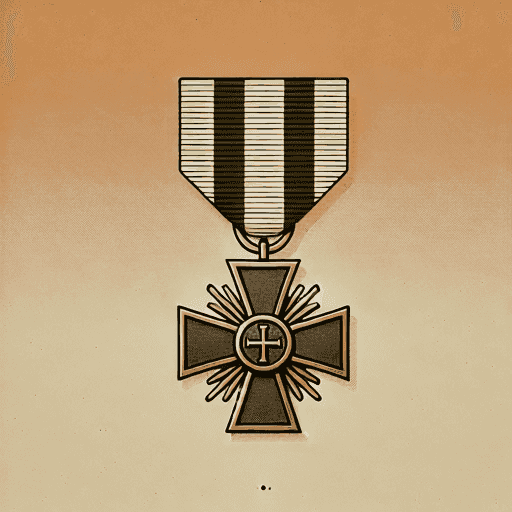
Captain Duroc confronts Bruno about the sabotage, but their argument is cut short by a frantic call from local rugby star and owner of the Café des Sports, Karim, who has found his grandfather, Hamid, murdered at his remote cottage. At the gruesome scene, Bruno and Duroc discover that Hamid has been brutally disemboweled, with a swastika carved into his chest. Karim reports that two items are missing from the wall: his grandfather’s Croix de Guerre medal and a photograph of his old soccer team from the 1940s. Bruno begins the investigation by interviewing neighbors, including Pamela Nelson, an Englishwoman who runs a guesthouse, and her friend Christine Wyatt, a historian.
The Police Nationale from Périgueux, led by chief detective Jean-Jacques “J-J” Jalipeau and his colleague, Inspector Isabelle Perrault, officially takes over the case. Bruno remains involved due to his local knowledge. The swastika on Hamid’s chest suggests that the murder is a hate crime, so Bruno reviews photos of rallies held by the local chapter of Front National, a far-right political party in France. Bruno identifies Richard Gelletreau, the son of a prominent local doctor, and his girlfriend, Jacqueline Courtemine. In attempting to track down Richard, the police discover the boy has a forged sick note from school and raid Jacqueline’s home, suspecting that Richard is there. Inside, they find a party with drugs and members of the Front National’s security squad. Richard and Jacqueline are arrested.
The case’s political sensitivity leads to the assignment of an ambitious young magistrate from Paris, Lucien Tavernier. A solidarity march for Hamid in St. Denis erupts into a riot when Front National supporters clash with locals condemning the hate crime. Bruno is injured in the brawl and is rescued by Isabelle, who uses martial arts to fend off his attackers. The investigation stalls until Pamela reveals that Richard and Jacqueline used to meet in the woods overlooking Hamid’s cottage. Bruno discovers that on the day of the murder, Jacqueline spent several hours at a local campground with a group of Dutch men involved in drug trafficking. This discovery links Jacqueline to a drug operation but also provides her with a potential alibi for Hamid’s murder.
With Christine’s research assistance, Bruno identifies Hamid’s soccer team as “les Oraniens,” coached by a man named Giulio Villanova. He obtains the team roster but finds Hamid’s name is not on it; the captain is listed as Hussein Boudiaf, a family cousin whom Hamid’s son, Momu, says bore an uncanny resemblance to his father. Military archives reveal Hamid al-Bakr has no official record before joining the French Army in August 1944. Christine’s research in the Jean Moulin Resistance archives in Bordeaux uncovers a shocking truth: during the war, Villanova commanded the Force Mobile, a brutal Vichy Milice (paramilitary units funded by German aid during WWII to fight the French Resistance) that terrorized the St. Denis area. One of his squad leaders was Hussein Boudiaf.
At the archives, Bruno, Isabelle, and J-J use photos and thumbprints from old pay books to confirm that Hamid al-Bakr was, in fact, Hussein Boudiaf, a notorious war criminal whose unit led punitive raids on local farms in 1944, including those belonging to the families of both Jean-Pierre and Bachelot. Bruno realizes the two old men must have recognized Boudiaf at the victory parade, and their silent stare was a pact for revenge. They murdered him two days later, carving the swastika not as a symbol of their politics but as a brand that exposed the victim’s true identity. Faced with the political scandal of trying two Resistance heroes for executing a Nazi collaborator, Tavernier and the French government quietly suspend the murder investigation, and Richard Gelletreau is released. Bruno lies to Momu and Karim, telling them the investigation has hit a dead end to protect them from the devastating truth of Hamid’s past. At the June 18 Resistance parade, Bruno quietly confronts Jean-Pierre and Bachelot, whose defiant pride confirms their guilt. The murder remains officially unsolved, and the story concludes with Bruno beginning a romantic relationship with Isabelle.

Unlock all 44 pages of this Study Guide
Get in-depth, chapter-by-chapter summaries and analysis from our literary experts.
- Grasp challenging concepts with clear, comprehensive explanations
- Revisit key plot points and ideas without rereading the book
- Share impressive insights in classes and book clubs