Brutal Prince
46 pages • 1-hour read
Sophie LarkBrutal Prince
A modern alternative to SparkNotes and CliffsNotes, SuperSummary offers high-quality Study Guides with detailed chapter summaries and analysis of major themes, characters, and more.
Symbols & Motifs
Content Warning: This section of the guide includes discussion of graphic violence, physical abuse, emotional abuse, sexual content, and cursing.
The Arranged Marriage and Wedding Rings
Callum and Aida’s arranged marriage functions as a key symbol in the novel, representing a forced political alliance that transforms into a genuine, chosen partnership. Initially, the marriage is a mechanism for damage control, a punishment for Aida’s recklessness, and a desperate truce between warring families. Her father declares, “You lit the match that started this blaze—it’s you who will put it out again. Not by violence but by your own sacrifice. You’ll marry Callum Griffin” (49). This command frames the union as a penance, stripping Aida of her agency and binding her to an enemy, foregrounding the novel’s thematic interest in Navigating Identity Within the Confines of Family Legacy.
Aida’s two wedding rings map the couple’s journey from coerced alliance to mutual respect and affection. The first ring, chosen by Callum’s mother, symbolizes their families’ contract—an impersonal, transactional object imposed upon Aida. The scene in which Callum acknowledges the impersonal nature of the ring signals the ways he’s coming to know and care about Aida as a person. He reflects, “Looking at [the ring] on her hand, I realize it doesn’t really suit her. Aida would have picked something more comfortable and casual” (123). When Oliver Castle destroys the first ring, he symbolically attacks the fragile, arranged foundation of their union. However, this act of violence creates an opportunity for renewal. The second ring, chosen by Aida, symbolizes their genuine bond and commitment to their marriage. Callum’s choice to repeat his vows as he slips the new ring on Aida’s finger marks the relationship’s ultimate transformation from a legacy-driven mandate to a personal, freely chosen partnership.
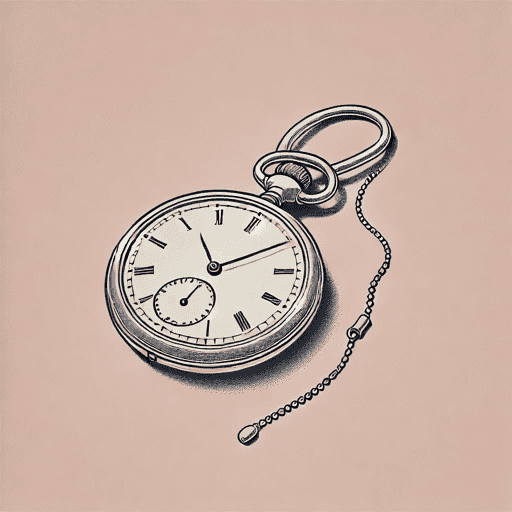
Callum’s Grandfather’s Pocket Watch
Callum’s grandfather’s pocket watch evolves across the novel as a layered symbol of family legacy, order, and the high stakes of trust in a world defined by violent rivalry. Positioned on the library mantel, the watch initially represents the Griffin heritage—a tangible link to the past and the immense pressure Callum feels as the sole male heir. When Aida impulsively steals it, he views it as a direct violation of the legacy Callum is sworn to protect. His discovery that “grandfather’s pocket watch is missing” (24) solidifies the personal nature of the feud and serves as the direct catalyst for the violent confrontation on the pier that leads to their arranged marriage. The watch’s subsequent plunge into the dark waters of the lake symbolizes the seemingly insurmountable chasm of hatred and mistrust between Aida and Callum.
For most of the novel, the watch’s absence represents their broken relationship. Its recovery and return in the final chapter complete its symbolic arc. Lark frames Aida’s efforts to hire a diver to find the watch and restore it as an act of penance and devotion, demonstrating her commitment to healing the wounds she inflicted. As Callum holds the recovered watch, he recognizes the depth of her transformation and his own, thinking, “Only Aida would believe she could get the watch back. […] I love this woman” (269). As the novel closes, the restored heirloom represents both the Griffins’ past and a new, shared future built on forgiveness and earned trust.
Fire
The recurring motif of fire represents the volatile, destructive, and ultimately transformative nature of Aida and Callum’s relationship. Fire bookends the novel’s primary conflict, appearing first as the inciting incident and last as the setting for the climax. The library fire Aida accidentally starts is a chaotic act of rebellion that literally ignites the plot, forcing a hostile truce between the two families. The imagery of fire is explicitly linked to the generations-long conflict when Aida’s father explains, “This feud has been going on too long. It’s an ember that smolders and continually bursts into flame, burning everything we’ve worked for” (48). This metaphor establishes fire as the symbol of their families’ legacy of violence and passion, a force that both consumes and connects them.
The motif culminates in the inferno at the beach house, where Oliver traps Aida, mirroring the initial blaze but with far higher stakes. Here, Callum and Aida must rely on each other to survive, their trust forged in the very element that first threw them together. Aida’s daring rescue of Callum and their escape from the collapsing, burning structure solidifies their bond independent of their families’ political alliance. The motif suggests that the same passionate, chaotic energy that threatens to destroy them is also the force that purges old animosities and allows for the emergence of a powerful, genuine love.

Unlock the meaning behind every key symbol & motif
See how recurring imagery, objects, and ideas shape the narrative.
- Explore how the author builds meaning through symbolism
- Understand what symbols & motifs represent in the text
- Connect recurring ideas to themes, characters, and events