48 pages • 1-hour read
Butcher's Crossing
A modern alternative to SparkNotes and CliffsNotes, SuperSummary offers high-quality Study Guides with detailed chapter summaries and analysis of major themes, characters, and more.
Part 2, Chapters 1-4Chapter Summaries & Analyses
Content Warning: This section of the guide includes discussion of animal cruelty and animal death, substance use, sexual content, and death.
Part 2, Chapter 1 Summary
The four men depart before sunrise on August 25, Miller leading the way. Charley Hoge drives the wagon with the oxen team, while the others ride on horseback. The ride is hot and harrowing, and Schneider worries about when they’ll find water for the animals. They see the river and rest after traveling only eight miles that morning. Schneider is doubtful about Miller’s route, but Miller explains his plan to follow the Smoky Hill trail: “‘[I]t follows the river pretty close all the way into the Colorado Territory. It’s easy traveling; should take us less than a week’” (72).
After a brief rest, they resume the trek. Along the way, they see signs of other buffalo hunters, including an abandoned camp. Andrews has never ridden this long, and his body hurts. He moves to the wagon and rides with Charley. They make camp at the end of the day, and Andrews watches as Charley handles all the camp duties, such as making the fire and cooking dinner. Exhausted, Andrews falls into a deep sleep.
Part 2, Chapter 2 Summary
The expedition continues across the plains, and the men encounter signs of the buffalo trade’s decline. They come across a buffalo trail and several dead buffalo, prompting Miller to reminisce about how the land was once full of buffalo as far as the eye could see. Schneider openly doubts that they’ll find any buffalo where Miller is leading them.
The men pass a struggling family traveling with a lame donkey. Miller tries to help by telling them they won’t make it and pointing toward a shortcut to the nearest town, but they don’t listen. Andrews observes how the journey is already changing the men physically. Their faces become weathered, their beards grow, and they sink into a routine of survival. Andrews imagines “himself to be like the land, without identity or shape” (77-78). Charley sings hymns as he drives the wagon, and sometimes at night when he drinks whisky. After six days of travel, the Smoky Hill Trail ends.
Part 2, Chapter 3 Summary
Miller insists that they leave the Smoky Hill Trail to save a week of travel time, even though doing so means abandoning their primary water source. Assuring the others that they’ll find water within a day, he orders them to fill every available container before turning off the trail. Schneider expresses strong skepticism, noting that Miller hasn’t traveled this route in more than a year and that he’s putting the group at risk, but agrees to Miller’s plan.
They fail to find the water Miller promised, and their supplies dwindle. The men grow tense and irritable, especially Schneider, whose doubts deepen as the hours pass without relief. Miller remains outwardly calm and confident, refusing to acknowledge the risk of his choice or that they’re lost. Schneider argues that they should turn south toward Arkansas, believing that it offers the best chance of finding water. Miller rejects the idea, insisting that the livestock wouldn’t survive such a route. Schneider threatens to break away from the group and attempts to persuade Andrews to leave with him, reminding him that he owns the wagon and the stock that make the expedition possible. Andrews says he’ll stay with Miller, and Schneider concedes.
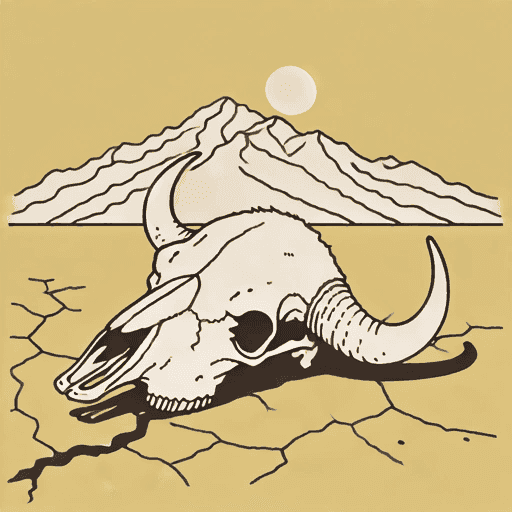
The men travel at night to avoid the brutal daytime heat, but their situation continues to deteriorate as their water runs out completely. The oxen’s tongues swell, and dehydration weakens them. Miller gathers what remains of the men’s canteen water and uses it to wet the oxen’s mouths. Furious, Schneider insists that the animals will die regardless and accuses Miller of having doomed both the livestock and the men. Miller says the men will rely on Charley’s whisky. Exhausted and dehydrated, Andrews becomes disoriented while traveling, nearly losing the team altogether. The next morning, they finally find a stream and stop to drink, spending the entire day resting to allow both themselves and the livestock time to recover.
Traveling with water again, they see the mountains on the 14th day. Andrew is transfixed by the wonders of the new landscape (compared to the dull, monotonous prairie), and he feels “a richness and a fulfillment for which he had no name” (106). The men come upon the railroad, a sight that astonishes both Andrews and Miller, who view it as a striking marker of progress cutting through the wilderness. Schneider, however, immediately recognizes it as a bad sign, noting that buffalo don’t come near the tracks. At a river crossing, Miller goes ahead alone to scout the land but returns confused, admitting that the terrain is “different” than he remembers. Schneider responds with anger and frustration, while Andrews still revels in the beauty of the mountains.
The men spend much of the day traveling along the riverbed. Miller appears uncertain and disoriented, unsure of where to turn to begin the climb into the mountains. Frustrated, Schneider expresses doubt regarding Miller’s leadership. The next day, Miller finally finds what he was searching for, and the group begins its ascent into the forested mountains. Schneider remains skeptical, but they discover that they’re following a buffalo trail. The steep, punishing climb forces the men to strain together to push the wagon up the narrow trail. As the altitude increases, Andrews becomes physically overwhelmed and briefly loses consciousness. The climb continues for hours, exhausting and relentless, and by the time they reach the top, Andrews is on the verge of collapse. When they finally emerge onto a flat plateau, the men are stunned by what lies before them: a vast, hidden valley that appears to be “a land where no human foot had touched” (117), filled with thousands of buffalo. They prepare to make camp.
Part 2, Chapter 4 Summary
The men make a comfortable camp near a rock face that shields them from the wind. Charley sets up his cooking supplies, while the others make beds. After dinner, Miller begins making bullets, and Schneider teaches Andrews how to sharpen the knives and the uses of each knife size for skinning buffalo. Miller draws a map of the valley, and they formulate a plan to harvest the buffalo and collect their skins. Miller will shoot, Andrews and Schneider will skin, and Charley will come behind them and collect the skins in the wagon. Miller says there are so many buffalo that they could stay there all winter to hunt.
Part 2, Chapters 1-4 Analysis
Williams intensifies the novel’s critique of westward expansion by placing the expedition in sustained conflict with the land itself. The journey into the Colorado Territory exposes the fragility of human control, the falseness of frontier mythology, and the gradual erosion of Will Andrews’s idealism. Andrews observes a change when the men leave the last trace of established travel: “Another strangeness was waiting for him when they left the trail and went into the Colorado Territory” (72). This “strangeness” is a growing instability, as the land resists the meanings that Andrews has projected onto it. The bedraggled family that the hunters pass on the trail foreshadows the dangers ahead. Miller’s grim assertion that they won’t make it establishes his hard-earned knowledge of the wilderness, which contrasts with Andrews’s lingering idealism. The family’s exhaustion and vulnerability mirror the fate that nearly overtakes the hunting party itself, reinforcing the novel’s portrayal of the frontier as indifferent to human hope or resolve. Through this brief encounter, Williams signals that westward movement isn’t a story of progress or renewal, but one of attrition, in which survival is uncertain and optimism is often fatally misplaced.
Through The Deconstruction of the American Frontier Myth, Williams thematically dismantles the belief that the West is abundant and renewable. Rather than encountering a pristine wilderness, the men move through a scarred landscape littered with dead buffalo, abandoned routes, and the railroad’s intrusion. The tracks reveal that human development has already altered the wilderness beyond recovery, as buffalo avoid the noise and disturbance of industrial progress. Even Miller’s authority as a seasoned guide begins to erode when the land fails to match his memory. His admission, “It seems like the country has changed […] It seems like everything is different from what it was” (108), exposes the flawed assumption that the West is fixed and can be reclaimed through will or knowledge. Although the hidden valley filled with buffalo appears to confirm the fantasy of an untouched West, its isolation underscores how rare such spaces have become. The men’s immediate response of manufacturing bullets reveals that their practices don’t separate discovery from exploitation. The valley isn’t a sanctuary; it’s a resource awaiting destruction.
The expedition’s near-fatal dehydration thematically foregrounds Human Arrogance Versus Nature’s Indifference. Miller’s decision to abandon the Smoky Hill Trail reflects confidence born from experience and pride, yet the plains offer no forgiveness. Without water, the men experience the land as an impersonal force that strips them of agency and coherence. Andrews experiences this erosion acutely: “Day by day the numbness crept upon him until at last the numbness seemed to be himself. He felt himself to be like the land, without identity or shape” (77-78). Rather than mastering nature, Andrews is depleted by it, losing individuality as his physical limits are exposed. Survival comes by accident, reinforcing the land’s indifference to human intention. The episode demonstrates how easily confidence collapses when confronted with environmental reality.
The suffering of the horses and oxen, driven beyond their limits to satisfy the men’s pride and misplaced confidence, foreshadows the violence to come in the valley. Treated as expendable instruments rather than living creatures, these animals bear the consequences of human arrogance long before the buffalo do. Exhaustion and injury put them close to death, anticipating how the same logic of domination later justifies the mass slaughter of the buffalo herd. In this way, Williams establishes a pattern in which human ambition first manifests itself against the vulnerable and dependent, suggesting that the valley’s apparent abundance will inspire repetition of the same destructive impulse.
This lesson continues during the steep, exhausting, and dangerous ascent into the mountains, during which Andrews collapses as he quickly learns that the landscape demands endurance, not domination. As his body changes under strain, Andrews reflects on this: “He felt a leanness and a hardness creep upon his body; he thought at times that he was moving into a new body, or into a real body that had lain hidden beneath layers of unreal softness and whiteness and smoothness” (86). Though this journey brings transformation, it’s born from deprivation rather than insight. Andrews’s education is physical and corrective, not transcendent. The land reshapes him through suffering rather than revelation.
In this section, the theme of Disillusionment and the Loss of Idealism emerges, particularly through Andrews’s experience. His Emersonian expectations of spiritual clarity give way to silence and uncertainty as the journey progresses. He increasingly withdraws during disputes between Miller and Schneider, unsure of his own authority or purpose. However, his idealism doesn’t vanish entirely. When the men reach the mountains, Andrews is overwhelmed by awe. The sight briefly restores his belief that suffering leads to meaning, that nature rewards endurance. This moment reveals that the frontier myth persists because it provides flashes of beauty that seem to justify the immense cost. Andrews’s rapture exists alongside his growing awareness that the land isn’t benevolent, that memory is untrustworthy, and that mastery is an illusion. The valley’s apparent purity is fragile, and the men’s presence signals its end. Andrews’s idealism survives the journey, but it’s already compromised. By allowing Andrews to glimpse transcendence even after he nearly dies, Williams makes the eventual collapse of that belief inevitable and more devastating.

Unlock all 48 pages of this Study Guide
Get in-depth, chapter-by-chapter summaries and analysis from our literary experts.
- Grasp challenging concepts with clear, comprehensive explanations
- Revisit key plot points and ideas without rereading the book
- Share impressive insights in classes and book clubs