51 pages • 1-hour read
Cackle
A modern alternative to SparkNotes and CliffsNotes, SuperSummary offers high-quality Study Guides with detailed chapter summaries and analysis of major themes, characters, and more.
Symbols & Motifs
Content Warning: This section of the guide includes discussion of gender discrimination and cursing.
Mirrors
Mirrors are a symbol that highlight both The Fear of Being Alone and the Freedom of Autonomy as well as The Empowering Nature of Female Friendship. Early on, Sophie explains that she collects mirrors, which she hangs in a gallery in her home. She says, “Seems narcissistic to collect mirrors. But I think there’s something special about mirrors. Art that frames you. They tell you the truth, if you look hard enough, for long enough” (62). Sophie sees the self as “art,” as something worthy of being framed, because she recognizes how unique and interesting she is. It is this same sense of confidence that she eventually passes on to Annie through their friendship. Her collection also suggests her freedom—she can choose to see herself any way she chooses because she isn’t beholden to someone else’s perception of her.
This lesson takes some time for Annie to learn because she is so self-critical, having internalized society’s rules governing women’s appearances and behavior. One day, after getting ready for school, she says, “I leave my apartment sooner than necessary, just to get away from the mirror” (87). At this point in her story, Annie doesn’t experience singleness as a kind of freedom but, instead, as a kind of lack. As a result, she finds herself wanting and avoids looking at herself in the mirror. She doesn’t take care of herself, choosing to drink excessively instead of eating wholesome meals or engaging in any other form of self-care.
However, when she begins to treat herself as someone who deserves care, her perspective on mirrors changes. She says, “I watch in the mirror while I massage the lotion into my face, and my skin glows in its wake” (117). Further, when Annie puts on the soft and stylish clothes she gets from Sophie, she notes that she looks “exceptional” when she sees her reflection. The more time Annie spends with Sophie, the more empowered she becomes as she learns to see herself as she really is—evidenced by her reflection in the mirrors—rather than how she measures up to some unrealistic social ideal.
Spiders
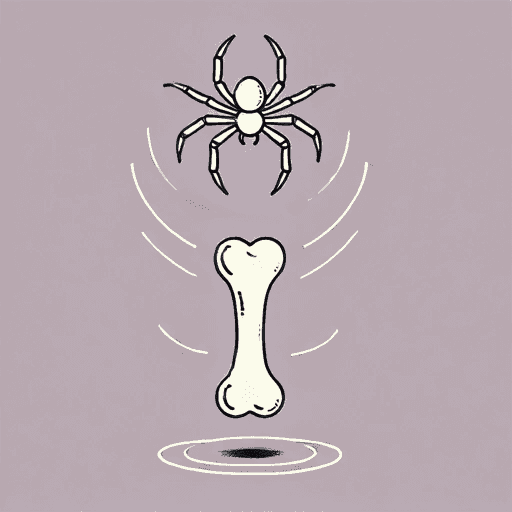
The many spiders that surround Annie and Sophie are a motif, highlighting Small-Town Conformity and the Policing of “Difficult” Women. Spiders are helpful creatures, eating insects that can do a great deal of damage, among other things. However, spiders are nonetheless maligned, treated as though they are scary and gross. In the novel, spiders are helpful, friendly, and caring. When Annie first meets Ralph, his cheerful smile immediately makes her feel better. One day, when she leaves her home, she says goodbye to another spider, and it waves back. While Sophie cooks in Annie’s kitchen, “A spider gathers up the rogue scraps of blemished potato skin and onion, slowly rolling them toward the trash” (139). Similarly, Sophie’s influence in Rowan has helped to make it a place where everyone wants to live. Rose and Deirdre credit her for everything from the good harvests to the weather. Despite Sophie’s helpfulness and generosity, she is misjudged simply because she is a witch; this is similar to the way spiders are seen as frightening simply because they are spiders.
It is therefore significant that Sophie is associated with spiders and that Annie, even before she meets Sophie, has an atypically gentle response to them. Sophie doesn’t conform to social etiquette: She won’t smile if she doesn’t feel like smiling, and she isn’t kind to people who are rude to her. In short, she won’t change herself to make them more comfortable. Neither can spiders do this; they are what they are, and they cannot change. Sophie and Annie’s affectionate dynamics with spiders thus reflects how they, too, are social outcasts who are not always understood.
Annie’s Haircut
Annie’s new, short haircut symbolizes The Fear of Being Alone and the Freedom of Autonomy. When Sophie completes the haircut, Annie is amazed by how much lighter she feels. She says, “I never realized how much bullshit is bound to the bottom of your hair. How it carries with it the years and experiences, all it has witnessed, has endured. The reason you can’t let go of your past is that it’s still attached” (217). Sophie empowers Annie by giving her the fresh new cut, an act that distances Annie from her former life with Sam and gets her to see herself in a new way.
Further, Annie feels freer as a result of the cut. She says, “That weight on your shoulders, the strain on your back and neck. It’s your dead ends” (217). Annie’s old life was a dead end too, something she soon realizes: With Sam, she was simply “enduring” her life. Without Sam, and without the ways in which their relationship circumscribed her life and choices, Annie gains a better understanding of the autonomy her single status gives her.
Witchcraft
Witchcraft is a key motif that reflects Annie’s growing empowerment. Her confidence and even her appetite for life grow as a result of her appreciation for first Sophie’s powers, and then her own.
Sophie’s self-possession is inspirational and aspirational to Annie, with Sophie’s status as a “witch” and magical abilities embodying the inner strength and independence Sophie possesses. As Annie becomes less susceptible to men’s opinions of her, she starts to manifest powers herself: After enduring Dan’s prying questions and misogynistic comments, Annie inadvertently uses her new power to fill his mouth with bones. The next day, she remembers how she felt, saying, “I conjure it [….]. The feeling of watching Dan spit bones from his wretched mouth. The feeling of dancing on the grass, in the moonlight. Of being seen by Lynn and not caring” (196). This ability not to care what others think causes her to think, “maybe I’m more myself than I’ve ever been” (196).
Embracing her powers allows Annie to imagine a new life for herself, one that isn’t dependent on anyone else’s feelings about her. When she levitates the chicken bones, she exclaims to Ralph, “I’m fucking magic! […] Me! Can you believe it?” (211). Prior to her realization that she is a witch, Annie struggles with being alone, believing she can only feel happy when she’s got someone else to make her happy. However, when she’s alone with her powers, she says, “‘I’m happy […].’ Then I say it again because it’s true and because I like the way it sounds” (218).
When she realizes how little Sam actually offers her, she thinks, “I know what it’s like not to have to endure. I know what it’s like to manifest things through sheer force of will. I’ve smashed teacups, broken glass, forced bones into someone’s mouth. I’ve made these things happen with my mind. Manipulated the physical world with my thoughts” (276). Recognizing and embracing her power as a witch allows Annie to develop her confidence as a woman. She realizes that she should not have to change herself to make Sam, or anyone else, comfortable.

Unlock the meaning behind every key symbol & motif
See how recurring imagery, objects, and ideas shape the narrative.
- Explore how the author builds meaning through symbolism
- Understand what symbols & motifs represent in the text
- Connect recurring ideas to themes, characters, and events