Ceremony
Ceremony
A modern alternative to SparkNotes and CliffsNotes, SuperSummary offers high-quality Study Guides with detailed chapter summaries and analysis of major themes, characters, and more. For select classroom titles, we also provide Teaching Guides with discussion and quiz questions to prompt student engagement.
Summaries & Analyses
Quizzes
NEWReading Tools
Games
Important Quotes
“I will tell you something about Stories,
[he said]
They aren’t just entertainment.
Don’t be fooled.
They are all we have, you see,
all we have to fight off
illness and death.”
(Page 1)
Ceremony is framed as a story within the story that Thought-Woman dreams up. This section of verse serves as an early marker of The Power of Stories, portraying them as vital to life and as important as good food and water.
“Years and months had become weak, and people could push against them and wander back and forth in time. Maybe it had always been this way and he was only seeing it for the first time.”
(Page 17)
Tayo’s internal world is full of jumbled memories that slip and slide into one another. This chaotic recall is a common symptom of PTSD. Tayo’s disjointed sense of time structures Ceremony. The novel lacks typical divisions like chapters; instead, stories and memories flow in and out of one another as they would in Tayo’s head, often in confused ways.
“He lay there with the feeling that there was no place left for him; he would find no peace in that house where the silence and the emptiness echoed the loss.”
(Page 30)
Tayo’s grief seems like a permanent fixture in his life in the beginning of the novel. The only home he has ever known is marked by the absence of the people he loved. Tayo’s grief gives positive, material force to things usually conceptualized as a lack (silence, emptiness): They can, paradoxically, echo.
“It took a long time to explain the fragility and intricacy because no word exists alone, and the reason for choosing each word had to be explained with a story about why it must be said this certain way. That was the responsibility that went with being human, old Ku’oosh said, the story behind each word must be told so there could be no mistake in the meaning of what had been said; and this demanded great patience and love.”
(Pages 32-33)
If stories are vital to life, it is because of the individual words that create them. The same reverence given to stories is therefore given to words and how they come to mean this or that. The power Ku’oosh associates with words emphasizes the severity of the curse that Tayo laid on the jungle and its humidity.
“The first day in Oakland he and Rocky walked down the street together and a big Chrysler stopped in the street and an old white woman rolled down the window and said, ‘God bless you, God bless you,’ but it was the uniform, not them, she blessed.”
(Page 38)
Indigenous Americans often experienced respect from white Americans for the first time while serving in World War II. Tayo makes it clear that he was never fooled into thinking he was being respected: Once the uniforms came off, the same biases Indigenous Americans had experienced before the war resurfaced. This lends a racial element to Indigenous veterans’ experience of Alienation and Isolation in Post-WII America.
“[The] fifth world had become entangled with European names: the names of the rivers, the hills, the names of the animals and plants—all of creation suddenly had two names: an Indian name and a white name. Christianity separated the people from themselves; it tried to crush the single clan name, encouraging each person to stand alone, because Jesus Christ would only save the individual soul; Jesus Christ was not like the Mother who loved and cared for them as her children, as her family.”
(Pages 62-63)
Mount Taylor is the English name for Tsoodził, a mountain sacred to several groups of Pueblo peoples, including the Laguna. Legal documents use this European name to divide up the mountain into different private properties for ranching, mining, and destructive logging. The colonialist words for places and things are overlaid on the Indigenous meanings, often in violent ways (as with Floyd Lee’s ranch).
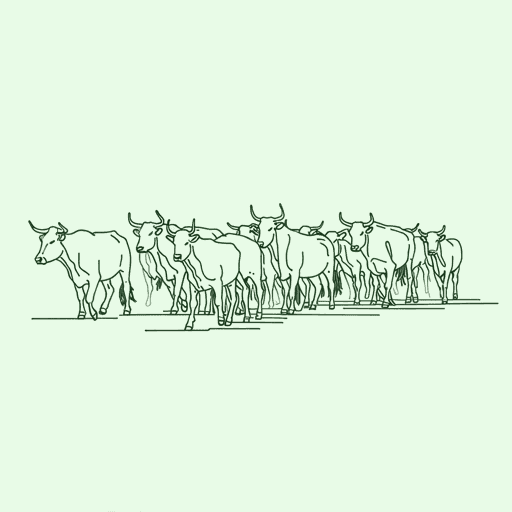
“Cattle are like any living thing. If you separate them from the land for too long, keep them in barns and corrals, they lose something. Their stomachs get to where they can only eat rolled oats and dry alfalfa. When you turn them loose again, they go running all over. They are scared because the land is unfamiliar, and they are lost. They don’t stop being scared, either, even when they look quiet and they quit running.”
(Page 68)
Animals, like people, suffer from colonization cutting them off from nature. Josiah’s words echo Tayo’s comments on the “plastic and neon, the concrete and steel” that lure people into the witchery of US culture and participation in the destroyers’ plans (190). Animals fall victim to the same trap: The cattle were previously kept inside, like a person in a city, and have little idea how to live in nature.
“She wanted to prowl those warm close places until she discovered the end because at that time she had not yet seen that the horizon was an illusion and the plains extended infinitely; and up until that final evening, she had found no limit.”
(Page 78)
Occasionally, Ceremony shifts to the perspectives of people other than Tayo, all of whom are women. Night Swan tells her story of finding her place in the world as a dancer and the power it gave her: She temporarily forgot about her marginalized status. Her experience with her abusive lover forms the core of the wisdom she later shares with Tayo: Like Emo, she believed she could use her abilities to buy a safe and respected place in society, but she now realizes this promise was illusory.
“He knew what white people thought about the stories. In school the science teacher had explained what superstition was, and then held the science textbook up for the class to see the true source of explanations. He had studied those books, and he had no reasons to believe the stories any more. The science books explained the causes and effects.”
(Page 87)
The “Indian School” that Tayo frequently mentions was an attempt to assimilate Indigenous youth into white American culture. These schools, run by the US Bureau of Indian Affairs, often forced students to relocate away from their families, do away with traditional dress and hairstyles, and adopt European names. They also challenged the legitimacy of Indigenous stories, the bedrock of Laguna Pueblo culture. Without shared narratives, people like Rocky would much more easily abandon their heritage.
“They think that if their children have the same color of skin, the same color of eyes, that nothing is changing. […] They are fools. They blame us, the ones who look different. That way they don’t have to think about what has happened inside themselves.”
(Page 92)
Night Swan reveals that those who are not marginalized blame those who are in the same way that Tayo blamed the jungle for Rocky’s death. Night Swan and Tayo are convenient scapegoats because their difference is visible (their skin and eyes, for example), whereas the internal evolution of their accusers is invisible and thus subject to less scrutiny.
“In a world of crickets and wind and cottonwood trees he was almost alive again; he was visible.”
(Page 96)
Tayo has few moments of peace. Many of these moments occur in nature, alone and without the weight of his trauma on him. Tayo goes from “white smoke” in the veterans’ hospital to a corporeal form because of his connection to the land.
“[He] had known the answer all along, even while the white doctors were telling him he could get well and he was trying to believe them: medicine didn’t work that way, because the world didn’t work that way. His sickness was only part of something larger, and his cure would be found only in something great and inclusive of everything.”
(Page 116)
While Tayo has trauma, the roots of his trauma lie in sociocultural factors that individual therapy cannot address. If Tayo took medicine and accepted the deaths of his family, that would not heal the factors that led to Rocky’s death or the theft of Josiah’s cattle. It would therefore not truly cure Tayo either as the well-being of the individual is bound up in the well-being of the community and of the natural world. The novel frames Western medicine, cures, and spirituality (like Western culture broadly) as short-sighted and obsessed with the individual.
“They had been treated first class once, with their uniforms. As long as there had been a war and the white people were afraid of the Japs and Hitler. But these Indians got fooled when they thought it would last. She was tired of pretending with them, tired of making believe it had lasted.”
(Page 153)
Helen Jean, like Tayo, is not fooled by the momentary respect Indigenous servicemen received. She is repeatedly abused by these veterans and witnesses firsthand their self-destructive tendencies. Like Tayo, she is looking for stability and a way out.
“Every day they had to look at the land, from horizon to horizon, and every day the loss was with them; it was the dead unburied, and the mourning of the lost going on forever. So they tried to sink the loss in booze, and silence their grief with war stories about their courage, defending the land they had already lost.”
(Page 157)
Loss as a tangible, physical presence is a key idea within the novel. The omnipresent, material weight of loss causes the self-destructive tendencies of the veterans and other Indigenous people.
“[From] this place there was no sign the white people had ever come to this land; they had no existence then, except as he remembered them.”
(Page 171)
Tayo’s passage through land untouched by white people is significant because of their overwhelming presence in every other scene. Such land shows that colonialism’s grip on the land isn’t all-consuming, which gives Tayo hope.
“[It] was then the Laguna people understood that the land had been taken, because they couldn’t stop these white people from coming to destroy the animals and the land.”
(Page 172)
Indigenous people have been stewards of the land in the Americas for thousands of years, forming sustainable relationships with and cultivating the land. This stewardship starkly contrasts with the environmental destruction evident in Tayo’s observations: the logging, the killing of the mountain lions, the uranium mines, etc.
“The white man, Floyd Lee, called it a wolf-proof fence; but he has poisoned and shot all the wolves in the hills, and the people know what the fence was for; a thousand dollars a mile to keep Indians and Mexicans out; a thousand dollars a mile to lock the mountain in steel wire, to make the land his.”
(Page 174)
Colonizers historically hunted wolves to extinction in some parts of the Americas. In Tayo’s time, wolves were nonexistent in the contiguous United States. The destruction on display in this passage, coupled with the harsh connotations of “lock,” “steel wire,” “make,” and “poisoned and shot,” demonstrate the violence necessary to privatize the mountain.
“The people had been taught to despise themselves because they were left with barren land and dry rivers. But they were wrong. It was the white people who had nothing; it was the white people who were suffering as thieves do, never able to forget that their pride was wrapped in something stolen, something that had never been, and could never be, theirs.”
(Page 189)
“‘Sunrise, sunrise.’ His words made vapor in the cold morning, and he felt he was living with her this way.”
(Page 200)
“The dreams had been terror at loss, at something lost forever; but nothing was lost; all was retained between the sky and the earth, and within himself. He had lost nothing. […] [Josiah and Rocky] were close; they had always been close. And he loved them then as he had always loved them […] They loved him that way […] The damage that had been done had never reached this feeling. This feeling was their life, vitality locked deep in blood memory, and the people were strong, and the fifth world endured, and nothing was ever lost as long as the love remained.”
(Page 204)
“Their highest ambition is to gut human beings while they are still breathing, to hold the heart still beating so the victim will never feel anything again. When they finish, you watch yourself from a distance and you can’t even cry—not even for yourself.”
(Page 213)
Death, or death-like states of being, is heavily associated with the destroyers. Tayo sees his time in the hospital in Ts’eh’s description of the destroyers’ motivations, suggesting that the US government’s way of dealing with PTSD was to turn veterans into metaphorical zombies.
“[At] that moment in the sunrise, it was all so beautiful, everything, from all directions, evenly, perfectly, balancing day with night, summer months with winter. The valley was enclosing this totality, like the mind holding all thoughts together in a single moment.”
(Page 220)
Sunrise is a transitional moment between one state of being and the next. The concepts of transition, change, and adaptation feature heavily in the last portion of the novel as Tayo finds healing and new life in old traditions.
“From that time on, human beings were one clan again, united by the fate the destroyers planned for all of them, for all living things; united by a circle of death that devoured people in cities twelve thousand miles away, victims who had never known these mesas, who had never seen the delicate colors of the rocks which boiled up their slaughter.”
(Page 228)
The destroyers use ceremonial lines, drawings, and imagery to enact their plans, much like Tayo and the Laguna Pueblo with their own stories and ceremonies. By looking at the destroyers’ actions through the lens of ceremony, Tayo views the events in the abandoned uranium mine as a struggle over how to tell stories and what stories should be legitimated.
“He knew what they were doing; Harley had failed them, and all that had been intended for Tayo had now turned on Harley. There was no way the destroyers could lose: either way they had a victim and a corpse.”
(Page 233)
Tayo restrains himself from violence because violence is the goal of the destroyers. The battle over the story in the uranium mine is a question of whether or not Tayo will give in to the desire for vengeance.
“Whirling darkness
has come back on itself.
It keeps all its witchery
to itself.
It doesn’t open its eyes
with its witchery.
It has stiffened
with the effects of its own witchery.”
(Page 242)
Witchery is presented as a dead thing that can mimic and play with but never be life. Because it is a dead thing, it cannot change and ultimately collapses under its own weight. The defeat of witchery, and by extension the destroyers, is therefore an inevitability.

Unlock every key quote and its meaning
Get 25 quotes with page numbers and clear analysis to help you reference, write, and discuss with confidence.
- Cite quotes accurately with exact page numbers
- Understand what each quote really means
- Strengthen your analysis in essays or discussions