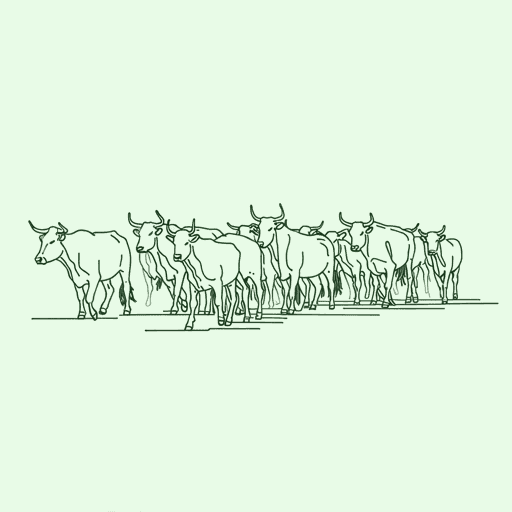
Ceremony
Ceremony
A modern alternative to SparkNotes and CliffsNotes, SuperSummary offers high-quality Study Guides with detailed chapter summaries and analysis of major themes, characters, and more. For select classroom titles, we also provide Teaching Guides with discussion and quiz questions to prompt student engagement.
Summaries & Analyses
Quizzes
NEWReading Tools
Games
Character Analysis
Tayo
Tayo is the protagonist of Ceremony. He was born in the 1920s; his mother was a Laguna Pueblo sex worker and his father an unnamed white man. He was raised by his uncle Josiah and lives with his mother’s family, including Auntie Thelma, his grandmother, and Thelma’s husband (Robert). Tayo is doubly marginalized because of his parentage: To white people, he is Indigenous, but to Thelma and Emo, he is white. This unique position shows Tayo that Emo’s desire to integrate into white society is a trick of the witchery of colonization. In Tayo’s experience, doing so is neither possible nor desirable.
Nevertheless, Tayo does not begin the novel with strong ties to Laguna Pueblo heritage. He trusts the white doctors’ treatment of his war-related PTSD, which consists of heavy drug doses and psychological therapy. The veterans’ hospital makes him feel like “white smoke” that is unaffected by his trauma, and he wants to recapture that numbness after leaving. Consequently, Tayo is dismissive of Ku’oosh and Betonie’s cures.
Tayo later realizes that the cures offered by the army doctors are highly individualistic and not rooted in communal care. The white doctors in the veterans’ hospital even tell him that he will never get better “as long as he use[s] words like ‘we’ and ‘us’” (116). In reality, Tayo can only heal from his trauma by simultaneously helping his community, his family, and himself. Tayo achieves this transformation by accepting Betonie’s Scalp Ceremony and adapting Laguna Pueblo rituals to suit his experience of Alienation and Isolation in Post-WWII America.
Ts’eh
Ts’eh is Tayo’s love interest, whom he meets while looking for his cattle. Ts’eh is heavily implied to be a mythical animal person, or a person who can assume both animal and human forms. The Laguna Pueblo elders believe she is A’moo’ooh, a magical elk person. She is also the woman whom Betonie foresaw in the Scalp Ceremony.
Ts’eh is a static character who does not change throughout the narrative. Instead, she acts as a supernatural agent, guiding Tayo through the latter half of his ceremony. Ts’eh’s deep romantic and sexual connection to Tayo contrasts with the casual but meaningless sex the veterans had with white women while deployed in World War II. Where Ts’eh brings healing and grounds Tayo further in his heritage and relationship to the land, the other veterans’ nostalgia for the women they slept with shows their embroilment in the “witchery” of colonialism, capitalism, and hyperindividualism.
Women are not obstacles or temptations in Tayo’s heroic journey of self-discovery and healing as they sometimes are in Western literature. Laguna Pueblo culture is matriarchal and makes the female characters (Ts’eh and Night Swan) vital to Tayo’s success yet also autonomous figures who decide of their own free will to be involved with him. If Ts’eh did not warn Tayo that the destroyers want to corrupt the end of his ceremony, he likely would have killed Emo during their final confrontation. Likewise, Tayo could not heal if he viewed women as objects to conquer (like Emo does), as he would not then be receptive to their guidance.
Night Swan
Night Swan is a Mexican cantina dancer who lives above a bar that Josiah frequents. She danced all over the American Southwest and was run out of a few towns before retiring to Cubero, a town near the Laguna Pueblo reservation. Many of the Indigenous women in the area dislike her because of her Mexican heritage, believing she will prey on their husbands and brothers. Night Swan takes Josiah as a lover and convinces him to buy cattle from her cousin. She later has sex with Tayo shortly before he joins the military. Night Swan vanishes after Josiah’s death.
Like Tayo, Night Swan is doubly marginalized, in her case because of her profession and ethnicity. However, she is much older and is confident in her difference in a way he is not. Night Swan calls the people who fear her and Tayo “fools,” saying that many people fear those who are different because they fear a changing world and the loss of tradition. Night Swan teaches Tayo to take pride in who he is while reminding him that the world will continue to change, illustrating the importance of Adapting Tradition to the Present.
Emo
Emo is the antagonist of Ceremony. He is implied to be in his mid-to-late twenties, like Tayo, and served in WWII on Wake Island with Leroy and Harley. Emo revels in the glory of his deployment: The uniform he wore brought him respect, and he was among “the best” and most brutal of soldiers. Ultimately, Emo’s performance in WWII was meant to impress his commanding officers, reflecting his desire to be accepted into white American society, which he sees as the only path to a better life. This desire also explains Emo’s hatred for Tayo, who is part white and therefore closer (in Emo’s mind) to such acceptance. Similarly, Emo tries to “get[] his hands” on white women to make up for the fact that white people have left Indigenous people with nothing but “this goddamn dried-up country” (51; 50).
This convoluted mindset—Emo’s simultaneous hatred and envy of white society and his urge to respond with domination and violence—is itself a product of colonialism’s “witchery.” Emo is a destroyer: a person who craves destruction, death, and violence. He is also (and relatedly) a static character: He is the same at the end of the novel as he is at the beginning. His inability to change leads to his exile from the reservation. In the climactic confrontation between Emo and Tayo, Silko writes that Tayo’s victory will cause “[Emo, Leroy, and Pinkie’s] witchery [to] turn, upon itself, upon them” (229), suggesting that those who are destructive and violent are eventually consumed by their own behaviors.

Unlock analysis of every major character
Get a detailed breakdown of each character’s role, motivations, and development.
- Explore in-depth profiles for every important character
- Trace character arcs, turning points, and relationships
- Connect characters to key themes and plot points