Citizen Illegal
46 pages • 1-hour read
José OlivarezCitizen Illegal
A modern alternative to SparkNotes and CliffsNotes, SuperSummary offers high-quality Study Guides with detailed chapter summaries and analysis of major themes, characters, and more.
Part 5Chapter Summaries & Analyses
“Mexican Heaven” Summary
The Mexicans party in the basement but God disapproves and threatens to throw them out of heaven if they don’t quit. After that, they are more discreet about what they do and God pretends to believe they have reformed.
“Poem to Take the Belt Out of My Dad’s Hands” Summary
Olivarez imagines a different story about the belt his dad used to punish him. He presents many different possibilities. His father does not use the belt; instead, the boy beats himself with it for his own good and then buries it. Then there is another scenario: The boy is waiting to be whipped and is already crying, but his dad just rubs the boy’s head instead.
“My Mom Texts Me for the Millionth Time” Summary
Mom keeps texting him even though he is often unavailable. She is sitting on the couch, tired after her work, yet her presence glows with light.
“I Loved the World So I Married It” Summary
Olivarez’s grandmother dies, and it takes him a while to find joy in life again. He does so even though he is aware that family and friends will all die someday; nothing is forever. One day he will have to part from all the things he loves in life.
“Love Poem Feat. Kanye West” Summary
His date arrives at the restaurant late, but they find common ground in discussing the music of Kanye West. He also recalls with appreciation that she was available to talk with him on the phone when his grandmother died.
“Getting Ready to Say I Love You to My Dad. It Rains” Summary
Olivarez imagines that he is rehearsing the moment he will say “I love you” to his dad. They are both watching television. Neither of them expresses themselves emotionally. He says “I love you” nonetheless, but his dad does not respond. Olivarez does not know how much love he should be offering.
“River Oaks Mall (Reprise)” Summary
In the mall, the immigrant speaker and his friends act just like Americans, proud of their name-brand hoodies. It’s not that they reject their Mexican identity, but they have spent a lot of money on the clothes they wear and they think the hoodie, with its gold star, looks really good.
“Gentefication” Summary
Gentefication is a play on the word gentrification. Olivarez envisions his neighborhood being reclaimed by Mexican culture, in harmony with the people who live there. White people are leaving and property values are declining, but the people do not care if the block has no economic value. They set up a system of trading, and the area is revived.
“Guapo” Summary
Olivarez’s speaker accepts and celebrates every part of his physical self, from his feet to the hair on his head. He declares himself to be handsome (“guapo”).
Part 5 Analysis
Part V offers a kind of resolution or reclamation—a poetic affirmation of identity and self-worth, despite the systems that seek to marginalize him. Joy, love, and self-acceptance feature in this section.
The final “Mexican Heaven” (56) poem reads like an echo of the teenage parties he mentioned earlier in the collection, in which a censorious parent disapproves of the kids drinking and smoking weed, so they assemble in the basement where they can do what they want. God the parent makes an aggressive comment about kicking them out if they don’t behave, but he knows exactly what is going and likely decides that making a fuss involves too much effort and won’t have any effect, so he pretends not to notice. This happens every time the kids have a party. As with the drunken St. Peter/Pedro and Jesus as a cousin Jesús “from the block” earlier in the collection, this Mexican heaven presents an earthier, more colorful ideal of the afterlife that places Mexicans at the center of Olivarez’s celestial vision.
In “Poem to Take the Belt Out of My Dad’s Hands” (57) Olivarez imagines a different scenario than the one he describes in “Boy & The Belt,” once more revisiting The Nature of Family Relationships. In this story, the boy beats himself for his own good; his dad has nothing to do with it. Then he buries the belt in a “cement coffin” (57), and dad rubs the boy’s head softly and comforts him. There is no beating, although the boy is crying. This is a tender poem, quite different from the earlier one, which recorded a very painful incident. That poem was told in the third-person, referring only to “the boy,” whereas in this poem, Olivarez refers to himself in the first person. He can face this reimagining of his experience directly, as “i”; he no longer needs the distancing device of a third-person narrator. This rewriting of his personal history puts a more positive spin on his relationship with his dad, which will also be the subject of “Getting Ready to Say I Love You to My Dad. It Rains.”
Another family poem follows, “My Mom Texts Me for the Millionth Time” (58) which can be compared to the earlier poem “I Tried to Be a Good Mexican Son.” In both poems, his mother is devoted to him but he is not always available for her. The emphasis in this poem is on how hard she works; it seems she may be a cleaner of some kind, and the work is physically demanding. She texts him constantly, even though he is usually not available: “[M]y mom home with my family/ minus me/ might as well/ be my name” (58). However, the poem ends not in a sense of discomfort or separation (as the earlier poem does), but with a visionary celebration of his mom as she rests on the couch after her work: “[A]wash in the glow/ she makes / so effortless / it’s impossible / to tell the light / comes from her own body.”
The title of “I Loved the World So I Married It” (59) conveys part of its theme, which focuses on losing a loved one. Olivarez suffered grief when his grandmother died, but within a short time he rediscovered his joy in life. However, he knows that life is not forever; he discovered that when he was young and his uncle died. He knows that family and friends will pass on, and he will then lose them for a second time as his memories of them fade. Continuing the metaphor of marriage, he knows that at some point he too will “divorce the world,” although some of his possessions will remain as well as other things he loved, including—as the poem rounds back to how it began—“the way mi abuelita smiled & called me Lupito” (59).
“Love Poem Feat. Kanye West” (60) also references the death of Olivarez’s grandmother. The poem is dedicated to Erika. This is Erika Stallings, Olivarez’s then-girlfriend, whom he married in 2022. The poem describes their first date, and how they connected with each other through the music of Kanye West. The specific reference is to West’s album The College Dropout, as well as to “Slow Jamz,” a song by the rapper Twista along with West and Jamie Foxx. Olivarez modestly admits that he does “not know how love works” but he remembers that on the day his grandmother died, Erika was there for him, on the telephone, and that has left a lasting impression on him (60). The poem also marks an emotional maturation compared to many of the speakers of the earlier love poems, as here the speaker’s focus is on genuine connection and mature bonding, not on the more over-the-top adolescent emotions or angry, aggressive outbursts detailed in the earlier poems.
“Getting Ready to Say I Love You to My Dad. It Rains” (61-62) is Olivarez’s third poem about his father. In it, he tries to express his love for him, even though it is not easy to do so. Like “Poem to Take the Belt Out of My Dad’s Hands,” this is an imagined experience, not a real-life one. Olivarez says “I love you dad” (61) as they sit together on the couch watching television on a rainy day. It is an unsentimental moment that doesn’t go down quite the way he had hoped: “[N]either of us cry, no hug or kiss. / a grunt and a nod” (61).
Thus, the anticipated moment of emotional honesty, reconciliation, and bonding does not occur. There is no indication that any rifts or roughness from the past have been healed, and the son ends up unsure of himself, not knowing how much love to express. As he toys with the notion that maybe the city is being washed clean by the rain, he constructs an analogy drawn from nature. Plants—like the one in the living room—need water, but he wonders how much water. He recalls that once a plant died because he gave it too much water and another plant died when he gave it too little. He worries that “love is violence” (62) and his relationship with his dad “is not new or clean” (62) so the issue remains unresolved for him, although the enigmatic final lines, “we rinse our mouths / with this water” (62) offer some guarded optimism, as if loving words can “rinse” or cleanse anything harsh or hurtful they may have once said.
“River Oaks Mall (Reprise)” (63) looks back, as its title indicates, to the earlier poem titled “River Oaks Mall,” speaking again to The Complexities of Assimilation and Cultural Identity. Like that poem, it exposes the lure of assimilation, in this case the hold that the American hip-hop urban culture may exert on a first-generation immigrant like Olivarez, who was deeply drawn to African American music. As the first line states, echoing the words of the other poem, “we were so American it was transparent” (63). The reference to the love of “french fries” also echoes the earlier poem, “Ode to Cheese Fries” as an emblem of assimilation. The speaker and his friends all fantasize about white women, even though their own faces show their Mexican ancestry. The Southpole hoodie—an American streetwear-inspired brand—they buy expresses the urban culture to which they are attracted, although they also emphasize that they love tacos, wanting to reassure people (and themselves) that “it’s not that we don’t want to be Mexican” (63).
Their self-assurances, however, do not sound authentic (“why / does it sound so white?” they say); something is off-center. Even though they appear at one point to waver and try to get their money back, the poem ends much as it began: They love the name-brand clothes, whether they reflect their core identity or not. The name Southpole “still looks good / emblazoned in gold, doesn’t it?” (63). They thus seek to reframe their purchase as more of a fashion statement than a deliberately ethnic or cultural one, but their debate and unease suggest that the issue is never an entirely straightforward one for young people caught between two cultures.
“Gentefication” (64-65) returns to the issue of cultural identity. The title is a play on the word gentrification. Gentrification is a process in which a low-income area of a city is changed by an influx of wealthier people who renovate homes and invest in businesses, which tends to increase property values and the cost of living, driving out the poorer people who lived there earlier. Gentefication is based on gente, the Spanish word that means “people.” It means reclaiming a neighborhood for the people who were being displaced.
In a flight of imaginative fantasy, Olivarez envisions his neighborhood being reclaimed by Mexican culture, in harmony with the people who live there. White people are leaving and property values are declining, but the people do not care if the block has no economic value. They set up a system of trading, such as “tortillas for haircuts, nopales for healthcare / poems for groceries” (64), thus striking a note of anticapitalism.
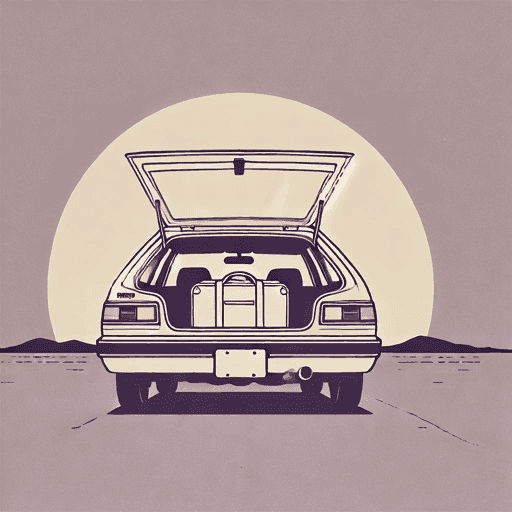
As a result of their activity, the area is revived: “the whole block is alive / & not for sale” (64). Their success attracts the attention of ICE (“la migra,” 65), but they evade the prying authorities by bundling everything into the trunk of a Toyota Corolla (which recalls the poem “My Parents Fold Like Luggage,” in which Olivarez’s parents hide in the trunk of a Toyota Tercel). ICE’s dogs “bark & spit, but all they find is grains of sand” (65)—an imaginative way of saying that this gentefication is a permanent fixture; it cannot be repressed or harassed out of existence.
“Guapo” (66) closes the collection by representing the poet’s absolute acceptance, even celebration, of every aspect of his physical self, with all its imperfections. This poem serves as an answer to other poems in which he expresses shame or dissatisfaction with his own body (e.g., “My Therapist Says Make Friends with Your Monsters”). He is modest and also self-deprecatory, such as when, after praising his own feet, he offers a nod to “my awkward dance partners. my friends in almost catching the beat” (66). He emphasizes that flaws like that don’t matter, as he affirms the uniqueness of his physical form. He is relishing this moment of triumph over his past insecurities and self-criticism. This newfound acceptance enables him to declare that, in reality, he has always been this guapo figure, he just did not realize it: “Guapo, i say it is my new name. it is my old name. it is my only name” (66). In naming himself with a Spanish word, Olivarez also openly claims his Mexican heritage, suggesting that he is now at peace with his identity the same way he is with his body.

Unlock all 46 pages of this Study Guide
Get in-depth, chapter-by-chapter summaries and analysis from our literary experts.
- Grasp challenging concepts with clear, comprehensive explanations
- Revisit key plot points and ideas without rereading the book
- Share impressive insights in classes and book clubs