Cod: A Biography of the Fish that Changed the World
54 pages • 1-hour read
Mark KurlanskyCod: A Biography of the Fish that Changed the World
A modern alternative to SparkNotes and CliffsNotes, SuperSummary offers high-quality Study Guides with detailed chapter summaries and analysis of major themes, characters, and more.
Part 1Chapter Summaries & Analyses
Part 1: “A Fish Tale”
Part 1, Chapter 1 Summary: “The Race to Codlandia”
Content Warning: This section discusses the European slave trade.
The Basque live in the northwest corner of Spain and southwest edge of France. They have lived in this region since before historical records began. Their language, Euskera, may be one of the oldest in Europe and is one of only four European languages that do not originate from the Indo-European family. Throughout history, others in the region, from the Celts and Romans to the Spanish and French, have “tried to subdue and assimilate them, and all have failed” (18).
In the Middle Ages, the Basque came to great renown and economic power by securing an unknown fishing ground and bringing back whale and cod to the European masses. One of their folktales, about a fisherman who catches a cod that speaks the Basque language, demonstrates the importance of cod to their culture, though cod is not native to Basque or Spanish waters.
The Basque were not the first to catch Atlantic cod, the Vikings having found it on their travels. The Vikings, led by Thorwald and his son Eirek the Red, traveled the ocean in around 985 CE from Norway to Iceland, and then to Greenland. From Greenland they reached the rocky shore of what is now the Labrador coast, following it southward into areas of Newfoundland, Nova Scotia, or Maine. The Vikings survived these long and treacherous sea voyages by catching codfish, which they dried in the cold winter air and ate like hardtack. Fishermen in Norway, where cod is plentiful, had already developed this process of drying cod and sold excess stock to other Europeans.
However, the Basque had salt, which the Vikings did not. They used a salt process to preserve whale meat, which they then applied to cod, allowing them to store the food longer and thus travel farther. The Basque sold salted dried cod to European markets, which became popular in part because of the Catholic fasting tradition of not eating meat on Fridays and Holy Days. This gave the Basque an enormous market. No one knew where the Basque had found such a plentiful supply, however. Cod was available in the northern seas around Norway and Iceland and in some areas near Ireland, but those fishermen did not encounter the Basque. It was not until the late 15th century that their source was revealed.
Meanwhile, a German merchant’s guild called the Hanseatic League controlled much of the import and export in Europe, putting them in conflict with British merchants in the port of Bristol. By 1475, the Hanseatic League had cut off the Bristol merchants’ entire supply of salted cod. In response, two Bristol merchants, Thomas Croft and John Jay, made a joint venture to find a new source of cod. Though none reported success, they declined when the Hanseatic League offered to renegotiate their trade agreements in 1490.
In 1497, a Genovese explorer, Giovanni Caboto, better known by his English name John Cabot, was commissioned by Henry VII of England to find a shorter path to Asia. Cabot, like Columbus five years earlier, believed a shorter route to Asia could be found across the Atlantic. Though Cabot did not find a route to Asia, he found a rocky coastline that he claimed for England. There, he noted the “presence of 1,000 Basque fishing vessels” (29). The Baque could have claimed the new territory for themselves if they had not been so determined to keep its existence a secret.
Part 1, Chapter 2 Summary: “With Mouth Wide Open”
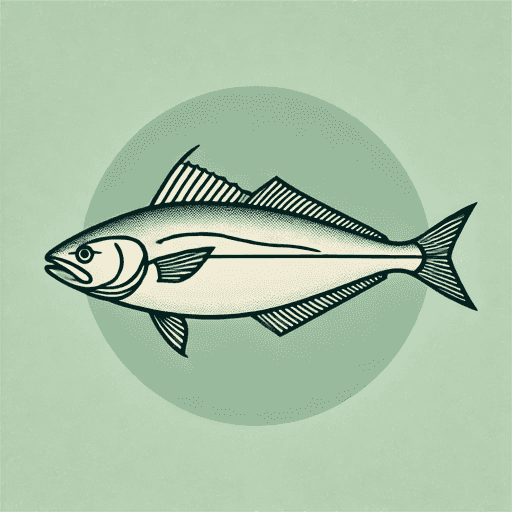
The cod, scientific name Gadus morhua, is “built to survive” (32). It is resistant to cold and disease, travels in shallow waters, and is omnivorous. It swims with its mouth open wide, eating anything in its path, including other smaller cod. It is prized for its white flaky flesh and high protein content—over 18%, with only 0.3% fat. When dried, the water evaporates and the protein concentrates to almost 80%, making it a perfect food source for travel. Additionally, nearly every part of the cod is edible.
The origins of the word cod are unknown. Many of its names and slang terms have sexual connotations. In Middle English, cod meant “a bag or sack” (35) and was a slang term for the scrotum, leading to the name for the decorative purse men wore at the crotch, the “codpiece.” In the West Indies the common name for salted cod, saltfish, became a slang term for “a woman’s genitals” (35). The French word for cod, morue, eventually came to be a term for a sex worker. The names for cod also change depending on whether it is fresh or salted. In modern French, fresh cod is cabillaud and only salted cod is called morue. For the Spanish, Italians, and Portuguese, who do not eat cod fresh but only salted, salt cod is baccala, and there is no word for fresh cod.
The codfish, or gadiforms, includes 10 families and more than 200 species, almost all of which live in cold saltwater in the Northern Hemisphere. However, for commercial fishermen, only five kinds have real value: The Atlantic cod; the haddock; the pollock; the whiting; and the hake. The Atlantic cod is the largest and most popular. British and Icelandic fishermen will only reluctantly catch haddock when they have filled their cod quotas. Nova Scotians prefer haddock, and hake is preferred among South Americans and South Africans. For most, cod remains the prize.
Cod is also easy to catch. It prefers areas where warm and cold currents meet, lives in shallow waters that make it easy to find, and its omnivorous nature means that it will latch onto almost any fishing lure used. Moreover, female cod can spawn between three and nine million eggs at a time meaning, even with low survival rates, a plentiful stock. Fishermen believed this stock could never run out. Unfortunately, its greatest predator is humanity, “an openmouthed species greedier than cod” (45).
Part 1, Chapter 3 Summary: “The Cod Rush”
When Cabot returned to England in 1497, his men reported fish so plentiful they could catch them by dipping baskets into the water. Though this was likely an exaggeration, the Europeans found a “wealth of game and fish unparalleled in Europe” (48) in North America. Flocks of the now-extinct passenger pigeon were so large they blackened the sky for hours, and English fishermen in Maine described five-foot cod even a century after Cabot’s arrival.
After Cabot found Newfoundland, he returned to the ocean still looking for a passage to Asia. Of the five ships he sailed with, only one returned and the other four vanished, Cabot with them. Meanwhile, the Portuguese charted parts of North America, claiming large parts of Newfoundland for themselves in 1502 and exporting cod. French explorers likewise brought back cod. By 1510, salt cod made up approximately 60% of all the fish eaten in Europe. Several European port towns became enormous economic centers on the strength of their access to Newfoundland cod. The Basque city of Bilbao grew in power as a shipbuilding center, particularly with its ironworks providing the anchors and other metal parts used on all European ships.
The feuding between English and Hanseatic merchants intensified through the 1500s, until the English gained greater access to the Newfoundland cod supply. In Newfoundland, the British experimented with new methods of summer-cured rock-dried cod from the fishing grounds called the Grand Banks. However, winter cures were far superior. In all cases, a fisherman’s access to salt was paramount. Debates about the best kinds and supplies of salt arose. The best salt came from Portugal. England maintained a favorable trade agreement with Portugal for salt, in exchange for protection from French naval interference, until Portugal merged temporarily with Spain in 1581.
Control of Newfoundland cod markets became strategically important. Most of Europe relied on dried cod to feed their Navies. Moreover, the Mediterranean market, where most of the best salt cod was sold, held enormous economic power. In 1588, the British defeated the Spanish effort to invade England, destroying their military and fishing fleets, and removing economic competition. By 1595, the British were catching enormous quantities of fish. Previously, British ships were only permitted to sell to British ports, who then sold the fish on to European markets. With an excess of stock, the British were forced to open commerce, permitting ships to trade directly with foreign markets.
Part 1, Chapter 4 Summary: “1620: The Rock and the Cod”
In the 16th century, the known world doubled for Europeans. Sailing for new territory became an obsession as Europeans headed for South America in search of gold or North America in search of cod fish. In both cases, however, they were still hoping for a route to Asia, still not understanding the size of the North American continent in their way. French-backed explorers in search of China came upon Cape Fear in North Carolina in 1524 and followed the coast north to discover parts of New York and Maine. In 1602, Bartholomew Gosnold also hit the North American coast in search of China and named the peninsula he found Cape Cod.
Later Bristol merchants followed Gosnold’s map to find what is now Maine and named the entire region New Virginia. In 1614, Captain John Smith, having already established a colony in lower Virginia, traveled north to chart the coast, renaming the area New England. He returned to England with 7,000 cod, which he sold in the English markets. He also lured and trapped 27 Indigenous people onto his ship and sold them as enslaved persons in Spain. The Puritans in England heard rumors that Smith had sold around 60,000 cod and ignored reports of the enslaved persons. Spurred by the promise of abundant fishing, the Puritans requested a land grant for the area around Cape Cod called Plymouth, and set sail to North America.
Equipped with religious zealotry and no experience with fishing, hunting, or farming, the Puritan pilgrims were inept at feeding themselves. This was made worse by their resistance to eating the native foods that the Indigenous Naumkeag tribe taught them to fish or hunt for. Out of desperation they eventually agreed to eat lobster. The only local resource they were willing to consume in abundance was cod. By 1640, the Massachusetts Bay Colony could reliably bring 300,000 cod to the world markets.
Before long, the two fishing powers in Newfoundland and New England were in competition. New England won on the world market because it had a milder climate. Newfoundland’s winters were too harsh for long-term settlements. Instead, Europeans arrived for the spring and summer fishing and then left in the fall, leaving solitary caretakers to protect their fishing grounds over the winter. Moreover, the rocky ground made it difficult to farm and sustain large populations. By contrast, New Englanders could fish during the milder winters and farm during the summer. The fishing colonies eventually attracted other kinds of workers: Blacksmiths, shipbuilders, and other tradesmen who brought their families.
Soon, New England was a commercial and economic power. The fishermen were a new kind of independent entrepreneur with the unprecedented freedom to sell their fish directly to foreign markets, rather than through the British crown. This would become a problem for the British empire.
Part 1, Chapter 5 Summary: “Certain Inalienable Rights”
Cod turned New Englanders from starving settlers to leaders of international commerce. In turn, they turned cod from “commodity to fetish” and named its commercial leaders the “codfish aristocracy” (78). The cod became a symbol of wealth and power. A life-sized wood-carved cod even hung in a place of honor in the Old State House after the American Revolution. What few wished to acknowledge was the inherent connection between the cod trade and the slave trade.
In the 1600s, sugar plantations in the Caribbean were worked entirely by enslaved labor. However, the Caribbean produced little food. To feed and maintain its enslaved labor force, colonists relied on salt cod as a cheap source of nutrition. This was particularly beneficial to merchants who sold high-quality cod products to Europe but often had an excess of low-quality cod. New Englanders quickly took over the Caribbean market. They could sell their best cod to Spain and other parts of Europe, then travel to the Caribbean, where they sold lower-quality cod as well as Spanish trade goods in exchange for sugar, molasses, and tobacco, which they brought back to sell in New England. Before long, they added the next logical step in the process: Returning to Boston with enslaved persons from the Caribbean along with sugar and molasses.
French politician Alexis de Tocqueville remarked in his 1835 study, De la democratie en Amerique, that among New Englanders there was a shocking disconnect between their belief in freedom and the injustice of the slave trade. Even for those ships that did not directly participate in the slave trade, the impact cannot be denied. The commercial success of the cod trade was dependent upon it. For instance, some of New England’s best customers were from the French Caribbean colonies—profitable plantation economies that brought thousands of enslaved persons from Africa to the Caribbean.
The French reliance on New England cod increased after the Seven Years’ War (the French and Indigenous War) in the late 1750s, when the British took French fishing grounds in North America but allowed them to keep the sugar plantations. This proved fatal to British control of its American colonies. Too late, England seemed to realize their danger and attempted to take back control of colonial commerce. However, many of these efforts were simply ignored and others stoked the American colonists’ ire.
Part 1, Chapter 6 Summary: “A Cod War Heard ‘Round the World”
While there is much romanticism around revolution, they are all “to some degree about money” (93). This was particularly true for the American Revolution, which was led by middle-class Massachusetts merchants who fought for the right to make more money. The British empire had assumed that American colonists would never rally against them because they were too busy fighting each other. However, what the British government did not understand was that the Revolutionaries “were pragmatists focused on primary goals and that molasses, cod, and tea were not mere troubling disagreements; they were the issue” (94).
Following the British Molasses Act of 1733, the trade of cod and molasses between New England and the French Caribbean grew, rather than slowed. The British tried again with a sugar tax in 1760. Then came the Stamp Tax in 1765. Each attempt was met with harassment, boycotts, or simple refusal to comply. The tax on tea was meant to lessen hostility, as tea was considered less significant than sugar or molasses. However, the Boston Tea Party of 1773 proved the British government wrong on this score. Finally, the British added insult to injury by forbidding New England fishermen from fishing the Grand Banks off the coast of Massachusetts in 1775, as if they were “trying to rally Massachusetts around its radicals” (97).
When the fighting of the Revolutionary War ended and the two sides entered negotiations in 1778, three topics became sticking points: The border, the repayment of debts to England, and control of the fisheries. Of these, fishing proved the most difficult to resolve. Massachusetts wanted to keep its fishing rights to the Grand Banks off the coasts of loyal British colonies in Canada. International law of the time was not clear on this issue, but even the French did not wish to fight the British on this topic. However, arguing for the New Englanders was John Adams. He successfully negotiated a provision that the fishing rights of the Grand Banks could not be taken away without approval from Massachusetts.
This led to one of the first major splits between the American North and South. To secure this agreement, Adams relinquished rights to the Mississippi River, angering the Southern states. When the British and Americans warred again in 1812, John Adams’s son, John Quincy Adams, negotiated that peace agreement, reversing the situation: The Americans regained control of the Mississippi River but never again gained access to the Grand Banks. This remains a source of tension between America and Canada to this day.
The New England cod fisheries were significantly injured when the British, French, and Dutch all abolished enslavement between 1834 and 1849. Over time, the cod merchants shifted their wealth into other industries and the codfish aristocracy died out.
Part 1 Analysis
Part 1 is the longest of the three parts and spans the greatest stretch of time. Unlike the Prologue, which narrows down to a highly localized place in a specific time period, the chapters of Part 1 move through large swathes of time and geography, discussing the movements of whole populations, including the Basque, Vikings, British, and French. Rather than paying particular attention to the interactions of specific individuals, Part 1 looks at the interactions of European societies as they move across the globe in massive colonialist projects centered upon the commodity of cod. Kurlansky thus uses his microhistorical focus on cod to examine The Interconnectedness of Trade, Colonialism, and Nationalism.
As Europeans eventually conceded that they could not reach Asia by passing through the Atlantic, they realized that what they found instead was just as good, perhaps even better. As Kurlansky states, European fishermen and merchants responded to North American cod “with the enthusiasm of a gold rush” (51), with the ever-increasing cod trade turning small fishing towns and ports into enormous centers of commerce. The unimagined abundance of the cod stocks in North American waters fueled an economic free-or-all that propelled many merchants into shocking levels of wealth and power. The tensions that arose between European powers over access to, and control of, this cod trade also mirrors the rise of European imperialism during this era, with countries like France, England, and Spain extending their political and economic reach outside of Europe through their colonies in the “New World.”
Kurlansky also demonstrates the crucial role of cod in the Puritan settlement in what is now Massachusetts. Kurlansky argues that the cod fish trade is responsible for the success and wealth of the New England middle-class and is, therefore, also responsible for the American Revolution. In drawing out these connections, Kurlansky emphasizes the domino-like effect: Increased international trade leads to greater colonial wealth and power, which leads to increased resistance to taxation and external control, and finally inspires a drive for independent nationhood. Kurlansky’s claim that revolution is always “to some degree about money” (93) therefore stresses the links between economic factors and political ones in shaping the trajectory of a nation-state.
However, this capitalist drive for trade and profit also led to shocking examples of humans’ detrimental impact on nature, invoking the theme of Human Responsibilities and Impacts on Nature. The abundance in North America, not only of cod but other wild game, rapidly disappeared under the strain of overfishing and overhunting. As just one example, early settler accounts describe flocks of passenger pigeons so large they “darken[ed] the sky for hours as they passed overhead” (49). Passenger pigeons were, in fact, at one point the most abundant bird species on the North American continent, yet Europeans had hunted it to extinction by 1890-1900 (Biello, David. “3 Billion to Zero: What Happened to the Passenger Pigeon?” Scientific American, June 2014).
As a work of popular nonfiction, Kurlansky also balances the need to be informative with the desire to be entertaining throughout this section. For instance, Chapter 2 provides useful information about the biological aspects and ecological significance of the cod and other groundfish. This chapter is important for explaining much of the terminology used throughout the text, such as the different kinds of groundfish and cod species, their physical characteristics, and their varying popularity in European culture. At the same time, Kurlansky offers humorous anecdotes by elaborating on the various slang terms—many of them vulgar or sexual in nature—associated with cod. Not only is the prevalence of cod-related slang terms humorous, it also demonstrates the widespread popularity and extensive use of cod across Western culture, from England and Spain to North America and the Caribbean.

Unlock all 54 pages of this Study Guide
Get in-depth, chapter-by-chapter summaries and analysis from our literary experts.
- Grasp challenging concepts with clear, comprehensive explanations
- Revisit key plot points and ideas without rereading the book
- Share impressive insights in classes and book clubs