Comus
35 pages • 1-hour read
John MiltonComus
A modern alternative to SparkNotes and CliffsNotes, SuperSummary offers high-quality Study Guides with detailed chapter summaries and analysis of major themes, characters, and more.
Symbols & Motifs
Content Warning: This section of the guide includes discussion of sexual content, sexual harassment, and sexual violence.
Music and Song
Masques always featured music, and Comus is no exception. Music runs like a leitmotif through the drama and gives expression to the thematic opposites of divine harmony versus decadent self-indulgence. When the Attendant Spirit takes on the form of Thyrsis, the family shepherd, he refers to the swain’s skill with his “soft pipe and smooth-dittied song” (Line 86), which could “still the wild winds” (Line 87) and “hush the waving woods” (Line 88). Elder Brother, when he meets the disguised Spirit, offers similar praise for the music that “sweetened every musk-rose of the dale” (Line 496). The Lady’s song is similar. It is an expression of the divine harmonies. When she invokes Echo in song, even Comus is moved by what he hears, which he describes at length with genuine awe and appreciation:
Can any mortal mixture of earth’s mold
Breathe such divine enchanting ravishment?
Sure something holy lodges in that breast,
And with these raptures moves the vocal air
To testify his hidden residence;
How sweetly did they float upon the wings
Of silence, through the empty-vaulted night,
At every fall smoothing the raven down
Of darkness till it smiled (Lines 244-52).
Set against these harmonious sounds that have the power to calm a storm are the raucous songs and chaotic revelry and dance that Comus and his crew create. To anyone who is not part of Comus’s riotous company, the sounds amount to an unpleasant, unsettling clamor. “Midnight shout” (Line 103) is how Comus describes it, while the Spirit says that Comus and his “monstrous rout are heard to howl / like stabled wolves, or tigers at their prey” (Lines 533-34); their noise is nothing more than “barbarous dissonance” (Line 550). If the Spirit’s music embodies order, peace, and reason, Comus’s expresses the opposite: chaos, violence, and animal instinct.
Toward the end of the drama, the Attendant Spirit employs music to bring divine help; he summons Sabrina in song, and Sabrina responds in song. Harmonious music is thus seen as a conduit to the divine and a vital agent in the breaking of Comus’s spell, solidifying the motif’s association with themes of Reason Versus Instinct and Ever-Present Divine Grace.
The Wild Wood
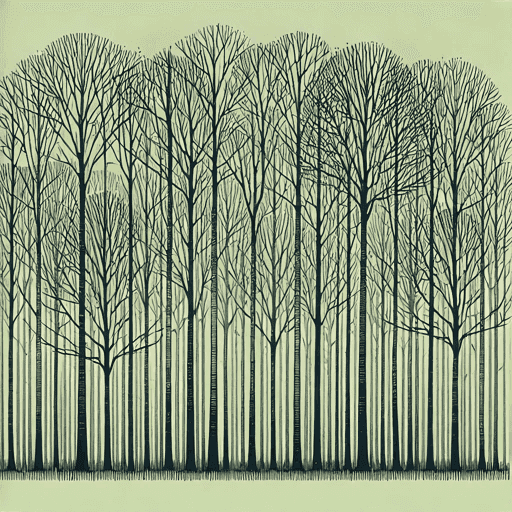
The “wild wood” (Line 312) at night entails malevolence, danger, vulnerability, and temptation for any virtuous soul that might innocently wander into it. The Attendant Spirit calls it “this ominous wood” (Line 61), the domain of Comus. The sorcerer is always ready to tempt the traveler into indulging in behaviors that obscure and betray their higher nature. The wood is thus an easy place to lose one’s way, both literally and symbolically. It is a place of confusion, outside the realm of civilization. The Lady refers to the “blind mazes of this tangled wood” (Line 181) and complains that “envious darkness” (Line 194) has stolen her brothers from her. Elder Brother is also aware of the dangers of the forest; he speaks of “Chaos, that reigns here / In double night of darkness and of shades” (Lines 334-35).
In its obscurity and wildness, the wood symbolizes the human journey through life, which demands not only virtue but also divine assistance if one is to avoid succumbing to the deceptions and sensual pleasures of sin. At the end, the Spirit, who embodies divine grace, invites the Lady to escape from “this cursèd place” (Line 939), promising to escort her through the “gloomy covert wide” (Line 945) to her father’s castle and safety—an analog to the journey to heaven.
Cup and Fountain
Comus’s cup, which contains a magic potion, is a central symbol. The pleasure they take from the potion overthrows their adherence to reason, which God has instilled in them. Whoever drinks it thus loses their self-control and indulges in their “baser” instincts, which they misperceive as desirable and attractive. The cup is therefore a “baneful cup” (Line 525) that supplies “pleasing poison” (Line 526). The “orient liquor in a crystal glass” (Line 65) that Comus offers suggests its superficial allure since “orient” here means “bright” or “shining.” In offering his sweet poison, Comus is following in the footsteps of his mother, Circe, who possessed a “charmèd cup” (Line 51). Whoever tasted the liquor in it “lost his upright shape, / And downward fell into a groveling swine” (Lines 52-53). Similarly, Comus’s enchantment reduces humans to an animalistic state by stripping them of the ability to distinguish between good and evil.
In contrast to the cup is another symbol, the free-flowing “fountain pure” (Line 912) that is associated with the goddess Sabrina. Sabrina takes just a few drops from that fountain and sprinkles them on the Lady. This has the effect of breaking the spell that holds the Lady to the enchanted chair. The fountain thus symbolizes the opposite of Comus’s cup; it embodies the power and grace of the divine, which nullifies the art of the sorcerer.
The Enchanted Chair
Like the cup, the enchanted chair on which the Lady sits is a symbol of the power of the magician Comus. She is unable to rise from the chair. Not only that, Comus threatens that if he so chooses, with just a wave of his wand, the lady will either be “all chained up in alablaster” (Line 660), which means turned into a marble statue, or, like Daphne as she fled Apollo, turned into a laurel tree (“root-bound” [Line 662]). The latter allusion clarifies the sexual nature of the threat, as Daphne was a nymph who refused the advances of the god Apollo.
The chair is very different from Comus’s magical cup. The Lady can see the danger presented by the potion and refuses it, but the chair took her by surprise. It was not as if she was tempted and gave in: This particular deceit was a silent, unannounced one. However, there is another, even more vital difference. Whereas the liquid in the cup overthrows the mind, the chair only incapacitates the body. As the Lady defiantly says to Comus: “Thou canst not touch the freedom of my mind / With all thy charms, although this corporeal rind / Thou hast immanacled” (Lines 664-66). In other words, even though the Lady can no longer control the movement of her body, her mind and soul, the essence of who she is, remain free. This supports the text’s depiction of The Invincible Nature of Chastity.
Nevertheless, the Lady is still in dire straits because she cannot move freely. Moreover, the spell remains in place even after the two brothers burst in and Comus and his crew flee. There is a ritual that the brothers could perform to break the enchantment, but they forget the Attendant Spirit’s instruction to seize Comus’s wand. Thus, the breaking of the spell needs the direct intervention of a higher power, which is supplied on request by the goddess Sabrina. The chair thus reinforces the necessity of divine grace by reminding readers of humanity’s powerlessness in its absence.

Unlock the meaning behind every key symbol & motif
See how recurring imagery, objects, and ideas shape the narrative.
- Explore how the author builds meaning through symbolism
- Understand what symbols & motifs represent in the text
- Connect recurring ideas to themes, characters, and events