Count Me In
A modern alternative to SparkNotes and CliffsNotes, SuperSummary offers high-quality Study Guides with detailed chapter summaries and analysis of major themes, characters, and more.
Summaries & Analyses
Quizzes
NEWReading Tools
Character Analysis
Karina Chopra
Content Warning: This section contains references to and descriptions of racism and anti-immigrant violence.
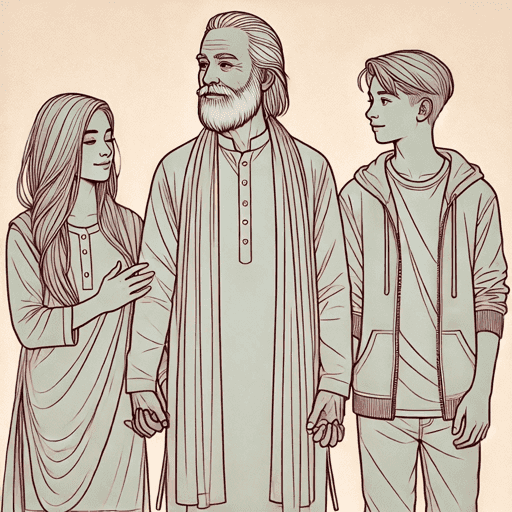
Karina Chopra is one of the novel’s two primary characters. The chapters titled with her first name are written from her first-person point of view and present her experiences and storyline from her vantage point. Karina is starting seventh grade at Spring Hill Middle School. She lives with her father Jay and her mother Trisha in Houston, Texas. Shortly after the school year starts, Karina’s paternal grandfather Shiv Chopra, or Papa, comes to live with her, too. Karina is thankful for Papa’s presence at home: He can be her “own personal tutor at home” and she will get to spend “more time [on] her photography” because Papa will keep her company when her parents are working (8). Photography is one of Karina’s favorite hobbies besides reading—it gives her a way to express her feelings when she doesn’t have the language to talk about them.
Karina, a third-generation Indian immigrant, learns to claim and accept her identity over the course of the novel. Although Karina loves her family, she struggles to be proud of her background and faces bullying at school for how she looks and expresses herself. Therefore, when Papa decides to volunteer as a math tutor for her peers, Karina worries about how her classmates will respond. Papa “is unmistakably an immigrant from India” (32) and Karina is afraid she’ll be teased when they hear his accent. Despite these fears, Karina is courageous and self-assured; she tries to stay strong and to be confident in the face of bullying, even when she feels alone.
Karina’s photography hobby, social media presence, and friendship with Chris Daniels help her to claim her voice and stand up for what’s right. After she, Chris, and Papa are attacked by a hateful man in the street, Karina transforms her horrified and distraught feelings into work that moves her community to support her and her family. Instead of letting anxiety control her behavior, she shares her story online through photos and writing posts that promote love, forgiveness, and grace. As Karina develops increasing reliance and self-confidence in the face of some negative responses on social media, learning how to use her voice for good allows Karina to stay true to herself and refuse to let others dismiss what she believes and who she is.
Chris Daniels
Karina’s classmate and neighbor, Chris Daniels is one of the novel’s two main characters. The chapters that are titled with his first name are written from his first-person point of view. Like Karina, Chris feels nervous about what seventh grade will bring. His older brother Matt has recently left home for college, leaving Chris alone with his parents. Meanwhile, Chris is struggling to do well in school and to earn the grades he needs in order to continue playing basketball. Chris also worries that his relationships with his basketball teammates and his other peers aren’t encouraging him to be the person he wants to be. In particular, he still feels guilty for laughing along when his teammate Quinn bullied Karina the year before. Chris did later stand up for and defend Karina against the bullies, but he doesn’t think that he can “reach across the aisle and tell her that” a year later (13). Throughout the novel, Chris asks his brother for advice on these social and academic situations. With Matt’s listening ear and encouragement, Chris eventually learns that he must stand up for what’s right even if it means losing the acceptance of some of his peers.
Chris’s friendships with Mr. C and Karina teach him the importance of community. When Mr. C starts tutoring Chris, Chris loves that Mr. C “is a genius at teaching math” (43), and enjoys talking to him about basketball and hearing stories about Mr. C’s past. Over time, this relationship helps Chris get to know Karina, too. Chris tries to show Karina kindness to make up for laughing at her the year before, and they discuss basketball and photography. As they spend more time with one another after school, on the bus, and in one another’s yards, Chris and Karina put their differences behind them.
This means that when Chris, Karina, and Mr. C experience the racist attack, Chris can be there for Karina. The violent incident shows Chris the prejudice that families from marginalized backgrounds like the Chopras face every day. Instead of cowering and backing away from the Chopras after the attack, Chris makes personal sacrifices to support them: He visits the recovering Mr. C despite being scared of hospitals, sits next to Karina on the school bus, posts comments on her social media, and encourages her when she’s feeling sad or defeated. Ultimately, Chris proves himself capable of growth. He matures and learns to put love and kindness before popularity and acceptance. He feels proud to know Karina and Mr. C and learns from their resilience and self-sacrifice, too.
Shiv Chopra/Papa/Mr. C
Karina’s grandfather Shiv Chopra goes by several names in the novel. Karina refers to Shiv as Papa, while Chris calls him Mr. C. For the sake of clarity, this character entry refers to him by his first name.
Shiv is an elderly man who has spent most of his life living in California. After his wife died sometime before the start of the novel, Karina’s parents convinced him to come and live with them in Texas by telling him they needed his “help in raising Karina” (14). Shiv has a special bond with Karina and wants to do anything in his power to support and love his granddaughter. Karina is glad that he’s coming to live with her family because Shiv’s presence will mean she can spend more time at home when her parents are working. However, Shiv’s move to the Chopra home also creates upheaval. Shiv likes to stay busy, so he fills his free time with odd chores around the house, frustrating Jay and Trisha when he doesn’t consult them before making home improvements. Nevertheless, Shiv’s behavior is clearly a sign of his love. His actions also illustrate his desire to be needed and to help his family.
Shiv becomes an important force for change in Karina and Chris’s lives. When Shiv volunteers as a math tutor at Spring Hill Middle School, he develops a connection with Chris. He sees the good in Chris and never gives up on him even when Chris feels discouraged or helpless. Shiv also supports Karina’s photography hobby, encouraging her artistic expression. Shiv assures Chris that he’ll eventually ace his math class and assures Karina that she’ll win the local photography contest. Shiv maintains this positive influence even after the attack; in the hospital, after surgery, and in rehab, he jokes with the nurses and with his family. His refusal to give in reminds Karina and Chris that although they’ve experienced violence and hatred, they can’t yield to adversity.
As a first-generation Indian American who has lived in the United States since immigrating roughly 50 years prior, Shiv sees the US as his home. Shiv believes in and promotes the fundamental American ideal of equality despite the injustice he’s experienced. He passes these beliefs to Karina and Chris. His strength, resilience, forgiveness, and positivity encourage Karina and Chris to embrace the same values.
Jay and Trisha Chopra
Karina’s parents are second-generation Indian Americans, born in the United States to immigrant parents. Jay and Trisha are loving and supportive. They’re close with Karina and have created a warm home life that welcomes Shiv, whom they see as another positive influence in Karina’s life.
However, after Shiv, Karina, and Chris are attacked, the insular comfort Jay and Trisha have relied on is shattered. Karina’s parents have heard about post-9/11 racial violence targeting people of South Asian extraction. However, the assault makes them realize how vulnerable they are personally.
Throughout the novel, Jay and Trisha maintain open communication with their daughter about bigotry in the US and adversity in Karina’s life. They at times question her social media habits, showing the ways different generations of immigrant families have been taught to handle prejudice: For Karina, it makes sense to publicize the attack, while her parents’ instinct is not to attract attention. Ultimately, however, they realize that she needs her social media platform to express her feelings, share her story, and find support.
Jay and Trisha aren’t controlling or overprotective, which allows Karina to rely on them for support when she’s feeling most upset and confused. She opens conversations with them about hatred and injustice, love and peace. Jay and Trisha therefore do their best to let Karina speak out in the ways she wants to, so she can process her experiences. They also listen to Karina whenever she engages them in conversation and even when she disagrees with their opinions. They are stable fixtures in Karina’s life who help her to feel safe and supported at home, even when the rest of her life feels uncertain.

Unlock analysis of every major character
Get a detailed breakdown of each character’s role, motivations, and development.
- Explore in-depth profiles for every important character
- Trace character arcs, turning points, and relationships
- Connect characters to key themes and plot points

Featured Collections
Art
View Collection
Books About Art
View Collection
Childhood & Youth
View Collection
Community
View Collection
Contemporary Books on Social Justice
View Collection
Fear
View Collection
Friendship
View Collection
Juvenile Literature
View Collection
Pride & Shame
View Collection
Safety & Danger
View Collection