Counterfeit
51 pages • 1-hour read
Kirstin ChenCounterfeit
A modern alternative to SparkNotes and CliffsNotes, SuperSummary offers high-quality Study Guides with detailed chapter summaries and analysis of major themes, characters, and more.
Themes
Living Up to Expectations
Counterfeit examines how the expectations within a family, a culture, or a country can impact a person’s life and choices. Familial expectations impose their own pressure, while assumptions made upon a group can lead to bias, restrictions, or opportunities.
The weight of expectations from family members is explored through several characters. Winnie feels she disappointed her parents because she left Stanford for a Chinese university, thus limiting, in their eyes, the prestige and potential of her studies. Ava felt burdened throughout her youth by her father’s expectations that she earn A’s in all her classes—an expectation not conferred upon her brother, Gabe. While her father felt he was encouraging Ava to use her strengths, Ava heard the message that her happiness was not as important as her achievements. As a college graduate and professional, Ava feels her peers and classmates expect her to be succeeding in her chosen profession, taking on more responsibilities rather than ceding her work to tend to her child. She makes a silent comparison between herself and the wife of the father who brings his daughter to the preschool interview, presuming the wife is a high-achieving Asian woman leaving the dad to be the caretaker. The combined weight of these expectations leaves Ava feeling helpless and inferior.
The novel also explores familial expectations through the hopes Ava has for Henri. As a mother, Ava feels she is failing because Henri is not on track or ahead of his peers developmentally. She feels ashamed when her family members suggest that Henri is difficult or needs interventions, and she compares Henri unfavorably to the other children at his preschool play-date or her cousins’ children. Complicating her guilt about not meeting the expectations of her education, family, or social group, Ava feels cheated that she worked hard and abided by the rules all her life but has not found satisfaction in her roles. This expectation or desire to be more, or have more, leads her to participate in Winnie’s business, work that makes her feel accomplished, successful, valued, and needed.
Winnie and Ava also play on the expectations put upon women, particularly Asian American women, by hiring primarily Asian American shoppers to conduct their returns. They exploit the assumption that Asian Americans are a “model minority” unlikely to break the law or prove untrustworthy. Winnie and Ava live among a white majority’s prejudices, as expressed by the scene in which an older white woman calls them “Orientals.” Ava also exploits Detective Murphy’s expectations about how a remorseful criminal should present herself, and here again, Ava provides the authorities exactly what they are looking for, playing on expectations that she should be a devoted wife and mother who has no desire to break free of the domestic sphere for something more.
While these biases against their cultural and gender identities can be exploited, there is one expectation to which Ava and Winnie both subscribe: the idea that hard work will improve their circumstances and enable them to achieve a desired outcome—the definition of the American dream. This is one ideal that, at the end, they both live up to, and happily so.
Counterfeit, Disguise, and Deception
The theme of counterfeits plays out on multiple levels in the novel, from the material to the psychological. The material items that Winnie fakes for her businesses, first designer handbags and then diamonds, raise the question of what gives luxury items their value. This subterfuge in turn questions the value of being real or authentic about one’s personality, ambitions, and activities in opposition to the image or narrative one presents to the world.
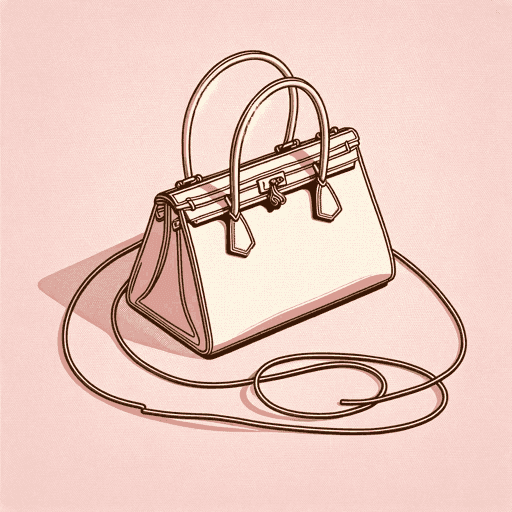
The novel debates whether counterfeits are in fact harmful. Winnie suggests to Ava that their scam of substituting counterfeit bags for the originals doesn’t actually harm anyone and in a sense rights a wrong. She argues that the people making the handbags don’t get paid a wage commensurate with the item’s sales price and the salespeople managing the returns don’t get paid a salary that allows them to afford such items, so exploiting their employer is just turnabout for the way the brand exploits its employees. Ava notes that Winnie’s replicas are one-to-one, nearly identical to the real thing; the only difference is that one is made with the brand’s knowledge and permission, and the other is not. The difference is merely a matter of approval but in a material sense is indistinguishable. When she carries her Kelly replica through the airport, Ava feels that people regard her differently. They can’t tell by looking that her bag is a fake, and she’s satisfied with the image she presents, even if it is achieved through a counterfeit.
The parts that malfunction in the airplane that explodes, harming the Shanghainese students, are not so much a depiction of counterfeits as a parallel to the kind of cutting corners and rationalizing that Winnie and Ava have been doing about their bags. In this case, where craftsmanship and authenticity are crucial, lives are at stake. Ava uses this as a wakeup call, or so she explains to the detective, to leave Winnie’s operation, which has harmed her. The airplane episode suggests that the truth is meaningful, even protective.
Ava insists she is being truthful with Detective Murphy, as the truth would have more value to law enforcement officials, but Ava’s narrative turns out to be another deception, crafted to play on the detective’s sympathies and win Ava a desired outcome. Ava has years of experience cultivating a persona she hopes will win her approval from others; only with Winnie, and to some extent Marie, can Ava reveals her true desires. Having played her whole life to what others want of her, Ava no longer even thinks of it as cheating. She is thrilled rather than remorseful for the part she plays in staging handbag returns, and she willingly joins Winnie’s new enterprise substituting lab-grown diamonds for mined. The novel questions the roles and definitions of the genuine and the disingenuousness.
The novel suggests there are different motives for why someone might engage in counterfeiting. Ava’s relates to the idea she describes of “face,” an important value in many Asian cultures. She wants the image she presents to the world to be accepted, even admired by her friends, former colleagues, and family. The Kelly bag lends to this illusion of prosperity. Maintaining face is part of the reason Winnie’s parents were ashamed of her dropping out of Stanford, but Winnie is only partly motivated to succeed to prove something for her parents; her deeper goals seem to be income and independence.
Winnie isn’t attached to things but she, too, cultivates the image she needs to make her business succeed. So does Mandy Mak as the heir and then head of Mak International. This belief in face complicates the value of authenticity, as the illusion or appearance is believed to be worth more than what is inside. This idea further interrogates the worth of luxury items, where the value to the rest of the world seems to matter more than any intrinsic worth. If the counterfeit can pass for the real thing, the novel seems to suggest, than the value of authenticity is merely a matter of perspective.
Negative Beliefs About Asia and Asian Identities
Along with its themes of deception, Counterfeit plays on assumptions about Asian people and Asian countries that are prevalent in the US, showing many of these presumptions to be erroneous if not outright offensive. As an Asian American, Ava hints at the many ways she encounters assumptions made based on her ethnic heritage that don’t reflect her personality or beliefs. Winnie, who was born and raised in China and became a US citizen as an adult, reports more frank encounters with prejudices about China and immigrants. Such assumptions, like the aura of glamor associated with the luxury designer handbag, often turn out to be illusions as well.
Ava is the daughter of parents who emigrated to the US from Hong Kong; her stories about her youth reflect her identifying with the ambitions held by her parents for her to pursue a successful career. In addition, Ava’s hint that her teachers often confused her with an Asian classmate suggests the invisibility that Asians, as a “model minority,” can face. Bias can work on several levels, however, as Ava’s own beliefs illustrate. She, a second-generation Asian American, calls Winnie “fresh off the boat” (6), expressing embarrassment at Winnie’s constant questions and accent. Yet this kind of snobbery seems lesser in impact than prejudices held by white people. Ava notes that when the scandal of falsified SAT scores involved Chinese students, those students were punished with expulsion. When the wealthy parents of white children cheated, they were only slapped with a fine. The author is likely referencing two real-world admissions scandals. In 2015, when Chinese nationals took SATs for other Chinese nationals so the latter could enter universities and secure visas on high test scores, they were punished harshly. In 2019, when rich, famous, white celebrities hired people to falsity test sources or bribe admissions officials to ensure entrance into prestigious universities, they received lax punishments. This disparity echoes the injustice that Ava observes and criticizes in the novel: The powerful and privileged have the cachet to avoid harsh penalties, while the underprivileged and disadvantaged are punished with the full weight of the law.
Ava likewise participates in a perception of Chinese women flaunting their money when she thinks Winnie looks “Mainland-Chinese rich” (3). Winnie despises the ambitions of her Chinese women friends to buy from internationally known designers and send their children to college in the US. Winnie points out the perception that newly acquired wealth is looked down upon as being “nouveau riche,” tainted with ambition and hard work. Winnie notes how tenuous this assumption is by saying it only takes a generation for nouveau riche to become old rich.
The dinner at Neiman Marcus depicts a racist woman using the word “Oriental,” which alludes to a distinction between Western countries and the exotic, Othered Orient. Ava notes that this term objectifies people; “we’re not rugs,” she replies (32). Winnie notes the woman’s deeper fear that spendy Asians are everywhere and answers it with a fact: “There are over a billion of us” (32), she responds, reminding the white woman that she shares the planet with them. Winnie herself notes that there seem to be more Mainland Chinese students at Stanford now but takes this as a sign of China’s increasing economic prosperity, not as an invasion of a foreign culture. Ava witnesses this prosperity when she visits Guangzhou and is amazed at the size and sophistication of the replica shopping mall, which rivals shopping districts in New York City or Paris. To her Westernized perspective, prosperous China is still a novel idea. But Ava also understands that Western capitalists can as easily run sweatshops. And while she laments the corruption she sees in China among the higher-placed officials she meets in Dongguan, and she fears that such corruption led to the explosion of the aircraft, she knows she’s guilty of the same kind of bribery in trying to get her son into a desirable preschool. Counterfeit doesn’t exalt one country over the other or pretend that the West is more virtuous, but the novel does present a variety of misconceptions about the Chinese nation and Chinese people and shows a complex and human reality as well as the more unfortunate effects of bias.

Unlock every key theme and why it matters
Get in-depth breakdowns of the book’s main ideas and how they connect and evolve.
- Explore how themes develop throughout the text
- Connect themes to characters, events, and symbols
- Support essays and discussions with thematic evidence