Criss Cross
48 pages • 1-hour read
Lynne Rae PerkinsCriss Cross
A modern alternative to SparkNotes and CliffsNotes, SuperSummary offers high-quality Study Guides with detailed chapter summaries and analysis of major themes, characters, and more.
Symbols & Motifs
Necklace
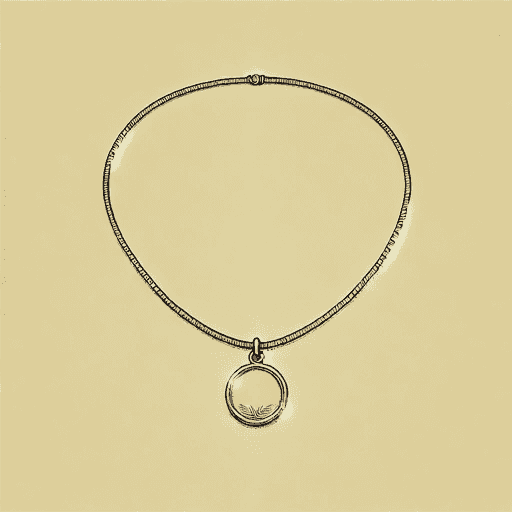
Debbie’s necklace is a symbol of community and interconnection. The recurring images of the necklace throughout the novel convey the Importance of Friendship and Connection. The necklace is a gold chain with a medallion engraved with Debbie’s first name. At the novel’s start, Debbie wears the necklace around her neck. She also fiddles with it, twisting it around her finger, when she’s thinking. In these scenes, the necklace acts as a manifestation of both Debbie’s identity and her angst.
When the necklace falls off her neck in the rhododendron bush in Chapter 6, Debbie incidentally loosens her hold on her youthful sense of self. The necklace then travels from one Seldem adolescent to the next, falling from coats and through holes in pockets and into various public settings throughout town. The necklace’s movements appear random, suggesting that interpersonal connections are determined by fate alone. However, by the end of the novel, the necklace becomes an omniscient entity. The necklace suddenly employs a first-person narrative voice, commenting on the characters’ relationships with each other and underscoring the importance of their communal ties. This formal choice implies that there is a cosmic force which brings people together into meaningful relationships.
In a literal sense, the necklace signifies unity. When clasped, Debbie’s chain forms a circle—which conjures notions of life cycles and infinity. A series of interconnected gold links also compromise the necklace—implying that the necklace is made of various, individual component parts. This is true of a community, too. Debbie, Hector, Lenny, Patty, and Phil are all distinct individuals, but their lives are joined together by their shared hometown and parallel adolescent experiences.
Music and Guitar
Hector’s guitar and musical passion symbolize meaning, purpose, and self-expression. When Hector attends the coffeehouse event with Rowanne at the novel’s start, he discovers an immediate interest in learning the instrument. While listening to one guitarist perform, “drops of sound [fall] on an unmoistened sponge that [is] waiting somewhere inside Hector. In his heart or his mind or his soul” (16). The music metaphorically “wets” the sponge of Hector’s psyche and inspires him. When he listens to music, he feels connected to other lives, realities, and truths beyond himself. Once he starts playing the guitar and writing his own songs, Hector is participating in the universal human experience. Music lets him escape his predictable reality, while infusing his daily life with beauty and wonder. Writing songs offers him an opportunity to communicate complex emotions through art. In turn, he shares these songs with his community and connects with his friends in a new way. Hector’s evolving relationship with his guitar and music trace his Search for Meaning and Understanding. The more invested he becomes in his music, the more valuable his life and identity feel.
New Bridge
Debbie and Peter’s visit to New Bridge symbolizes their longing for escape. They decide to go here together because they believe that “when you go somewhere for the first time, everything seems unusual” (258). Encountering new sights, sounds, and emotions in turn changes the characters. New Bridge is located not far from Seldem. However, this environmental relocation offers Debbie and Peter a new perspective on their lives and identities. As is true of the hero’s journey narrative model, leaving and returning to one’s home is vital to growing as a person.
The town name reiterates the setting’s symbolic significance. “New” evokes notions of beginnings, refreshment, and renewal. “Bridge” evokes notions of transition and transformation from one phase of life to the next. These concepts apply to Debbie’s Journey Towards Self-Discovery in particular. She is crossing a metaphoric bridge from childhood into adulthood to claim a new way of being.
Clothes
Images of clothing throughout the novel symbolize the adolescent pursuit of identity. For example, Debbie starts wearing her older sister’s clothes at the novel’s start because she is trying to understand herself according to her role model. Later, she begs her mother for a pair of bell-bottoms. She’s determined to find “the perfect pair” of these trending pants because she not only wants to fit in but to express herself through her sartorial choices (45). The plaid bell-bottoms she ends up buying don’t catalyze Debbie’s immediate transformation, but they grant her a sense of agency over her developing sense of self.
At the novel’s end, Debbie learns that it isn’t her clothes that define her identity. In Chapter 31, the image of her studying her naked reflection in the mirror implies that Debbie is most herself when she isn’t trying to change her appearance or behavior to please others.

Unlock the meaning behind every key symbol & motif
See how recurring imagery, objects, and ideas shape the narrative.
- Explore how the author builds meaning through symbolism
- Understand what symbols & motifs represent in the text
- Connect recurring ideas to themes, characters, and events