Dear Debbie
49 pages • 1-hour read
Freida McFaddenDear Debbie
A modern alternative to SparkNotes and CliffsNotes, SuperSummary offers high-quality Study Guides with detailed chapter summaries and analysis of major themes, characters, and more.
Symbols & Motifs
Content Warning: This section contains discussion of graphic violence and sexual assault.
The Findly App
Findly is a fictional location-sharing smartphone app developed by Debbie Mullen and used by her and members of her family throughout Dear Debbie. The app acts as a symbol of Debbie’s intelligence and wasted potential, and of her protective nature, which stems from the trauma of being raped in college. Findly is described as “a highly accurate tracker of friends and family” (18) comparable to the Find My Friends app, “but with much more impressive accuracy” (96). These passages suggest that Debbie has an exceptional technical mind on par with developers at major tech companies. The fact that Debbie is a stay-at-home mom and keeps the app closed to everyone “except for our immediate family” (18) reflects the novel’s sense that Debbie’s potential is being wasted.
Debbie’s insistence that her family members download and use Findly is the result of her overly-protective nature, which the novel suggests stems from the trauma of being sexually assaulted. Debbie insists that her daughters “are safer when [she] know[s] where they are” (18), and although she tries not to violate their privacy, she feels comforted knowing that, “not only do I know where they are, but I’m also able to download a history of their prior locations” (18). She explicitly connects her desire to keep her daughters safe to the lasting trauma of her sexual assault, noting, “if my parents had protected me better” (86), she might not have been assaulted. The novel suggests that Findly is Debbie’s attempt to protect her daughters from the same abuse she suffered.
Debbie’s Garden
In the opening chapters of Dear Debbie, the protagonist learns that her prized flower garden has been passed over for a photoshoot at the fictional Home Gardening magazine in favor of her neighbor’s rose garden. This discovery incites Debbie into a violent spree that ends with the murder of two people.
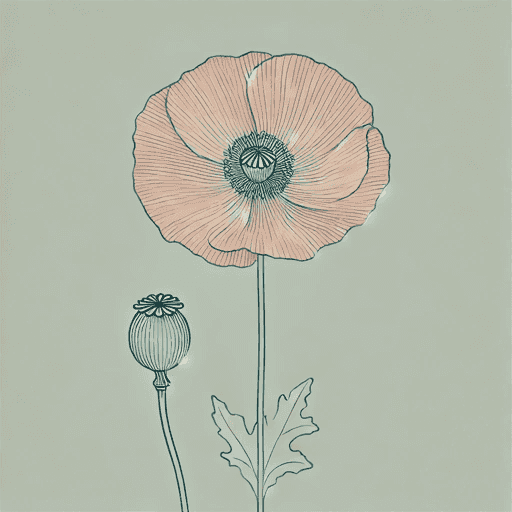
Although Debbie’s obsession with her neighbor’s garden seems petty, the novel suggests that Debbie sees her garden as a symbol of independence. As a stay-at-home mom, Debbie’s life revolves around her children; her flower garden represents her attempts “to be proud of something that was all [her] own” (5). Debbie compares her garden to her children again later, noting, “unlike my children, who change every single year, leaving me fumbling to keep up, poppies follow a natural and predictable cycle” (155). These comparisons suggest that Debbie sees her garden as a space to express her independence from her children.
Although Debbie’s garden gives her a sense of pride and independence, it also reflects her darker impulses. While setting up the Home Gardening photo shoot, Debbie admits, “if I told them what the flowers really were, I wouldn’t be in the magazine” (31). She later reveals that she grows “opium poppies” (116), used to make sedatives, and “Carapichea ipecacuanha” (116), which can be used to make “a powerful emetic” (116). Debbie’s knowing cultivation of these dangerous plants suggests that she sees the garden as a tool for the expression of her violent impulses.
“Dear Debbie” Letters
Although Debbie loses her job early in Dear Debbie, letters from the eponymous column appear scattered throughout the novel. The letters act as a motif reflecting the novel’s subversion of the figure of the housewife, as represented by Debbie. When Debbie is fired, her boss refers explicitly to the expectations of the genre of the advice column, which has traditionally been associated with women. Her boss urges her to stick to advice “about gardening or getting stains out of shirts” (76), insisting that the Hingham Household is “a family-oriented paper” (77) and that she “can’t tell people to get a divorce” (77) in her column. This description of Debbie’s column reflects the social value of advice columns to reinforce societal expectations.
As the novel progresses, Debbie’s discarded draft letters show that she has been subverting this generic expectation throughout her career. Rather than offering “family-oriented” (77) advice, these drafts reflect violence escalating from installing a padlock on the front door to force a family to eat breakfast, to disabling car brake lines to get rid of a pesky boyfriend, to poisoning husbands who complain about food. Debbie’s subversion of the expectations of her column reflects her subversion of the typical role of housewife. Like her columns, Debbie hides a secretly violent side, refusing to conform to what is expected of her type.

Unlock the meaning behind every key symbol & motif
See how recurring imagery, objects, and ideas shape the narrative.
- Explore how the author builds meaning through symbolism
- Understand what symbols & motifs represent in the text
- Connect recurring ideas to themes, characters, and events