Different Ways to Pray
Different Ways to Pray
A modern alternative to SparkNotes and CliffsNotes, SuperSummary offers high-quality Study Guides with detailed chapter summaries and analysis of major themes, characters, and more.
Summaries & Analyses
Quizzes
NEWReading Tools
Background
Literary Context
“Different Ways to Pray” adds to the works of Arab American literature—a literary tradition that extends to the 1800s and since the 1960s, has seen a substantial increase in voices. With an influx of Arab immigrants to America between 1960-80, Arab Americans turned to writing as a form of self-expression, writing about their ethnic heritage and culture. With war breaking out in the Middle East in the 1970s and 80s, many Arab Americans struggled to understand and define their identity, which they did through literature, poetry, and writing. The Arab American literary tradition, while drawing on many American literary traditions, also “touched, sometimes glancingly, sometimes directly, on Arab identity and probed what had been lost during the generations of assimilation” (Majaj, Lisa Suhair. “Arab-American Literature: Origins and Developments.” American Studies Journal. 2008.). Nye’s poetry squarely falls within this tradition, as her poems often apply pressure and question what it means to be an Arab American and an artist.
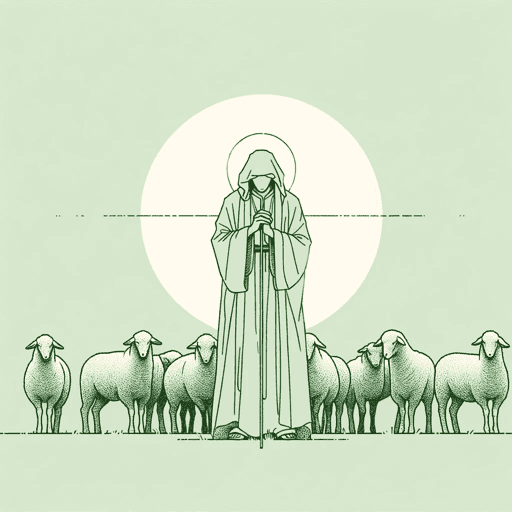
“Different Ways to Pray” is largely a poem about the Middle East, Islam, and Arab culture. Citing specific cultural words such as “Mecca” (Line 23) and “Allah” (Line 40), Nye clearly alludes to Muslim prayer. Yet growing up straddling two cultures, languages, and identities, Nye’s “Different Ways to Pray” acknowledges concepts of immigration and a lost homeland (both of which are apparent in Stanza 5). While the poem is told through a distant third person perspective, it functions as a bridge between different worlds of prayer within Islam.
Like much Arab American poetry, “Different Ways to Pray” also functions as a bridge between the Middle Eastern world and the Western world (e.g., America). The poem seeks to establish understanding between a prominent Middle Eastern religion (Islam) and the rest of the world. Unlike other poems in the Arab American literary tradition that seek to reconcile or defend the Arab way of life, Nye’s poetry suggests “that Arab American identity is not something to be preserved or denied or escaped or romanticized: [I]t is just another way of being human” (Majaj, Lisa Suhair. “Arab-American Literature: Origins and Developments.” American Studies Journal. 2008.). Using differences to highlight similarities, Nye’s “Different Ways to Pray” argues that humanity is bound by its similarities—not its differences.
Historical Context
“Different Ways to Pray” is included in Nye’s first full-length collection of poetry of the same title. Nye, who is an Arab American, identifies with Palestine and her Middle Eastern ancestry. Yet, she describes herself as a “wandering poet” (“Naomi Shihab Nye.” The University of Arizona Poetry Center.)—a poet of many cultures, backgrounds, languages, and upbringings. “Different Ways to Pray” is a testament to this, arguing that there is no one correct way to pray; rather, all forms of prayer are correct, even that of “Fowzi the fool” (Line 45) who speaks to God in the same way he speaks to his animals. Nye’s father, a Palestinian refugee, was raised Muslim. However, he rejected this faith and was supported by his parents (Nye’s grandparents) who simply asked the following of him: “Be a good person, love human beings, love the earth, love god, love each other, and that’s okay” (Kelmenson, Kalia. “re/VIEW: Naomi Shihab Nye.” Spirituality & Health.).
This guidance seeped into Nye’s poetry—particularly “Different Ways to Pray.” Published in 1980 at a time during political and social unrest in the Middle East—particularly the 1979 Iranian Revolution and the Iran-Iraq War in 1980—Nye’s “Different Ways to Pray” is a voice of reason and compassion to sects within Islam and all religions at odds with one another. Prayer, Nye argues, should be able to occur anywhere, by anyone, no matter a person’s education level, gender, ethnicity, occupation, or class.
The poem staunchly holds that there is no one way to pray. Rather, prayer can occur in a mosque with smooth stones (Line 3), while “lugging water from the spring” (Line 30), in “holy places” (Line 24), or even “Under the olives tree” (Line 12). Taking the advice her grandparents gave her father, Nye (who is a practicing Zen Buddhist) exemplifies that as long as the action is rooted in devotion, good will, and love, it can be called prayer. Seeking to recognize the similarities between different forms of prayer, “Different Ways to Pray” is a poem of unification between those within one religion, and between all the religions, and people, of the world.

Get in-depth, chapter-by-chapter summaries and analysis from our literary experts.
- Grasp challenging concepts with clear, comprehensive explanations
- Revisit key plot points and ideas without rereading the book
- Share impressive insights in classes and book clubs