Direbound
61 pages • 2-hour read
Sable SorensenDirebound
A modern alternative to SparkNotes and CliffsNotes, SuperSummary offers high-quality Study Guides with detailed chapter summaries and analysis of major themes, characters, and more.
Symbols & Motifs
Content Warning: This section of the guide includes discussion of death.
The Monarchical Regalia
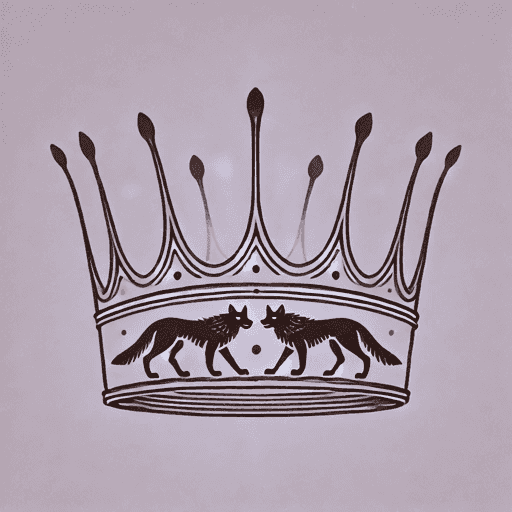
Thematically supporting The Effects of False History, monarchical regalia include the magical sword Diren Blæd, the twin-wolf and opal crown, and the opal necklace that Meryn’s mother gifts her before the Forging Ball. The sword symbolically attests to the overall structure of the kingdom of Nocturna and its fundamental social structure: the relationship between humans and direwolves. In the hands of King Cyril, however, the sword symbolizes abuse of power, as the sword allows him to order more death among the Rawbonds at his whim and pleasure.
The crown symbolizes the unified power and magic of the kingdom’s rightful rulers, but its meaning is once again corrupted through King Cyril and his predecessors. Through the centuries of Valtiere rule, the crown becomes a symbol of past and present history because it attests to the lost memories of the Sturmfrost queens while acting as the catalyst for the Siphons’ blood curse to erase memories of the past. Given that it’s also recurrently drenched in the blood of Bonded riders and direwolves, the crown also represents pack sacrifice and the cost of an abusive monarchy.
The opal necklace symbolizes both dawning hope and resistance. Since it has remained a hidden secret in Meryn’s family for centuries, the necklace indicates a history of maintaining a lost legacy that would one day be reclaimed. It symbolizes Meryn’s ancestors’ ability to remain elusive to those who wanted to eliminate them, and when Meryn wears it at the ball, it symbolically announces the return of the true queen.
Bonded Tattoos
Bonded tattoos are a recurring symbol that, while not directly supporting any of the themes, nevertheless contribute to the fantasy aspect and political nuance of the novel’s world building. The text identifies two types of tattoos: neck tattoos, earned for participating in the death of a fellow Bonded rider, and chest/upper arm tattoos, earned for participating in and/or causing the death of a Siphon. Neck tattoos are arranged in what Meryn sees as a collar-like pattern and are meant to symbolize the sacrifice inherent in building a strong pack filled with reliable packmates. The collar-like display, however, implies that these deaths solidify a submissive connection to the collective pack while also signaling the bearer’s violence.
Tattoos dedicated to the deaths of Siphons are marks of bravery and strength. Unlike neck tattoos, they’re worn as badges of honor and as symbols that attest to the efforts made to keep humans alive and well under the onslaught of Siphons. The ritualization of Bonded tattoos also carries a deeper meaning. Marking the deaths of both comrades and enemies creates a sense of kinship between pack members by visually creating uniformity within the packs: All are bonded by the deaths they leave in their wake. Likewise, the habit of licking the tattoos suggests a sense of intimacy and care, thus promoting familial support and reliance among pack members.
The Faceless Goddess
Another recurring motif in the novel is the Faceless Goddess, which supports two themes: The Objectification of Women and The Effects of False History. Though the origins of the Faceless Goddess and her religious following remain a mystery throughout the novel, the figure is nevertheless directly tied to the foundation myth of the kingdom and the relationship between direwolves and humans.
In the Valtieres’ false history, the Faceless Goddess symbolizes legitimacy since she’s described as blessing the Valtiere family with the right to rule. However, an inherent tension exists within this reimagined foundation myth, as the Valtiere kings have worked to diminish the credibility of the goddess and render her worship a relic of the past. As Meryn explains, “For most commoners, the king is closer to a deity than the goddess, but she’s still invoked in prayer—or as a curse. There are small religious sects around the country devoted to her, their members numbering in the thousands” (402). Despite the alleged anointment of the Valtiere family as rulers of Nocturna, this passage underscores the Faceless Goddess as a sign of resistance against the deification of the king and represents a lost history that contradicts what the kings seek to achieve: godlike status and complete supremacy over the kingdom.
That the god-figure of the kingdom is female signifies resistance against the current kings of Nocturna because her existence (which has no male counterpart) suggests that divine power and divine rule reside in women rather than men. This provides further reason for the heavily patriarchal Valtiere family to erode the credibility of the goddess as a figure of worship.

Unlock the meaning behind every key symbol & motif
See how recurring imagery, objects, and ideas shape the narrative.
- Explore how the author builds meaning through symbolism
- Understand what symbols & motifs represent in the text
- Connect recurring ideas to themes, characters, and events