55 pages • 1-hour read
Disgrace
A modern alternative to SparkNotes and CliffsNotes, SuperSummary offers high-quality Study Guides with detailed chapter summaries and analysis of major themes, characters, and more.
Chapters 13-18Chapter Summaries & Analyses
Chapter 13 Summary
Content Warning: The novel and this guide discuss sexism, sexual assault, stalking, sexual grooming, violence, and racism.
The following day, Bev changes David’s bandages, and he remembers the goat in the clinic, likening himself to it. He quizzes her about Lucy, particularly about the threat of disease or pregnancy following the attack. David suggests that Lucy should visit a gynecologist, but Bev says that he—rather than Bev—should be the person to make such a suggestion to Lucy. David feels older in the wake of the attack, as though his heart has suffered. He feels no pleasure in life; instead, he feels a deep despair that he will not return to his “old self.”
David and Lucy return to her farm. The dead dogs are still there, and Petrus is nowhere to be found. Two police officers inspect the crime scene. They take a statement from Lucy. As she delivers the statement, she watches her father. She does not mention the rape at all. According to Lucy, the robbery lasted less than 30 minutes. David hardly listens to Lucy. The officers reveal that a detective will come to take fingerprint samples. Then, they leave.
Ettinger visits the house. He says he does not trust Petrus as he does not trust any Black people. He offers to send “a boy” to repair the broken vehicle (109). His use of this word would have once angered Lucy, but she says nothing. After Ettinger leaves, David asks Lucy why she did not tell the police everything. She insists that she told them the “whole story” (110). David believes that Lucy is allowing her rapists to win by withholding the story from the police; while the attackers will be free, Lucy will be imprisoned by her own quiet shame. To help Lucy, he offers to dig graves for the dead dogs. As he buries the dogs, he thinks about the attackers. To these men, he thinks, the dogs may have been a symbol of the oppression of apartheid. Thus, the act of killing them must have been “exhilarating, probably, in a country where dogs are bred to snarl at the mere smell of a black man” (110).
Later David finds Lucy moving her bed into the pantry. He suggests that she sleep in his room instead, while he moves into her room. In this room, he is haunted by “the ghosts of Lucy’s violators” (111). During dinner, David probes Lucy again about her decision to withhold information from the police. They are in South Africa, she explains, and in this time and in this place, this information is “purely private” (112). David says she cannot pay for the crimes of the apartheid past through her own suffering. Lucy accuses her father of not being able to understand her and stops the discussion. The tension between them hurts David, who feels Lucy growing distant from him.
Chapter 14 Summary
On Friday, David repairs the damage to the house. He wishes that Lucy would allow him to turn the house into a “fortress,” as Ettinger has done. Petrus reappears with the materials that he will need to begin construction on the house he plans to build; he also brings two sheep. David notices that Petrus happened to be absent at the exact time the attack took place. This makes him suspicious of Petrus. When he tells Lucy about his suspicions, she is not interested. David, however, is upset; he confronts Petrus, mentioning the robbery. Petrus is dismissive of David’s concerns. He points out that David seems fine after the attack and asks whether Lucy plans to visit the farmers’ market. Later, Lucy tells David to accompany Petrus to the market while she stays home. David takes this as a sign that Lucy is ashamed of what happened to her.
David goes to the market with Petrus. There, he reads a newspaper article that describes the attack by “unknown assailants” against Lucy Lourie and her “elderly father” (116). Their family name is misspelled, which makes David feel relieved. At the market, Petrus does all the hard work. David jokes to himself that this is “just like the old days” (116), though he does not dare to give Petrus any instructions. He is still uneasy around Petrus. Despite this, Petrus intrigues David, who dwells on the way in which—in a post-apartheid South Africa—Petrus is now a neighbor, rather than a subordinate. David would like to hear Petrus tell his story, but he would rather not hear the story told in English. To David, English is beginning to feel like “an unfit medium for the truth of South Africa” (117). David views Petrus as a peasant, someone who is capable of “honest toil and honest cunning” (117). He tries to imagine a future in which a Black man like Petrus will desire Lucy’s land, pushing white people like Lucy to the fringes of society.
After the market, David and Petrus work together on the dam. David mentions the attack again, hinting that the attackers raped Lucy. He says that he would like them to be punished. Petrus seems not to hear him. He does not acknowledge David’s implication, which angers David. In the coming days, David runs the farm because Lucy has sunk into a deep depression. He thinks about how his burns and injuries have made him hideous. David tries to contact Rosalind, but she is away on vacation. In a message, he tells his ex-wife that he was robbed but insists that the attack was not serious. At night, David suffers from nightmares; he feels as though he is losing his sense of himself. He thinks about his unrealized opera about Byron; his fear has stopped him from beginning the research needed to complete the project. David feels compelled to write down the music that he hears in his mind.
Chapter 15 Summary
David tells Petrus to move a pair of sheep into a grazing spot, but Petrus says no. He changes the subject, inviting David to a party in the coming days. The sheep, he says, will be cooked and served at the party. David takes it upon himself to move the sheep. When he speaks to Lucy about the party, she suggests that the event could be to celebrate Petrus’s newfound status as a landowner. David notices that Lucy’s demeanor has changed in recent days; she is brusque and short-tempered toward him. He suspects that the attack may have permanently changed her. Trying to be subtle, he inquires as to whether she has been tested for sexually transmitted diseases. Lucy claims that she can “only wait”—she is now waiting to find out whether she is pregnant.
David believes that Petrus is treating his sheep badly since he sees them tied up on bare ground. He wonders whether he should buy the sheep from Petrus and treat them better. Standing beside the sheep, he thinks about Bev Shaw’s “communion with animals” (126). He would like to become more like her, at least in this respect. Lucy has noted her father’s reluctance to attend Petrus’s party. She has correctly guessed that this is due to his sudden affection for the pair of sheep.
On Saturday, David smells “the stench of boiling offal” (127). He mourns the sheep’s deaths and then wonders whether this is proper. As Lucy prepares to attend Petrus’s party, David decides he will go with her. David and Lucy are the only two white guests at the party. Lucy gifts a bedspread to Petrus’s pregnant wife. Petrus’s wife speaks only Xhosa, which David does not understand. Petrus refers to Lucy as their “benefactor,” which perturbs David. Petrus imagines that his unborn child will be a boy, hoping that he will be able to teach his sisters. Girls, Petrus says, are expensive. He attempts to pay Lucy a compliment by saying that she is almost “as good as a boy” (130). Lucy is embarrassed.
David stares at the cooked mutton, debating whether he should eat it. Lucy quietly informs him that one of the attackers is at the party. David confronts the boy, but Petrus swiftly intervenes. He claims that he does not know the boy, and the boy claims that he had nothing to do with the attack. David threatens to bring the police, and then he and Lucy leave. They return home, where Lucy tells her father that he needs to hear from Petrus before calling the police. Since Petrus is her neighbor, she says, they need to live peacefully together. They must listen to his side of the story. David believes that Lucy is trying to “make up for the wrongs of the past” (133). He realizes that his relationship with his daughter has become strained and struggles to understand the way Lucy thinks. David is clear with himself: Lucy has no future if she remains as “a woman alone on a farm” (134). Quietly, he leaves the house and returns to Petrus’s party. There, a man in the decorated dress of a chieftain is speaking Xhosa to a rapturous audience. When David is spotted, he “does not mind the attention” (135).
Chapter 16 Summary
The following day, David and Petrus work together, but David is “in no mood to be helpful to Petrus” (136). David asks about the boy at the party, as he would like to pass along the boy’s name to the police. David promises to not to get Petrus personally involved. Petrus, however, is only interested in maintaining peace. The boy, he says, is riled at the accusation that he is a thief. The boy is also too young to be sent to prison. Though Petrus understands what happened to Lucy, he promises David that he will “protect her.” The boy’s youth, to Petrus, means that he cannot be guilty. He refuses to answer David when he demands to know whether the boy and Petrus are related.
David and Bev discuss Petrus. He feels that he cannot leave Lucy and return to Cape Town because he does not feel that she is safe. David suspects that Petrus knows more about the attack than he will say. However, Bev trusts Petrus. She assures David that he can trust Petrus, too, since he has helped Lucy often in the past. When Bev tells him that he was not present for Lucy’s problems, David is “outraged at being treated like an outsider” (141).
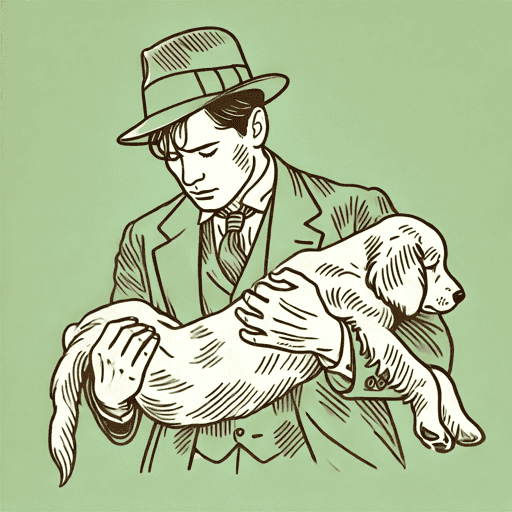
At home, David knows that both he and his daughter believe that it is time for his visit to end. At the same time, however, he does not want to “abandon his daughter” (141). His Byron opera remains a distant dream, which only angers him further. David spends his Sunday helping Bev at the clinic. They euthanize “superfluous” stray dogs. David holds the dogs while Bev injects them with the deadly chemicals. David becomes emotionally affected by the job, and this confuses him. He feels immense compassion for the dogs that are about to die. Increasingly, David has become responsible for disposing of the dead dogs. On Mondays, he drives the dead dogs to the hospital incinerator. The workers at the incinerator brutally beat the dead dogs into small pieces to make them easier to burn. This horrifies David, so he does the work for them. He throws the dead dogs into the fire. As he does so, he feels that he has become “stupid, daft, wrongheaded” (146). Petrus once referred to himself as a dog-man, and now, David notes, David has become a dog-man of a different sort.
Chapter 17 Summary
David and Bev talk together after a day of work at the clinic. Bev mentions David’s dismissal from the college. She offers her sympathies, suggesting that college life must have been more exciting than this dull, rural community. David tries to imagine a younger version of Bev, thinking about how she might have been more attractive in her youth. Impulsively, “he reaches out and runs a finger over her lips” (148). In response, she kisses David’s hand. The following day, Bev calls to invite David to meet her at the clinic, even though it is typically closed on Mondays. David meets her at the empty clinic, and they have sex on the floor of the locked, unlit surgery room. Afterward, David reflects on what he has “come to” (150); he tells himself that he must get used to this “and even less than this” (150).
Chapter 18 Summary
Petrus borrows a tractor to plow his land. In his mind, he can see his future house overlooking Lucy’s farmhouse. David asks whether Petrus will build the house himself. Petrus says that he will dig the foundations, which is “just a job for a boy” (152). Though David hates Petrus, he asks whether Petrus would manage the farm in the event that Lucy were to go back to Cape Town for a vacation; Petrus says that it would be too much extra work.
A police detective calls David to say that his stolen car has been found. David and Lucy go to collect the car, and the detective explains that the two men who were arrested for the attack are now out on bail. David realizes that this car is not his, which annoys both him and Lucy. David encourages his daughter to leave her “house full of ugly memories” (155), suggesting that she needs to start a new life somewhere else. Lucy refuses, and David cannot understand her decision. She is sorry that she cannot explain herself to him.
David and Lucy drive home together. For the first time, she speaks to him about the attack. The attackers, she says, treated her with “such personal hatred” (156). This shocked her. David suggests that this was “history speaking through them” (156). Lucy also explains that she needs to make her own decisions. She does not believe that David can understand her, though he insists that he does: She was “raped. Multiply. By three men” (157). Despite this, even though Lucy was terrified, David could not save her. David failed her. Lucy believes that the attackers will come back for her, which is “the price one has to pay for staying on” (158). She believes that the attackers see themselves like debt collectors. David recalls his nightmares about beds and baths covered in blood. He pictures the scene of his daughter being raped, and while he can imagine himself as the men, he does not “have it in him to be the woman” in this scenario (160).
Lucy writes David a letter later that night, in which she explains that she is “a dead person” (161) and she does not know what can bring her back to life. Lucy criticizes her father for not being able to understand why she cannot leave her farm. She says his advice and guidance is of no use to her at this moment. The next Sunday, David lays beside Bev as they talk. Bev promises that she and her husband will watch out for Lucy. She assures David that everything will be okay. As she talks, David thinks about his Byron opera.
Chapters 13-18 Analysis
After the attack, David embarks on his journey of Building Empathy. Lucy cannot remain in the same bedroom where she was raped, as staying in the same place would be too traumatic. This is a subtle inversion of David’s departure from Cape Town: Lucy, a victim of violence, feels a need to exile herself, while David left Cape Town after committing an act of violence. Arrogantly, he considered himself to be the victim of an unwarranted persecution. While Lucy is justified, her father is deluded. David moves himself into Lucy’s bedroom, taking up the space which she has deemed too traumatizing, and this becomes an unexpectedly important step in his journey toward developing empathy. He physically puts himself in Lucy’s position and forces himself to think about her thoughts and experiences, and he experiences empathy in the most uncomfortable way. While he struggles to put himself in Lucy’s position, he tellingly begins to empathize with her attackers. In another scene, too, David sees himself as having more in common with the attackers than with the victim. He will realize what Lucy and Melanie share in common and how he, too, is responsible for violence. David taking up residence in Lucy’s bedroom is the first step on his journey toward learning empathy and condemning his own actions.
David also struggles with Navigating Change—he settles on his preconceived racist assumptions as he processes the attack. He focuses on Petrus in his search for justice. While David struggles to articulate his exact thoughts, he decides that Petrus must know more about the attack and that he was in on it in some way. He decides that Petrus’s link to the crime must be investigated further, but to David’s disappointment, he realizes that his views do not hold any credence in a post-apartheid world. Lucy ignores David’s rants on the subject, and she finds his reactions so overblown and unlike her own thoughts on the matter that she refuses to even confide in David. Disappointed that his own daughter is cutting him out of her life, David struggles even more when he realizes how little power he holds over Petrus. He cannot demand that Petrus submit to his whims; when he quizzes Petrus on the subject, hoping to get a confession out of him, Petrus ignores him. David spent most of his life as a white man who benefited from the racial power imbalance of apartheid, and now, he is tuned to mistrust Black people and is frustrated when he is unable to exert influence over Petrus. When he confides in Bev about his suspicions regarding Petrus, she claims that Petrus has always been there for Lucy and has helped her more than David ever has. David is shocked when Bev places both men on an equal footing when she compares their involvement in Lucy’s life.
David and Bev develop a bond rooted in compassion and empathy for the animals they work with, and this invokes the theme of Disgrace and Atonement. Though David announced his lack of interest in pets and animals, he discovers that his work at the clinic moves him, setting the stage for his eventual atonement. Earlier, David was alienated, selfish, and cynical, but he discovers that this volunteer work gives his life purpose. David and Bev euthanize abandoned and unwanted dogs as a public service. David offers these dogs love and compassion by holding them and soothing them at the end of their lives; after they are dead, he ensures that their bodies are treated with dignity before they are incinerated. David’s time at the clinic becomes the focus of his days, and eventually, David and Bev have a romantic connection and have sex. Their affair differs from David’s earlier sexual encounters in the novel: Unlike Soraya, who was paid by David, or Melanie, who was coerced by David, Bev is a willing participant in the affair. She does not appeal to him sexually, as Melanie and Soraya did. Instead, she offers him an emotional connection. David is a withdrawn, alienated individual who—for much of his life—has only been able to relate to women through the act of sex. When Bev offers him emotional atonement in the wake of the attack, helping him to find a way to forgive himself, he reacts in the only way he knows how to connect: by initiating a sexual encounter. He initially frames their sexual encounter as a fall for a man like him, thinking in an embarrassed way that Bev is very different from Melanie’s youth and beauty. However, their affair continues and their connection deepens, with David and Bev spending their time alone holding each other and talking rather than always turning to sex. David appreciates her kindness and is kind in return, which is very different from how he usually treats women, illustrating his burgeoning empathy.

Unlock all 55 pages of this Study Guide
Get in-depth, chapter-by-chapter summaries and analysis from our literary experts.
- Grasp challenging concepts with clear, comprehensive explanations
- Revisit key plot points and ideas without rereading the book
- Share impressive insights in classes and book clubs