Dragonslayer
70 pages • 2-hour read
Tui T. SutherlandDragonslayer
A modern alternative to SparkNotes and CliffsNotes, SuperSummary offers high-quality Study Guides with detailed chapter summaries and analysis of major themes, characters, and more.
Part 1, Chapters 5-9Chapter Summaries & Analyses
Content Warning: This section of the guide includes discussion of death, animal death, and graphic violence.
Part 1, Chapter 5 Summary: “Leaf”
After his sister Wren’s disappearance, nine-year-old Leaf discovers an unexpected ally in his oldest sister, Rowan. One day after school, she claims to be helping him study for the dragonmancer exams but instead leads him into the forest, where she produces two wooden swords. Rowan secretly trains Leaf to become a warrior capable of slaying dragons. Even if he did study for the dragonmancer exams, she says, hardly anyone passes, and those few who succeed in becoming dragonmancer apprentices rarely survive their apprenticeships.
During their training sessions, Rowan teaches Leaf about different dragon species, including swamp, mountain, desert, arctic, and ocean varieties, as well as black dragons that her friend Grove, a refugee whose previous village was destroyed by dragons, claims to have seen. When Leaf expresses his hatred for the dragons he believes killed Wren, Rowan asks a pointed question: Would he still hate them if someone else were responsible for her death? She reveals her suspicion that the dragonmancers are hiding something and suggests Leaf could infiltrate them as an apprentice to uncover their secrets.
A dragon-warning bell interrupts their training. Racing toward their village of Talisman, they encounter Grove. Before entering the schoolhouse shelter, Leaf hears crying inside and finds Butterfly, the teacher’s young son, hiding under a desk. Leaf calms the frightened child by explaining that dragons do not hunt specific people, then carries him to safety while singing a song to distract him. In the shelter with Rowan and Grove, Leaf learns about the distant Indestructible City and its ruthless new ruler, the Invincible Lord. Grove and Rowan joke about stealing a dragon castle to live in, but Leaf silently vows that one day, dragons will hide from him.
Part 1, Chapter 6 Summary: “Ivy”
Eight-year-old Ivy hides her dragon drawings from her disapproving mother. Her friends Violet and Daffodil arrive for a Truth Seekers Club meeting. Violet produces a copied map and reveals a suspicious detail: Ivy’s father, Heath the Dragonslayer, recently claimed to have ridden to the distant mountain dragon palace and challenged the dragons there, but the journey is impossible in the three days he was gone. The girls decide to follow Heath on his next mysterious trip to discover where he really goes.
Ten days later, Ivy sees Heath leaving suddenly with a hidden bag. Unable to fetch her friends in time, she follows him alone. At a guarded tunnel exit, Heath encounters Foxglove, a young Wingwatcher who attempts to enforce Heath’s own law requiring anyone leaving the underground city to state their purpose. Irritated, Heath claims he is inspecting orchards on official business.
After Heath climbs to the surface, Ivy approaches Foxglove and invents an excuse to follow him. Amused, Foxglove agrees to accompany her outside. In the forest, a dragon roars overhead. Foxglove immediately lifts Ivy into a tree and teaches her the crucial lesson: Always hide from dragons, never run. From their perch, Ivy watches her father race past in apparent panic. Then she glimpses a beautiful black dragon soaring overhead, its scales shimmering with dark colors. While Foxglove calls running from dragons cowardly, the dragon captivates Ivy. She tells Foxglove she loved seeing it, and the Wingwatcher confides that she also secretly admires dragons. Foxglove offers Ivy early training sessions and makes her promise never to go outside without a Wingwatcher escort.
Part 1, Chapter 7 Summary: “Wren”
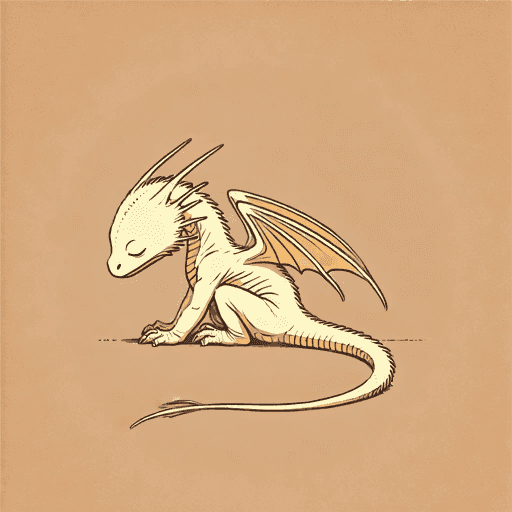
Wren and her dragon companion Sky shelter in a valley near the Indestructible City. She tells Sky she must enter the city alone to obtain new clothes, as her old dress has become too small. Sky protests desperately, but after two days, reluctantly accepts the plan. Wren encourages him to practice flying during her absence.
Approaching the city, Wren discovers that it sits atop a steep cliff, accessible only by treacherous stairs or a cargo platform. Both routes are heavily guarded by soldiers in spiked armor. She watches from hiding as guards inform desperate refugee families that the new Invincible Lord will admit only one family, and only if they bring him the Dragonslayer. When one family begs to be allowed to visit the market, just for the day, to trade the goods they’ve brought, the guards demand that they first leave their children behind as collateral. They also declare that all orphans must be surrendered to the city permanently. Horrified, Wren abandons her plan to enter.
While retreating through the waiting crowd, she collides with a boy holding an enormous orange cat. The boy reveals that his name is Undauntable and that his cat is named Dragon. When Wren produces one of Sky’s shed baby scales to trade, Undauntable desperately wants it and offers her a pouch of silver coins. Having never encountered money before, Wren does not understand the coins’ value. Undauntable escorts her among the refugee community, showing her what she can buy with the coins: She acquires a complete set of new clothes, boots, a map, books, provisions, and Undauntable’s silver earring shaped like a dragon. When Undauntable correctly guesses that the scale came from a baby dragon and speculates about hunting it, Wren lies, claiming she found it in distant swamps. Undauntable reveals that he is the prince of the Indestructible City and predicts she will be dead within a year. After deliberately walking south to mislead any watchers, Wren circles back and returns to Sky in their hidden valley.
Part 1, Chapter 8 Summary: “Leaf”
At 14, Leaf has spent six months as an unwilling dragonmancer apprentice assigned to Master Trout. Although his parents are thrilled, and Rowan and Grove group encouraged him to take the dangerous position to uncover secrets, Leaf resents every moment spent on menial chores instead of training to become a dragonslayer. He copes by having imaginary conversations with Wren in his head. His only relief comes during weekly training sessions in the forest with Rowan, Grove, and their expanded group, which now includes Cranberry, an acrobat, and twin brothers Mushroom and Thyme.
One day, Grove asks if Leaf has discovered anything in Trout’s house. Grove is angry because the dragonmancers recently used a supposed vision to confiscate crops and livestock from his father’s farm, and no villagers supported his objections at the village meeting. Leaf reports that Trout’s study is always locked. Grove volunteers to break in himself, and Rowan worries it is too dangerous, but six days later, when Trout is away, Leaf lets Grove into the house.
Grove picks the lock, and they enter together. The study contains numerous oversized, gem-studded artifacts that Leaf recognizes as dragon treasure. When he notices scratches in the floor, he slides a bookshelf away from the wall, revealing an enormous map and blueprint of the mountain dragon palace. The detailed drawing includes notes in an unknown language and additions in Trout’s own handwriting. Grove theorizes that their village, Talisman, was originally founded by treasure smugglers who became the dragonmancers. Overwhelmed, Leaf wishes Wren were there. Grove encourages him to imagine what advice she would give him, and the imaginary Wren in his head tells him he must copy this map for her sake. Leaf sits down and begins the painstaking work.
Part 1, Chapter 9 Summary: “Ivy”
In the underground city of Valor, 13-year-old Ivy celebrates becoming an official Wingwatcher alongside her best friends, Violet and Daffodil. At the welcome ceremony, Commander Brook greets them warmly and asks Ivy about her uncle Stone, who left their underground city of Valor a year earlier, noting that he never recovered from what happened during Heath’s dragonslaying quest in the desert. When Violet tries to learn more, Brook deflects.
Foxglove arrives and accepts a thank-you drawing from Ivy. When Violet asks if Foxglove plans to retire, she reveals that most Wingwatchers from her cohort are staying on. Violet brings up the banishment of Pine and three other Wingwatchers, and Foxglove becomes cautious, suggesting they discuss it privately later. After Foxglove leaves, Violet reveals her secret theory to a shocked Ivy: She believes a revolutionary conspiracy is forming within the Wingwatchers to overthrow the government of Valor. As Daffodil confirms that this is why Violet joined, Ivy feels conflicted, as she realizes why her friends kept this secret from her: Her father is Heath, the ruler of Valor.
Heath arrives and inspects the new recruits, embarrassing Ivy by singling her out as his daughter. She senses the older Wingwatchers exchanging wary looks. During Heath’s speech praising the Wingwatchers, Ivy remembers seeing him flee in panic from a dragon and has the disturbing thought that perhaps he should not be Valor’s lord. After the ceremony, Foxglove warns Ivy to hide her love of dragons from Brook, who lost many people when Valor’s original above-ground village was burned. Observing Brook’s visible tension during Heath’s speech, Ivy wonders if the commander might be leading the conspiracy. She realizes that if Violet and Daffodil find proof of a revolution, she may be forced to choose between her family and her friends, her dream, and the dragons she loves.
Part 1, Chapters 5-9 Analysis
These chapters establish the theme of Deception as a Tool of Power by positioning each protagonist as an investigator within their respective society. Leaf, Ivy, and Wren are all driven by a skepticism toward the dominant ideologies they have been taught. Ivy’s Truth Seekers club challenges the heroic myth of her father, the “Dragonslayer,” by using logic and map-reading to expose the impossibility of his claimed exploits. Her investigation interrogates the foundational myth that legitimizes Heath’s rule. Just as Ivy questions her father’s purported heroism, Leaf begins to question the infallibility of the dragonmancers, the spiritual and political authorities of Talisman. Rowan’s pointed question about who is truly responsible for Wren’s death initiates Leaf’s journey from simple vengeance to critical inquiry, as he begins to wonder whether the dragons bear sole responsibility for his sister’s supposed death. Elsewhere, Wren’s observations at the Indestructible City dismantle its reputation as a bastion of safety, revealing it as an exploitative system built on the subjugation of the vulnerable, particularly children. Through these parallel journeys, the text demonstrates that discovering the truth often requires questioning authority.
The motif of hiding and secrets functions as the primary mechanism through which characters navigate and subvert these oppressive systems. The protagonists’ quests for truth are clandestine operations: Leaf trains with Rowan in a secret forest clearing, Ivy hides her dragon drawings and follows her father in secret, and Wren and Sky live in a hidden valley. This secrecy is a necessary tool for survival and resistance against regimes that punish dissent. The physical discovery of hidden spaces—such as the secret map behind Master Trout’s bookshelf—symbolizes the unearthing of concealed truths. Furthermore, the act of hiding is re-contextualized as a strategic virtue. Foxglove teaches Ivy that in the face of overwhelming power, one must “hide. Do not run” (91), framing hiding as an act of intelligence and patience. This lesson contrasts with the behavior of Heath, who runs in apparent panic from a dragon, revealing the hypocrisy of a leader who secretly evades the dangers he claims to conquer. The pervasiveness of this motif illustrates how power in this world is maintained through the control of information, forcing those who seek the truth into the shadows.
The narrative develops its protagonists through a structure of parallel arcs and character foils, highlighting different paths of resistance against systemic corruption. While all three protagonists are disillusioned, their responses diverge. Wren chooses separation from human society, forming a primary bond with a non-human. Ivy seeks to reform her society from within, aspiring to join the Wingwatchers, an institution she hopes holds more integrity than her father’s leadership. Leaf initially channels his grief into a desire to become a traditional dragonslayer, embodying the very ideology his society promotes, before Rowan and Grove steer him toward uncovering the system’s internal rot. Their companions further define these paths: Sky represents an alternative to human conflict, Violet provides the intellectual framework for Ivy’s investigation, and Grove fuels Leaf’s suspicion of the dragonmancers with his own experiences of their injustice. This tripartite structure allows for a multifaceted exploration of rebellion, suggesting there is no single correct response to a broken world.
The injustice that pervades this world arises from Greed as a Source of Corruption. The dragon treasure Leaf discovers in Trout’s study is evidence of a foundational hypocrisy. The presence of these artifacts suggests that Talisman, a village supposedly protected by the dragonmancers’ piety, was likely founded on smuggling and theft. The treasure symbolizes a hidden history of greed that underpins the dragonmancers’ authority. In Valor, the title of “The Dragonslayer” is similarly based on a lie, and in this section, Ivy and her friends in the Truth Seekers begin to uncover the truth beneath that lie. For the public, the title “Dragonslayer” signifies safety and human supremacy. For Ivy, it comes to symbolize deceit and unearned authority. Meanwhile in Wren’s storyline, Sky’s sensitive and gentle character challenges the central prejudice of human society. As Wren’s companion, he embodies the falsity of the monstrous dragon stereotype used by leaders like Heath and the Invincible Lord to justify their power and incite fear. Sky’s existence serves as living proof that peaceful coexistence is possible, undermining the entire premise of the human-dragon war.
The multi-perspective narrative is a crucial structural choice that generates dramatic irony and reinforces the unreliability of any single worldview. By shifting between protagonists, the narrative provides the reader with a more complete, albeit fragmented, truth than any individual character possesses. While Leaf trains obsessively to avenge Wren’s death, eager to kill any dragon he can, the reader is aware that Wren is alive and that her best friend is a dragon. This knowledge emphasizes the devastating personal cost of official lies. Similarly, the audience witnesses Heath’s panicked flight from a dragon, a secret that re-frames his public persona as a hollow performance long before the citizens of Valor might learn the truth. This structural choice forces the reader into an analytical role, piecing together disparate clues and perspectives to understand the full scope of the world’s corruption. This experience mirrors the protagonists’ own quests, making the act of reading a parallel process of deconstructing established narratives.

Unlock all 70 pages of this Study Guide
Get in-depth, chapter-by-chapter summaries and analysis from our literary experts.
- Grasp challenging concepts with clear, comprehensive explanations
- Revisit key plot points and ideas without rereading the book
- Share impressive insights in classes and book clubs