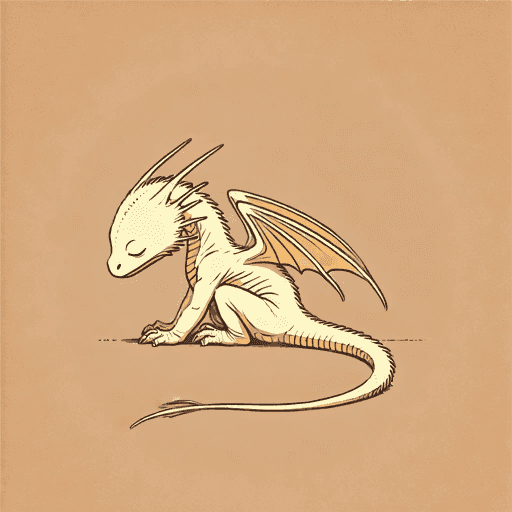
Dragonslayer
70 pages • 2-hour read
Tui T. SutherlandDragonslayer
A modern alternative to SparkNotes and CliffsNotes, SuperSummary offers high-quality Study Guides with detailed chapter summaries and analysis of major themes, characters, and more.
Symbols & Motifs
Content Warning: This section of the guide includes discussion of death, animal death, and graphic violence.
Dragon Treasure
The dragon treasure is a symbol of Greed as a Source of Corruption, catalyzing the novel’s central conflict. The initial theft from the SandWing palace, which Heath portrays as a heroic act of daring, is in fact driven by greed and leads to the apparent death of Rose. In the Prologue, Heath’s desire for the hoard is inextricable from his desire for status, as he murmurs to his brother, “All this sand dragon treasure—ours, Stone. We’ll be kings” (xx). This statement reveals that from the outset, Heath views the treasure as a pathway to absolute authority. His subsequent actions as the lord of Valor confirm this, as he hoards the treasure in a secret cabinet, using the power it affords him to create a despotic rule built on fear and lies. In contrast, his brother Stone rejects the treasure, and while he is haunted by guilt over Rose’s death, his conscience remains intact. The treasure thus serves as a powerful symbol for the novel’s primary theme, illustrating that the pursuit of power for personal gain inevitably leads to moral decay, paranoia, and tyranny, destroying individuals and the communities they are meant to lead.
The “Dragonslayer”
The title of “Dragonslayer” is a recurring motif that represents a flawed, human-centric model of heroism founded on a lie. This motif is central to the theme of deconstructing official histories and manipulated narratives. The entire society of Valor is built upon the myth that Heath bravely slew the SandWing queen, an official history that papers over the truth of a clumsy theft gone wrong. Heath leverages this manufactured title to establish his rule, creating laws that benefit himself and banishing anyone who questions his authority. The myth is so powerful that it inspires the next generation, as seen when Rowan tells a romanticized version of the story to her younger brother Leaf, claiming that Heath “stole all her treasure and rode back home, triumphant” (23). This retelling omits the story’s greed and tragic consequences, instead presenting a simplistic narrative of conquest that motivates Leaf to pursue a violent, misguided path of vengeance. The severed dragon tail, which Heath preserves in a glass box, functions as a grotesque symbol of this motif. It is the tangible “proof” of the lie, a macabre trophy that glorifies a violent, accidental death and represents the moral decay at the heart of Heath’s constructed identity and rule.
Hiding and Secrets
Secrecy and hiding function together as a motif throughout the novel, highlighting the theme of Deception as a Tool of Power. The Prologue shows the true version of the events that Heath later mythologizes in service of his own power. The dragon’s severed tale, a trophy symbolizing the deceptive narrative of Heath’s glory, doubles as the hiding place of the treasure—evidence of his greed and deception. Meanwhile in the nearby village of Talisman, the ruling dragonmancers are so committed to secrecy that they condemn a seven-year-old girl to death because she has uncovered their secrets. Each of the three protagonists must embark on a quest to uncover dismantle the secrets that have shaped their world, and this quest often requires them to engage in secrecy and hiding of their own. When Wren first encounters the juvenile dragon Sky, he is hiding from an adult dragon who likely means to kill him, paralleling her own position as a human child in hiding from adults who want her dead. In Talisman, Ivy and her friends form a secret club, the Truth Seekers, whose purpose is to expose the secrets of the so-called Dragonslayer.

Unlock the meaning behind every key symbol & motif
See how recurring imagery, objects, and ideas shape the narrative.
- Explore how the author builds meaning through symbolism
- Understand what symbols & motifs represent in the text
- Connect recurring ideas to themes, characters, and events