50 pages • 1-hour read
Dragonsong
A modern alternative to SparkNotes and CliffsNotes, SuperSummary offers high-quality Study Guides with detailed chapter summaries and analysis of major themes, characters, and more.
Foreword-Chapter 3Chapter Summaries & Analyses
Foreword Summary
Content Warning: This section of the guide includes descriptions of animal death, bullying, mental illness, gender discrimination, child abuse, physical abuse, emotional abuse, and death.
The story takes place on a planet called Pern, which orbits the star Rukbat in the Sagittarian Sector. At regular intervals, a mysterious red star falls into Rukbat’s orbit and releases deadly, thread-like alien spores onto Pern’s surface. The Thread is vulnerable to water and fire and cannot delve through metal or stone. However, the spores dig into any organic matter that they touch, devastating Pern’s population and agriculture. To survive, the humans who settled on Pern retreat into the caves in the northern continent and begin breeding the dragons that are indigenous to Pern. Because dragons can teleport and breathe fire, they are a highly effective weapon against the Thread. Humans with “high empathy ratings or some innate telepathic ability” (ii) are selected as the dragons’ lifelong trainers and partners.
Eventually, the humans’ subterranean settlements divide between Ford Hold and Ruatha Hold in the west, where pastoral colonists live, and the extinct volcanoes of the Benden mountains in the east, where the dragons and their riders live. As time passes, these two types of settlements spread and become more set in their distinct customs. The pastoral Holds tithe to support the dragon riders of the Weyrs. Lord Holders rule the Holds, but Crafts like “metalworking, animal breeding, farming, fishing, and mining” (v) are ruled by Masters who are independent of the Holds’ leadership; this system ensures that everyone benefits from their work.
The Red Star returns about once every 200 years, but Rukbat’s other satellites happen to block the Thread on one of these passes. During this longer Thread-free interval, the Holds’ populations prosper, grow complacent, and come to resent sending tithes to the dragonriders. By the time the Red Star returns, there is only one Weyr left. Three dragonriders named F’lar, F’nor, and Lessa convince the Lord Holders and Craftsmen of the imminent danger of the returning Thread, but there aren’t enough dragons to stave off the threat. Lessa discovers that dragons can teleport through time. She and Ramoth, her golden dragon queen, travel 400 years back in time and bring five Weyrs of dragonriders forward to battle the Thread. Dragonsong takes place seven years after Lessa and Ramoth’s return from this epic journey.
Chapter 1 Summary
When Petiron the Old Harper passes away, a 14-year-old girl named Menolly is the only person in Half-Circle Sea Hold with the musical skills needed to honor him with a Deathsong. Her father, Sea Holder Yanus, is greatly upset by this because women aren’t allowed to be Harpers. Menolly has been Petiron’s student, and in recent weeks, she also became his nurse when the elderly man fell ill. After she sings his Deathsong, he is buried at sea (3), and only then does she allow herself to weep for the death of “her friend, her ally and mentor” (3). She also drops the drum and the stick that she used to perform the song into the water. Menolly is glad when a brown dragon flies overhead because its appearance feels like a tribute to the late Harper. The men on the burial barge treat her with respect because she sang the elegy well; their demeanor surprises her because her fellow holders are usually dismissive toward her.
One of a Harper’s responsibilities is to educate the Hold’s children by teaching them the time-honored Teaching Songs. It will likely be months before Masterharper Robinton sends a new Harper to Half-Circle, and Menolly overhears some of the Hold’s women asking her mother, Mavi, if Menolly can instruct the children in the meantime. Mavi and Yanus are opposed to this suggestion, because girls are not allowed to be Harpers in Half-Circle and because they disapprove Menolly’s habit of inventing catchy tunes instead of simply playing the traditional songs of Pern. However, Petiron had seen great potential in Menolly’s compositions, and he even sent two of her songs to Masterharper Robinton shortly before his death, although he did not tell the Masterharper that a girl wrote the songs. Now, despite Yanus’s reservations, he eventually decides to entrust Petiron’s guitar and teaching duties to Menolly. Mavi echoes her husband’s order that Menolly stop playing her own tunes, admonishing the girl, “Behave yourself when you stand in a man’s place. No tuning!” (12).
Chapter 2 Summary
Menolly greatly enjoys her new teaching responsibilities despite her parents’ disapproval. Yanus often comes to the Little Hall to scowl at her while she is teaching, and Mavi assigns her “all the smelliest, most boring or tedious jobs” (14) after she finishes her teaching duties for the day. When a message from Masterharper Robinton (addressed to Petiron) arrives, the girl hopes that it is a response to her mentor’s message about her songs. However, her mother scolds her for asking about the men’s correspondence, believing that teaching has given her youngest daughter an exalted opinion of her own importance.
After a Threadfall, Menolly is assigned to a flame-thrower crew that seeks out and destroys any Thread spores that escaped the dragons’ fire. The girl is thrilled when she sees the dragonrider F’lar and his beautiful bronze dragon, Mnementh. The marvelous and rare sight of watching a dragonrider take flight inspires Menolly to compose a new song. Her older sister, Sella, catches her composing and threatens to tell their parents. That night, the Sea Hold is in a celebratory mood, and Menolly performs two traditional sagas about dragons.
The next day, she grows weary from singing and playing music by herself, so she starts to teach one of the children how to play the drums. Mavi sternly reprimands Menolly because she believes that music instruction is the sole prerogative of Harpers. She tells her daughter, “Just your good fortune Sea Holder is out in the Deep or you’d have the belt across your shoulders, so you would. No more nonsense” (18).
Menolly continues writing and practicing her own songs, but only when she is alone. One lovely spring day, she accidentally performs a melody of her own composition during a lesson. Her father overhears, sends the pupils away, beats her with his belt, and takes Petiron’s guitar. When Mavi learns the news, she regards her daughter with disgust and sends her out of the Hold to gather plants.
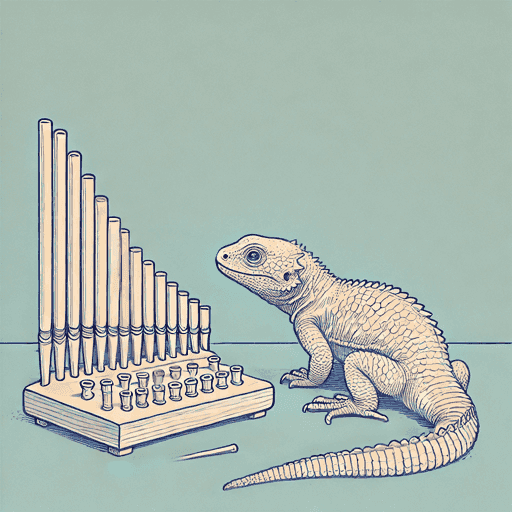
Menolly sees a group of fire lizards in a seaside cove near a landmark called the Dragon Stones. Fire lizards resemble dragons but are much smaller, and they are so elusive that some humans think they’re only a myth. After the creatures fly away, the ecstatic Menolly fashions a pipe from a reed and improvises a song about the sight.
Chapter 3 Summary
When Menolly returns to the Hold, she learns that a ship is approaching, presumably bearing Petiron’s replacement. Mavi supervises the Hold’s women as they hurriedly prepare a feast. Menolly is assigned to tend to “Old Uncle,” her great-grandfather, who is a former Sea Holder. Sella gives Menolly a packet of sweets to appease the talkative elderly man and keep him quiet during the feast to welcome the Harper, and Menolly is surprised by the helpful gesture. The new Harper is a handsome young man named Elgion. When Old Uncle loudly calls for a humorous song, Elgion answers that they must “put lightness and laughter” away and “honor the dragonrider” (37) in these dangerous times. Old Uncle causes a disturbance, and Menolly misses the Harper’s performance because she is tasked with tending to her elderly relative instead.
Over the next few days, Menolly is kept busy with manual labor. Both of her parents are more cross with her than usual, and she wonders if they are worried that Elgion will learn that she taught the children. One day, Menolly badly cuts her left palm while cleaning a poisonous fish. When she asks her mother what the injury means for her musical abilities, Mavi warns her, “Even if your fingers will work after that slice, you won’t be playing again” (43).
Foreword-Chapter 3 Analysis
In Dragonsong, McCaffrey weaves together the genres of science fiction and fantasy to tell a coming-of-age story with feminist overtones. Like her acclaimed Dragonriders series and the rest of the Harper Hall trilogy, the novella takes place on the planet of Pern, and the foreword highlights McCaffrey’s unique niche in the literary world by showcasing her talent for blending elements of science fiction and fantasy. For example, the foreword sets the stage and appears verbatim at the beginning of many of McCaffrey’s Pern-themed stories, featuring classic science fiction trappings details such as telepathy, teleportation, time travel, and human colonization of a distant planet,. Even the dragons, which are usually a staple of fantasy, are given a science fiction twist. These creatures are “a highly specialized variety of a life-form indigenous” (ii) to Pern, and the specific dragons used to fight the Thread are the product of a selective breeding program undertaken by human scientists. Dragonsong is generally classified as a young-adult title, and the main conflict is based on Menolly’s efforts to become a Harper despite opposition from her family and culture. The struggle for independence is a frequent subject in young-adult fiction because it reflects a common challenge that adolescents face in the real world. Dragonsong therefore combines science fiction settings and fantasy adventure with realistic human experiences.
By relating Menolly’s passion for music, McCaffrey examines the theme of Empowerment Through Self-Expression. Early in the story, the author emphasizes that Menolly’s skills for singing, playing instruments, and composing songs are rare gifts that should be cherished. As Harper Petiron observes, “One in ten hundred have perfect pitch […] One in ten thousand can build an acceptable melody with meaningful words” (4). Music is the protagonist’s greatest passion, and although her family lacks the capacity to understand her zeal, Menolly considers music to be “the one thing that made her life bearable” (44) in an existence otherwise characterized by drudgery, disrespect, and outright abuse. Her decision to continue writing and playing songs in secret at the risk of her parents’ displeasure speaks to her great love for music and the solace that it offers her. At this early point in the story, the injury to Menolly’s hand is existential in nature, as it threatens her ability to pursue her passion and to empower herself.
Yanus and Mavi’s opposition to Menolly’s dream of becoming a Harper illustrates The Struggle Against Oppressive Societal Norms, and McCaffrey makes it clear from the very beginning that their hardline stance is rooted in sexism. Even after their youngest daughter performs a Harper’s responsibilities well, they are unable to cast off the tradition stipulating that only men can be Harpers at Half-Circle Sea Hold. As the Hold’s leaders, Menolly’s parents have a strong stake in maintaining the status quo. This conflict comes to a head in Chapter 2 ,when Menolly’s father uses physical violence as punishment when she gives way to her musical talents and plays a fragment of her own song. As the narrative states, “If only she had been a boy… Then it wouldn’t have mattered if Petiron had died and left them Harperless. Nor would Yanus have beaten a boy for being brave enough to sing his own songs” (23). This moment of brutality makes it clear to Menolly that her parents’ “judgment was irrevocable and harsh” (21). When she realizes that her parents will never accept or honor her deepest passions and will instead commit flagrant abuse in order to thwart her, Menolly has no real reason to stay. This confrontation thus foreshadows her later decision to stay away from Half-Circle Hold indefinitely. If Menolly is to realize her goal of becoming a professional musician, she must do so in the face of societal opposition, starting with her own parents’ violent antipathy.
Throughout Menolly’s struggles in these early chapters, she is emotionally devastated by her grief over Petiron’s death, and his absence from her life deprives her of The Role of Mentorship and Community in Personal Development. Although the broader community of Half-Circle Sea Hold is more appreciative of her talents and is more open to change than Yanus or Mavi, the holders do not challenge their leaders’ harsh treatment of Menolly, and it is clear that she must leave her birthplace behind in order to find a community that will truly honor her. Initially, McCaffrey emphasizes the protagonist’s deep loneliness and the absence of a support structure by opening the novel with the aftermath of Petiron’s death and establishing that “[h]e had been the only person in the Sea Hold who had ever encouraged her in anything: and most especially in that one thing that she was now forbidden to do” (19). With the loss of this single source of kindness and understanding, Menolly is bereft of any guidance or encouragement in her goals.
Although Petiron dies before the story opens, he exerts a major influence on the narrative’s structure by advocating on Menolly’s behalf and writing to the head of the Harpers. The recurring mentions of Masterharper Robinton in these chapters also foreshadow his presence in the novel’s conclusion, when his interest will finally grant Menolly the freedom to pursue her musical passion in earnest. In the meantime, although Harper Petiron’s death is a great loss to Menolly, her late mentor’s actions will eventually help her find a supportive community and others who believe in her.
Throughout the novella, Menolly’s determination to engage with music however she can serves as a motif of her pursuit of empowerment through self-expression. Menolly’s musical skills are a key part of her unique identity, and her talent is apparent when McCaffrey states that the young protagonist is “the only person in the entire Half-Circle Sea Hold who could play any instrument as well as the old Harper” (1). Whenever she has joyful experiences, her immediate reaction is to turn them into songs, as when the sight of the fire lizards inspires her to compose “a fire lizard song: sprightly, cunning, secretive” (29). Menolly is at her happiest and most authentic when she is writing and performing music, and these moments provide the only relief from her deeply oppressive life in Half-Circle Sea Hold.
As the story continues, fire lizards also emerge as a motif of community. Menolly encounters the creatures for the first time in Chapter 2, and they become central to the plot and the protagonist’s character development in the next two sections. The contrast between Menolly’s elation at seeing the fire lizards and the loneliness of her life at Half-Circle Sea Hold hints at their future thematic importance and the much-needed sense of belonging that she finds among them.

Unlock all 50 pages of this Study Guide
Get in-depth, chapter-by-chapter summaries and analysis from our literary experts.
- Grasp challenging concepts with clear, comprehensive explanations
- Revisit key plot points and ideas without rereading the book
- Share impressive insights in classes and book clubs