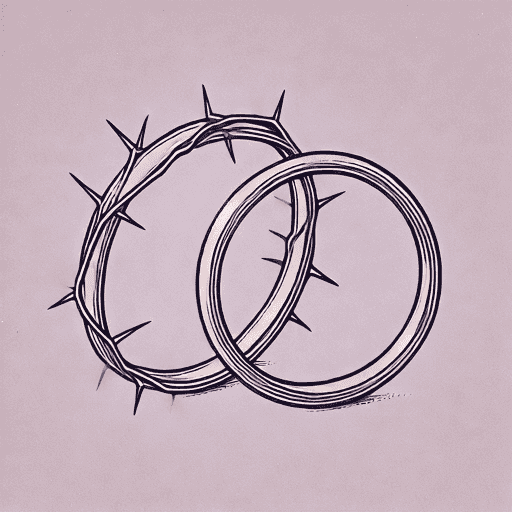
Electric Idol
64 pages • 2-hour read
Katee RobertElectric Idol
A modern alternative to SparkNotes and CliffsNotes, SuperSummary offers high-quality Study Guides with detailed chapter summaries and analysis of major themes, characters, and more.
Background
Series Context: The Dark Olympus Universe and the Romance Genre
The Dark Olympus series begins with Neon Gods, which focuses on Psyche’s sister, Persephone, whose resistance to the prospect of an arranged marriage with Zeus (Perseus’s father) forces her to flee to the realm of Hades, a fallen Olympian leader. Hades grants her sanctuary in his realm, agreeing to protect her from Zeus until spring, when she can access her trust fund (and her independence). As the two spend time together, they develop a passionate romantic and sexual relationship and grow to see each other as equal partners. When Hades trespasses in Zeus’s territory in order to rescue Persephone’s younger sister, Eurydice, this move sets off a political crisis. Attempting to negotiate peace, Persephone tells Demeter that she will return to Olympus and make public appearances by Hades’s side—but only if Demeter dethrones Zeus and protects Persephone and Hades from the fallout. As the crisis unfolds, events accelerate toward a climactic struggle between Hades and Zeus, in which Zeus ultimately falls to his death. In the aftermath, Demeter hides all evidence of the fight and adheres to Persephone’s bargain.
As the second book in this well-established series, Electric Idol reintroduces familiar characters and builds on their dynamics while adding new characters and political complications. Psyche is more uncertain in the aftermath of Persephone’s departure for Hades’s realm in the lower city. She is also disconcerted by the fact that Demeter’s ambitions for arranging political marriages for her daughters are undimmed despite the near disaster of Persephone’s experience in Neon Gods. Notably, Aphrodite’s son Eros appears in the first novel only as an adversary, sparring verbally with Persephone while pursuing the hedonism found in Hades’s kink club. Eros’s presence in Electric Idol as a point-of-view character gives him a greater degree of emotional depth and complexity, highlighting his struggles with Aphrodite’s toxic influence.
In Electric Idol, Robert uses the marriage-of-convenience romance trope to develop the Dimitriou family dynamics, and Psyche and Persephone’s close sisterly bond is tested once more by Psyche’s choice to marry Eros. Demeter is just as ambitious now as she was in the previous installment, and she is even more willing to accept unconventional choices. Robert also uses key scenes in Electric Idol to foreshadow the primary conflict and characters for the series’ third installment, Wicked Beauty. To this end, the descriptions of Callisto’s fiery temper and choice to marry Zeus in order to protect Eurydice set up her unlikely romance with Perseus Kasios, as well as her ascension to the highest levels of Olympian politics. Likewise, Eros’s presence as a protagonist provides Robert with the opportunity to introduce Helen Kasios, who emerges in Electric Idol as a sharp observer with ambitions of her own. Her presence and the brief reference to Ares’s illness in the Epilogue both foreshadow her role as the protagonist in Wicked Beauty.
Robert also introduces additional minor characters who appear as protagonists in more recent books. For example, Orpheus’s presence in Electric Idol allows Psyche and Eros to act as allies and deepens Psyche’s connection to Helen. At the same time, Orpheus’s problematic behavior and the aftereffects of his relationship with Eurydice allude to the core conflict of the novel Midnight Ruin, which reunites Orpheus and Eurydice and explores their growing relationship with Charon, Hades’s close ally.
Literary Context: Dark Olympus and the Myth of Eros and Psyche
Whereas Neon Gods is focused on reinventing the myth of Hades and Persephone, Electric Idol reimagines the myth of Eros and Psyche, drawing on the version set forth in such classic works as Edith Hamilton’s Mythology. In the original Greek myth, Aphrodite frequently cherishes mortals whom she deems to be her favorites, and she is also notorious for bringing harm on those she sees as rivals. In the story of Eros and Psyche, Psyche is a human woman who is so widely renowned for her beauty that Aphrodite grows jealous. Psyche is carried away to sanctuary by the wind, and she arrives to find that she is now married to a husband whom she sees only at night. The mysterious man (Eros) claims that disaster will strike them both if she ever sees his face.
Psyche eventually disregards Eros’s order not to look at him and is forced to flee as a result of her disobedience. She is also rejected by her sisters. Aphrodite sets trials for her, promising to reunite the two lovers, but the tasks are so difficult that they require assistance from other members of the pantheon, including Demeter and Persephone. In the end, Zeus helps to reunite Psyche and Eros and makes Psyche immortal in exchange for Eros’s help in finding him a future lover.
Robert simultaneously reinvents the original myth while continuing to rely on many of its dominant tropes. In Robert’s version, Aphrodite’s envy is the basis for Eros and Psyche’s marriage of convenience, and at first, Psyche only agrees to have sex with Eros for a single night. She assures him that their intimate relationship will end when the sun comes up. Demeter and Persephone are allies because they are family, not because they are gods acting on Psyche’s behalf. Psyche primarily rescues herself by capitalizing on Aphrodite’s vanity to record the plot against her.
Eros and Psyche’s relationship is also one of equals, as Psyche forces Eros to face himself both metaphorically and literally during their intimate moments in front of his home’s mirrors. The mirror-themed décor also subtly alludes to Eros’s traditional mythological role as a god of love, with Cupid as his Roman counterpart. Specifically, Psyche finds “jagged hearts and a cluster of arrows” in the frame of a mirror (78).

Unlock all 64 pages of this Study Guide
Get in-depth, chapter-by-chapter summaries and analysis from our literary experts.
- Grasp challenging concepts with clear, comprehensive explanations
- Revisit key plot points and ideas without rereading the book
- Share impressive insights in classes and book clubs