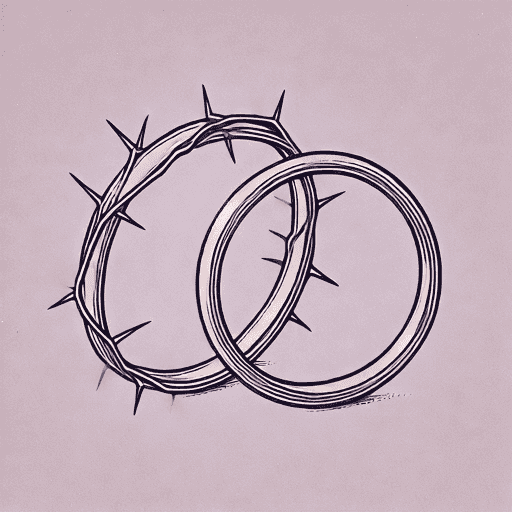
Electric Idol
64 pages • 2-hour read
Katee RobertElectric Idol
A modern alternative to SparkNotes and CliffsNotes, SuperSummary offers high-quality Study Guides with detailed chapter summaries and analysis of major themes, characters, and more.
Chapters 14-20Chapter Summaries & Analyses
Chapter 14 Summary
Content Warning: This section of the guide includes discussion of sexual content, child sexual abuse, and death.
Psyche mentally prepares for the wedding and greets Hades and Persephone as they arrive. She dreads Aphrodite’s discovery of the marriage, and she is equally anxious about facing her own mother, but she knows that unlike Aphrodite, Demeter is protective and loving.
Persephone asks Psyche once more if she is truly dedicated to her marriage plan. Psyche gently reminds her that she trusted Persephone’s relationship with Hades and deserves the same consideration. Persephone tells Psyche that she looks like a “goddess” and reluctantly confesses that she has invited Demeter to the wedding.
Eros enters, and Persephone is reluctant to leave Psyche with him, suggesting somewhat cuttingly that he has no idea what it is like to care about others. Psyche stops her, realizing, “If this were a real relationship, I would never let her talk to my partner like that” (155). Eros says that there is a room set up downstairs for the ceremony. When Psyche asks what else is wrong, he reluctantly explains that his mother has left him a voicemail about the wedding and has vowed to renew her plan for vengeance. Psyche panics, and Eros tries to reassure her. He also laughs uproariously when he finds out about Demeter’s attendance, telling Psyche that their mothers will keep their lives interesting. Before leaving, he tells her, “I meant it when I said you look divine. I could eat you right up. Again” (158).
Psyche attempts to convince herself that their physical chemistry is a stress response, not true desire. She feels some sadness and anxiety at the prospect of facing a wedding that does not match her prior imaginings. When she meets her mother downstairs, Demeter assures her that she is glad to be there and is relieved to know that the wedding is Psyche’s choice. When Demeter implies that she could have manipulated the situation to Psyche’s advantage, Psyche laughs and says, “Maybe on my next marriage” (161).
Chapter 15 Summary
Eros finds himself looking forward to the permanence of marriage, however unlikely he once thought it would be. He is pleased when Psyche clearly takes in that he has decorated the room and flowers to match her dress and that the guests are in a similar array of black, red, and silver. As she and Psyche approach, Demeter tells Eros, “If you do anything to bring my daughter harm in any way, I will gut you and leave you for my pigs” (164). During the ceremony, Eros is overcome with emotion and kisses Psyche passionately after the exchange of vows. Demeter reminds both of them that family dinner attendance every Sunday is mandatory.
Persephone repeats her threats to hurt Eros if necessary, and they banter about how her threats do not match her public image. Eris and Helen Kasios appear, with Eris openly gloating at the prospect of Aphrodite’s rage. Psyche is nonplussed, assuring both sisters that she trusts Eros to outmaneuver his mother. Helen responds warmly, inviting them both to her next party.
Psyche and the photographer discuss what images she wants to capture, and Eros is amused when she tells the man casually that he can feel free to sell one of the images, but only the posed shot of her choosing. Eros teases Psyche for being just as calculating as the rest of her family, and Psyche admits that life in Olympus requires ruthlessness. Eros, touched by Psyche’s meditative streak, assures her that she is nothing like him and tells her, “It takes someone special to live among monsters and not become one” (170). He urges Psyche to come upstairs for dinner since they are likely safe for the night. When he admits that Aphrodite is likely to manufacture a scandal now that her first murder attempt has failed, Psyche remains undeterred, reminding Eros that she is adept at public relations.
Chapter 16 Summary
Psyche is touched and grateful for Eros’s wedding decorations, but she is also exhausted and anxious about the future. In a particularly vulnerable moment, Psyche points out that it would be the perfect scheme for Eros to marry her and then murder her as his mother wishes. He responds sharply, “You’re mine now and I protect what’s mine” (174). Psyche realizes that if Eros did not care about her, he could have arranged a sham wedding without paying attention to her tastes.
Putting her hands on his chest, Psyche suggests that their “one time” having sex could last until sunrise. Eros tells her to be direct so that he knows exactly what she consents to, and she tells him that she would like to have sex that night. Eros agrees but asks for more chances to prove their sexual chemistry. Psyche resists the idea, reminding Eros that she has never seen him with a long-term partner in all her years in Olympus. Eros reminds her that that his history of casual dating could have more than one explanation. Psyche, when pressed, realizes that Eros avoids attachments in order to protect any partners from his mother.
As they casually touch each other, Psyche insists again that she cannot commit to a sexual relationship beyond their wedding night. Eros admits that he is desperate to be with her again. Psyche finally agrees, saying, “For as long as we’re married, you can attempt to seduce me” (178). Psyche takes in her own flushed reflection as Eros eagerly removes her wedding dress and corset. She is surprised to see that his hands are not steady and is certain that she is imagining it. Eros shocks her even more when he declares, “If I take off my pants, I’m going to be inside you, and if I’m inside you, this will be over too quickly. Don’t rush me” (180). Eros penetrates Psyche with his fingers, asking her to watch in the mirror. Watching his face, Psyche decides that he is entirely sincere in his desire for her. In the aftermath of her orgasm, the intensity of Eros’s gaze makes Psyche realize that she is in danger of falling in love.
Chapter 17 Summary
Eros feels some guilt over robbing Psyche of a more romantic marriage and wedding, though marriages for political reasons are not uncommon among the Olympian elite. Eros is privately resolved to distract her with more orgasms, giving Psyche more reason to stay with him even if she does not truly care for him. Eros eagerly kisses his way down Psyche’s body and is overcome when she says his name during her orgasm. As he prepares a condom, he tells her, “Let me have you, Psyche,” and then reflects, “The words are wrong. They mean too much, reveal too much” (167). The two have intense sex.
Eros gets more condoms, and Psyche smiles but tells him that she wants to shower first. Eros feels victorious when she takes his hand, seeing it as proof that she is no longer afraid to casually touch him. When they return to the bed, Eros tells her, “I want you. The sun isn’t up yet. Do you want more?” (191). Psyche agrees, and Eros kisses her, relieved.
Chapter 18 Summary
The next morning, Psyche tries to tell Eros that they should not have sex again. He briefly worries that she regrets the previous night, but Psyche assures him that she enthusiastically consented. However, she does not trust that their attraction will last. Eros remains undeterred, reminding her of their chance meeting in the bathroom and insisting that he was drawn to her even then. Psyche is still anxious, reminding him that their marriage cannot involve emotion. Privately, Psyche fears that “restricting sex to [the] wedding night is the only way to keep [her] heart intact” (197).
Eros assures Psyche that he only wants to be with her if she is truly enthusiastic. He understands her need for distance, saying, “There’s no reason a woman like you would want to be linked to a man like me more than you already are, and I’ll respect that” (198). Psyche is overcome by the idea that she has hurt Eros, and her resolve crumbles. She touches his arm and tells him that she has changed her mind. Eros performs oral sex on Psyche until she is overwhelmed. After she recovers, Eros is touched when she insists on reciprocating. She notes that he is “almost confused at the idea that [she wants] to take care of him too” (203). Psyche revels in the sense of power she feels as Eros lets her take the more dominant role.
Chapter 19 Summary
After Psyche performs oral sex, Eros pins her beneath him. When Psyche asks what he is thinking, he confesses to various fantasies, including bondage or sex without a condom. As their sex grows more passionate, Eros tells her, “I’m the one who makes you feel that way. I’ll do it again, whenever you need me” (210). Eros is overcome by the intensity of their chemistry. He feels selfish for wanting Psyche to stay in Olympus but knows that he cannot face a life without her. Psyche asks him if all his physical relationships are so intense, and Eros admits, “I never lose control enough to be overwhelming. Not with anyone but you” (212). Psyche teasingly suggests that they continue having sex, as they are still in bed. Eros joyfully agrees.
Chapter 20 Summary
Struggling with her feelings, Psyche asks Eros to let her shower in private and does her best to marshal her emotions. She forces herself to look content and happy for a series of selfies to post later. She then joins Eros in the kitchen, relieved when he begins discussing their first public outing as a married couple. She asks for his input and is relieved when he opts for a walk in the gardens and drinks rather than a formal meal to build up their romance. He asks why Psyche would even consult him, given her expertise, and he urges her to “stop doubting [her]self” (218).
Psyche takes in the minimalist dining room as they eat, surprised to see that it is barely used. Eros tells her that even in his childhood, family meals were not common. He indicates that the mirrors were his mother’s idea. Psyche offers to decorate in her own style in a few rooms, and Eros agrees happily. She soon breaks their companionable silence to ask how Eros came to find himself doing so many cruel and distasteful tasks for his mother. He explains that it began more righteously when he leaked incriminating photos to oust a former prominent Olympian and expose his sexual abuse of a young girl named Daphne. Then, at age 19, Eros killed a man who threatened his mother. Over time, her requests became far less noble, but by then, he struggled to say no. Psyche finds Aphrodite’s intentional manipulation of Eros horrific but reminds herself that he could have made different choices in adulthood.
Psyche decides to tell Eros some of her own secrets in order to reassure him that he is not the only one implicated in the moral compromises of Olympus. She confides that she was the one who leaked a recording of Ares complaining about the Kasios children; this move alienated him from Zeus. Psyche explains that she did this to prevent a marriage between Ares and her sister Eurydice. Psyche recalls her sister’s affair with Orpheus and her own sense as a younger woman that no one in Olympus was truly safe to confide in. She fears that being with Eros could prove “another hard lesson that [she is] destined to learn through pain” (227).
Chapters 14-20 Analysis
Psyche and Eros’s wedding showcases how their respective families have shaped their identities and their views of the world, and their interactions with each other’s loved ones allow the new couple to understand each other more fully. For example, Eros is both amused and appreciative of Persephone’s ferocious streak, and he takes a similar attitude toward Psyche’s casual threats to their photographer. The political savvy of Psyche’s family is also demonstrated when Demeter correctly assumes that Psyche has her own strategic reasons for this marriage and offers her daughter trust and support rather than judgment, even as she, too, asserts her own power over her new son-in-law. For all that Eros’s reputation rests on a hypermasculine and sexualized form of violence, he is clearly delighted and amused to be in a world where women have agendas of their own. Psyche’s casual threat to the photographer suggests that she and Eros may have different methods and morals, but neither one is above using manipulation for their own purposes; thus, it is clear that they have more in common than either of them will admit.
Eros’s guilt about the hasty wedding and his efforts to give Psyche an event in line with her aesthetics both suggest that he has come to sincerely care for her and her feelings. His open admiration of her beauty combines with Persephone’s insistence that Psyche see herself as a “goddess” to demonstrate Robert’s thematic focus on Self-Acceptance as a Source of Power. Likewise, Psyche routinely insists on her own dignity and value as a fat woman, alienating Aphrodite in the process. At the wedding, basking in Eros’s admiration, she also comes to embrace her own desirability in new and more open ways. For all that Psyche has chosen the marriage from a place of vulnerability, Eros brings her other kinds of power that drown out her remaining doubts and fears.
Psyche’s agency and self-assurance take on more salience as she and Eros negotiate the terms of their sexual relationship. While Eros sees himself as a monstrous villain, he insists on Psyche’s full and enthusiastic consent before he has sex with her, and he also continually shows his interest and desire even after their wedding night. Throughout these scenes, Robert’s decision to alternate between the protagonists’ perspectives becomes a key factor that heightens the emotional stakes. While Psyche is afraid that having sex will make her care for Eros beyond his capacity to reciprocate, Eros is discovering new depths of emotion through the intensity of his desires.
Contrary to his public reputation, Eros makes a fundamentally unselfish partner, pursuing Psyche’s pleasure almost as a kind of obsession. He admits freely that their partnership is not like any of his other liaisons, and this comment serves as a subtle indication that both emotion and sexual chemistry are heightening the bond between them. Psyche, for her part, comes to relish the obvious power that she holds in their sexual relationship, insisting on reciprocating and indulging in Eros’s various erotic fantasies. Though she does not give in to all his hypothetical demands, she is clearly not repulsed by them, and this dynamic shows that her ability to create distance between them is limited.
The post-wedding interlude also highlights Robert’s intentional reimagining of the original myth in new contexts. For example, Psyche’s attempt to confine her sexual relationship with Eros to a single night echoes the mythological story, in which Psyche only encounters her husband’s true self in darkness. In Robert’s version, Psyche tries to avoid scrutiny on the second evening of their marriage, retreating to take selfies because she fears her intensifying feelings for Eros. This dynamic underlines the idea that their time together has exposed her vulnerabilities, and when she is faced with these issues, maintaining her public persona ironically becomes a form of refuge. However, during their dinner together, Psyche asks for honesty from Eros about both his history and his home décor, and she soon comes to see that he, too, is vulnerable, harboring insecurities that come from his childhood of manipulation at Aphrodite’s hands. Robert also briefly invokes the story of Daphne and Apollo to suggest that Olympus itself is built on abuses of power. (In the original myth, Daphne rejects Apollo and transforms into a tree in order to escape him.)
Ultimately, Psyche’s choice to confess her own role in Olympian power games is an open acknowledgment that both she and Eros are survivors in a society that does not reward gentleness or warmth. For his part, Eros urges Psyche to trust her instincts and skills as an influencer, and his encouragement demonstrates how much he admires her and values her skills. As the two of them prepare to return to their public roles, they embrace a genuine, strategic partnership that increasingly blurs the lines between their marriage of convenience and their prospects for a lasting romance.

Unlock all 64 pages of this Study Guide
Get in-depth, chapter-by-chapter summaries and analysis from our literary experts.
- Grasp challenging concepts with clear, comprehensive explanations
- Revisit key plot points and ideas without rereading the book
- Share impressive insights in classes and book clubs