59 pages • 1-hour read
Equus
A modern alternative to SparkNotes and CliffsNotes, SuperSummary offers high-quality Study Guides with detailed chapter summaries and analysis of major themes, characters, and more.
Act I, Scenes 11-21Chapter Summaries & Analyses
Content Warning: This section of the guide features depictions of animal cruelty and mental illness.
Act I, Scene 11 Summary
That night, Dora comes to Dysart’s office. She believes that there is something important that Dysart should know regarding the horse picture in Alan’s room. Before the horse, a different picture was on the bedroom wall. The picture depicted Jesus Christ being tortured before his execution; Alan “insisted on buying it with his pocket money” (51). Though Frank had allowed the picture, he demanded that it be taken down after arguing about religion with Dora. He tore the picture down and threw it in the trash. This incensed Alan, who became “hysterical” (52) for a few days. Only when Frank gave him the picture of the horse did he begin to calm down. Dora leaves the office. Dysart admits that he senses a “real alarm” (53).
Act I, Scene 12 Summary
The stables where Alan worked on weekends are owned by Harry Dalton. Visiting Dysart, Dalton insists that Alan should be imprisoned for what he has done. He explains that the girl who worked at the stable, Jill Mason, experienced a “nervous breakdown” in the wake of the crime. She blames herself for what Alan has done, as she was the person who introduced Alan to the stables. Dalton remembers Alan as a good worker. He recalls, however, that he never quite believed Alan’s insistence that he never rode the horses. After Alan began working at the stables, he notes, there were strange signs. The horses were sweaty or sick in the morning, suggesting that they were ridden during the night. Dysart is interested in why Alan would want to ride alone at night rather than during the day with friends. Dalton dismisses this, insisting that Alan is “a loony” (54). Alan’s voice cuts across the conversation: riding at night “was sexy” (55), he says. That evening, Dysart tells the audience that he listened to Alan’s tape recording.
Act I, Scene 13 Summary
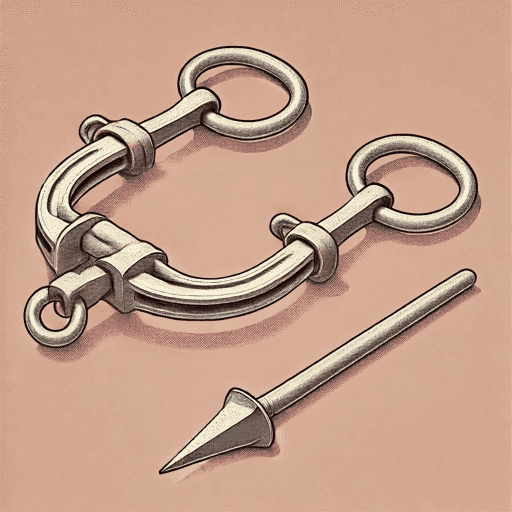
Alan records a tape. After he hands the recorder to the nurse, she takes it to Dysart. As he listens to the tape, Alan talks about the horse and the beach. He can remember the sweat on the neck of the horse. The horse seemed so powerful, as though it could go “any way [he] wanted” (55). At the same time, he remembers immediately noticing the bit in the horse’s mouth. Alan asked the horse whether it was hurt by the bit. The horse replied, Alan says, but he does not tell Dysart what the horse said.
Alan continues with his quasi-erotic description of the horse. His mother would never understand his perspective, he believes. For Dora, the appeal of horses is the dress and the formality of horse riding. She appreciates the upper-class tendency to dress up in jodhpurs and bowler hats when riding. To Alan, this approach is horrific. He views wearing a bowler hat to ride as “filthy” (56). Alan appreciates the freedom of cowboys. He exclaims that all cowboys must be “orphans” (56). The nurse interrupts to tell Dysart that Alan’s father, Frank, has arrived. This surprises Dysart, who tells the nurse to bring Frank into his office. Alan is in the midst of speaking fondly of cowboys. Frank’s arrival seems to anger him; he returns to bed as Dysart shuts down the tape machine.
Act I, Scene 14 Summary
Frank tells Dysart about a night 18 months earlier. Late in the night, Frank passed Alan’s bedroom. Inside, Alan was performing a ritual. Frank describes the ritual as Alan acts it out onstage. Alan chanted a genealogy of famous horses like “one of those lists” (57) in the Bible and then stood before the picture of the horse. As he knelt, he called out to “Equus, my only begotten son!” (58). Dysart realizes “Equus” is the entirety of the word “Ek,” which Alan has been calling out in his nightmares. Alan placed a piece of string in his mouth like a bit and flagellated himself with a wooden coat hanger. Frank blames religion for his son’s strangeness. He adds that, on the night of the blinding, Alan was out with a girl. Though Dysart asks Frank how he knows this, Frank leaves in a hurry.
Act I, Scene 15 Summary
Dysart talks to Alan about Jill, the girl from the stables. She introduced Alan to the stables, and Alan remembers when they first met at the appliance store where he worked. This scene is played out on the stage: In Bryon’s appliance store, angry customers shout out brand names and demand appliances. The chaos threatens to overwhelm Alan. This is when Jill enters. She wants a set of horse-shearing clippers. Alan recognizes her from the stables. Jill knows him as the boy who is “always staring into the yard” (62) at lunchtime. Jill says that she can introduce Alan to Dalton, hinting that there may be a job available on weekends. Alan accepts.
Act I, Scene 16 Summary
The humming sound—referred to as the Equus Noise—is heard on stage, as are the clatter of horses’ hooves. Alan stands in the middle of the stable. He find himself enraptured by this “glowing world of horses” (64). Just as he is about to sink to his knees in reverie, Jill enters with Dalton. The stable owner shows Alan a hoof-pick, the device used to clear a stone from a hoof. Jill can train Alan, he says. Jill shows Alan how she grooms the horses.
Next, Jill introduces Alan to the horse named Nugget. Alan watches with “fascination” (65) as Jill shows him how to groom Nugget’s coat. She lets Alan try, and he is mesmerized as he follows her instructions. Pleased with Alan’s progress, Jill tells him to finish grooming Nugget and then move on to the other horses. She leaves him alone in the stable. Alan touches the horse’s neck and flank. He smells the scent of the horse on his palm.
Dysart interrupts the memory to question Alan. When he asks whether stroking the horses felt good, Alan says yes and moans. He liked Jill “all right” (66), he says when Dysart asks. Dysart asks more questions about Jill, asking whether Alan would like to take her on a date. His questions become more insistent, though Alan is noncommittal. Eventually, Alan becomes enraged. He moves around the office, accusing Dysart of being a “nosey parker” (67).
Act I, Scene 17 Summary
Dysart apologizes to Alan. Still angry, Alan insists that it is Dysart’s turn to answer questions. Dysart accepts, so Alan launches into a series of erotically charged questions about Dysart’s wife, Margaret, and their sexual relationship. Alan mocks Dysart about his marital sex life or lack thereof. Alan becomes increasingly provocative. Eventually, Dysart snaps. He sends Alan back to his room, then turns to the audience and explains that Alan has a particularly “brilliant” (69) talent for identifying other people’s vulnerabilities. He knew about Dysart’s private life by asking people around the hospital, so he knew which comments would cause Dysart the most distress. As Dysart sits down, Hesther enters.
Act I, Scene 18 Summary
Dysart and Hesther talk about Dysart’s marriage. Once upon a time, Dysart admits, he and Margaret got along and “worked for each other” (70). Their relationship was sharp, efficient, and brisk, leading to a quick development but also a quick decline. Now, they live dull, passionless lives. Margaret occupies her time with knitting, making clothes for orphans, while Dysart spends his time reading about ancient Greece. Dysart pauses for a moment. He admits to Hesther that he wishes he could take someone to Greece. The country fascinates him. He wishes he knew someone who was not so instinctive. In Greece, he says, there are “a thousand local Gods” (71). He wishes he could enjoy such a spiritual place with someone, visiting all the spirits and deities. If he had a son, he fears that the boy would grow up to be like Margaret. The boy, he fears, might be “utterly worshipless” (71).
Dysart turns the conversation to Alan. He asks Hesther for guidance, wondering how he should be approaching Alan’s treatment. Hesther believes that Dysart is helping Alan experience a “normal life” (72). By now, Dysart says, he has lost any idea of what normal means. He asks Hesther what she believes is normal; she suggests the eyes of a smiling child, though admits that normal is hard to define. Hesther praises Dysart for his hard work. She leaves. Dysart is left alone in his office, reflecting on the idea of normal.
Act I, Scene 19 Summary
Dysart and Alan resume their sessions after the explosion of anger in the previous session. They begin with mutual apologies. Dysart suggests that they play a game named Blink. Alan should stare at the wall, Dysart says, and he should either open or close his eyes every time Dysart taps a pen. They play, and Alan begins to relax, eventually becoming hypnotized. As the hypnosis takes hold, Dysart reflects on the idea of normalcy. Just as much as the happy expression in a child’s eyes, he says, normal also includes “the dead stare in a million adults” (74). To Dysart, this seems like a God that kills and sustains in equal measure. It is an “indispensable, murderous God of Health” (74), and Dysart mocks himself as a priest for this God. Dysart is a priest of normal, he says, and he has helped many children. At the same time, his treatment has removed many of the aspects of their personalities that make them unique. Unlike a sacrifice to Zeus, Dysart says, a sacrifice to “Normal” (74) would take more than just a minute. Each sacrifice may need as much as 60 months.
The hypnosis takes hold. Dysart speaks to Alan, instructing him to answer each question. He begins with the memory of the beach, asking Alan to focus on the moment when he asked the horse whether it was hurt by the bit in its mouth. The horse said that the bit is never removed, as though it is “in chains” (76). Dysart asks about the horse, suggesting that it is like Jesus. Alan accepts this comparison, as well as Dysart’s suggestion that the horse is not named Jesus. Alan says that the name of the horse-god is Equus. Through horses, the god Equus is able to speak to Alan. Dysart would like to know about the rituals associated with the horse-god Equus. Alan describes Equus as being bound in chains as punishment for the “sins of the world” (76). Equus will save Alan, he says, and will help him ride away. Alan and Equus shall “be one” (76), just like the rider and the horse that appeared to be one being.
Dysart asks about the stables. He asks whether Dalton’s stable is a temple to Equus. Alan says it is. Dysart asks whether it was Equus who told Alan to ride the horses at night. Alan says yes. Alan tells Dysart that he secretly rode the horses every few weeks. Dysart suggests to Alan that he imagine himself in front of the door to the stables. He tells him to open the door.
Act I, Scene 20 Summary
Alan opens the door. The Equus Noise grows. Dysart urges the hypnotized Alan to describe the midnight ritual. Alan acts out his ritual: He approaches Nugget and places the bit in the horse’s mouth. Placing the bridle on the horse, he leads Nugget out of the stable and takes him to a patch of nettles in a field. Alan describes this spot as the “place of Ha Ha” (80). In spite of Nugget’s reluctance, Alan leads the horse to the spot in the center of the stage.
Act I, Scene 21 Summary
Alan removes his clothes. He takes a stick—which he refers to as his “Manbit” (81)—and places it in his mouth. Offering a lump of sugar to Nugget, which he refers to as the “Last Supper” (82), Alan mounts Nugget. He shouts “take me” (83) as he feels the horse’s coat against his naked flesh. Alan orders Equus to walk. He offers his praise for Equus “the Godslave” (83) who will take his sins. He denounces his enemies—Hoover, Philco, Jodhpur, and Gymkhana, all those who “tie rosettes on his head for their vanity” (84). Alan urges the horse to move faster, describing himself as feeling raw and stiff. He wants to be in Equus, Alan says, and he wants to be him. As the horse moves faster, Alan calls out in a mix of pain and pleasure, calling for Equus to trample his enemies. He calls out the words “one person” (85). In a final burst of sexual and religious ecstasy, Alan crumples up, twists, and falls down. Alan kisses the horse’s hoof and, with his head bent back, calls out “amen” (85).
Act I, Scenes 11-21 Analysis
In this section, Alan shifts from guarded silence to vulnerable disclosure, laying the groundwork for the play’s deeper psychological excavation. Through careful inquiry, hypnosis, games, and mutual honesty, Dysart gains insight into Alan’s state of mind. His parents’ squabbles over religion help Dysart understand why Alan would wish to create a religion that diverges from the examples set by his parents. This development highlights one of the play’s central themes: The Role of Religion and Worship in Modern Society. His parents’ angry reaction to his first experience of horse riding, for example, establishes Frank in particular as being against horses and horse riding. Alan latches onto horses as symbols of spiritual expression, infusing them with a religiosity that is informed by, but is markedly different from, Christianity. Equus is not merely a stand-in for God; he is a god of Alan’s own making, drawn from biblical cadences, advertising slogans, and equestrian imagery. In doing so, Alan asserts control over his spiritual life, constructing a belief system that both absorbs and rejects the influences of his upbringing. His devotion to Equus becomes a form of psychological freedom—a rebellion not just against traditional religion but against the parental forces that tried to shape his identity.
To Dora, Equus the horse-god is a profane invention that borders on blasphemy. To Alan, it is a natural iteration on his parents’ ideologies. Importantly, Alan is aware that his parents would disapprove of his religion. He hides his beliefs, knowing that his mother would not approve of his new religion and that his father resents anything that seems “kinky” (39). Rather than liberating him, their opposition entangles him in conflicting dogmas, preparing the ground for his eventual creation of a new, hybrid faith. Alan’s rituals and ceremonies involve self-flagellation, as he seeks to punish himself for his impure thoughts. Equus, like Christ, is punished “for the sins of the world” (76), and, as in the eucharist, Alan mirrors his deity’s suffering in a ritual form. As a boy who has repressed his sexual desires, this mistrust of sex and repression of desire blends with his father’s judgmental views, as well as his mother’s ideas of sin and punishment. The conflicting belief systems in his home do not cancel each other out—they fuse into something volatile. Alan invents an outlet for his repressed emotions, but this outlet is not powerful enough to free him from self-loathing. This creates an irresolvable tension that results in the crime that brings Alan into context with Dysart. In this way, Alan’s invented theology becomes both a rebellion and a trap, rooted in the role of religion and worship in modern society but twisted by guilt, desire, and shame.
Alan’s ability to pick and pry at Dysart’s fears and weaknesses suggests that he has an understanding of psychiatry. Dysart, with all his training, can diagnose self-loathing in others and help them to treat these issues. Alan can achieve half of this, possessing a talent for identifying fears and weaknesses. He mocks Dysart’s marriage, for example, and Dysart becomes so angry that he struggles to maintain his professionalism, showing how Alan has employed his own form of amateur psychiatry to push Dysart away from him. Rather than stay angry, however, Dysart is ultimately pleased by Alan’s show of intellect. He believes that, by engaging with him on negative terms, Alan is at least engaging. He also begins to see much of himself in Alan, sensing how they are more alike than he would care to imagine. This dynamic is central to the play’s meditation on Psychiatry and the Search for Meaning in Life. Dysart gradually confronts the limitations of his profession, questioning whether erasing Alan’s passion will leave him hollow. This emerging empathy is what Alan has been denied for most of his life and what will draw him and Dysart closer together. Dysart is no longer certain whether his role is to heal or to erase.
The final scenes of Act 1 involve the portrayal of Alan’s ritual for the first time. Importantly, this is conveyed from Alan’s perspective, rather than from a police report, an anecdote, or Frank’s judgmental memories. Alan is able to walk Dysart through the ritual and through the significance of the ritual. Alan’s ritual involves just as much denunciation of other people’s relationship with horses as it does a celebration of his own. He critiques the bowler hat wearers and the jodhpur aficionados; he hates those who only ride horse as an act of vain self-interest. Alan’s own ride is an attempt to blend himself not just with Nugget or other individual horses, but with Equus itself, the divine embodiment of all horses. Alan’s worship of Equus, his invented deity, and his ritualized horse-riding escapades are acts of rebellion against a world that has no room for his passions. Alan’s unique religion is a celebration of horses in the abstract, while also serving as a stinging criticism of the social constructions around horse riding such as expressions of social class and competition. Alan’s defiance is not political but deeply personal; it stems from his desire to feel intensity, to live in awe. To dress up to ride, as Dora’s grandfather did, is disgusting to Alan. He rides naked as a rebuke of such vain, human pursuits. This act literalizes The Conflict Between Societal Norms and Individual Desires—Alan’s body becomes the site of resistance against shame, conformity, and spiritual inertia. His refusal to be tamed, even when it leads to self-destruction, sets him apart from the people around him, who have submitted to the dull routines of ordinary life.
By the end of Act 1, it becomes clear that knowing Alan is transformative for Dysart. Although Dysart begins the play as the expert, it is Alan’s raw intensity, rebellion, and spiritual inventiveness that provoke Dysart to confront the emptiness of his own life. Alan comes to symbolize both the danger and necessity of individuality; his suffering is extreme, but it exposes the deadness that can result from living without passion. Dysart, by contrast, recognizes that he has spent his life performing roles rather than living fully. Through Alan, he is forced to confront the limitations of his profession and the compromises of his personal life. Their growing connection suggests not only empathy but an uncomfortable kinship. Alan’s resistance to conformity and longing for transcendence—however distorted—awakens Dysart’s own buried hunger for meaning. This shared recognition lays the groundwork for the central question of Act 2: whether curing Alan will heal him or destroy the part of him that is most alive.

Unlock all 59 pages of this Study Guide
Get in-depth, chapter-by-chapter summaries and analysis from our literary experts.
- Grasp challenging concepts with clear, comprehensive explanations
- Revisit key plot points and ideas without rereading the book
- Share impressive insights in classes and book clubs