59 pages • 1-hour read
Equus
A modern alternative to SparkNotes and CliffsNotes, SuperSummary offers high-quality Study Guides with detailed chapter summaries and analysis of major themes, characters, and more.
Act II, Scenes 29-35Chapter Summaries & Analyses
Content Warning: This section of the guide features depictions of animal cruelty, sexual content, and mental illness.
Act II, Scene 29 Summary
The stage is set up like a movie theater. Alan and Jill enter and take their seats. The theater was filled with men, Alan says. Jill was the only woman. He sits beside Jill, and they stare at the screen. Alan recalls the story of the film, in which a woman takes a shower. Alan becomes increasingly excited. At the back of the theater, Alan’s father Frank enters. Alan does not see him at first. He is too preoccupied by the film; this is the first time he has seen a woman naked. Then, Frank and Alan see one another. Alan is horrified. He jumps to hide, placing himself behind Jill, but Frank is moving toward him. Alan and Jill leave the theater; the characters move the benches, disassembling the theater. Dysart enters.
Act II, Scene 30 Summary
Outside the theater, Alan, Jill, and Frank are now standing at a bus stop. Alan and Jill fumble around for an explanation. Jill claims that it was her idea, while Alan insists that he has never been to such a place before. Frank is silent. Eventually, he states that he visits the theater for his work. He has business with the theater regarding posters, he says. Frank claims that he had no idea that the theater showed pornography. When the bus pulls up, Frank tells his son to say goodbye to Jill. Alan wants to walk her home and Frank reluctantly agrees. Frank exits, leaving behind Jill and Alan. A shaken Alan tells Dysart that he felt as though “a hole had been drilled” (108) in his stomach.
Act II, Scene 31 Summary
As Alan walks around the stage, he describes the expression on his father’s face as Frank sat on the bus. To Alan, Frank seemed “scared” (109), which put Alan in mind of the many times his father called for him to be disciplined. The discipline was the only way to better Alan’s character, Frank said. Jill chases after Alan. She wants to know what he is thinking about. When he says that he is thinking about nothing, she laughs. The situation is terrible, she says, but also “very funny” (109). Now, he and his father have something in common, she jokes. In this moment, Alan says to Dysart, he stopped thinking about older men as “just Dads” (110). They were people with sexual urges. To Jill, he dismissed his father as a “poor old sod” (110). Jill agreed. Frank needed to go to pornography show, he suggests, because Dora and Frank did not have a sexual relationship.
Alan came to pity his father. Frank has his own desires and his own secrets, Alan realized, so they have something in common. Alan wants to end the therapy session. Dysart continues to ask questions, asking Alan whether—in that moment—he was “happy” (111). Alan admits that he was. He felt freed by his realization about his father. In that moment, Jill was holding his hand. He found her eyes alluring. As Dysart presses him, he admits that he felt drawn to her body. Jill kissed Alan and whispered in his ear that she knew where they could go to have sex. She ran away; Alan realized that she was going to the stables.
Act II, Scene 32 Summary
The chorus issues a “warning hum” (113). Alan seems horrified, but Jill urges him to go into the stables with her. They cannot go to her house because her mother does not like her bringing boys home. Alan is very uncomfortable but insists that this is because they are next to the horses. Jill says that they can close the barn door so that they will not see the horses.
Act II, Scene 33 Summary
Alan tells Jill to close the stable door. Dysart asks Alan to describe the stable. Alan wanders around the stage, remembering the details of the interior. When he comes across a hoof-pick, he briefly inspects it before “hastily” (115) dropping it to the ground. As he talks, six horses can be seen upstage. Dysart tells him to continue with the memory.
Sitting beside one another, Alan and Jill kiss. Alan is interrupted by the sound of “faint trampling” (115). Jill ignores Alan’s unease. Behind them, the horses stamp their hooves. Alan is distracted, but Jill suggests that they undress. Alan is silent, so Jill begins to remove her clothes. Alan mirrors her until they are both naked. They embrace and then lay down. Just as they are about to have sex, however, the Equus Sound is heard. Alan freezes. He stares straight ahead. Alan tells Dysart that he “put it in her” (117), but Dysart seems unsure whether Alan was capable of sex in this moment. He asks for more detail and insists that Alan tell the truth. Alan erupts with a scream, then falls to the floor. He could not have sex, he admits, because “He was in the way” (117). Whenever Alan touched Jill, he says, he felt Equus. He could not touch Jill. When Jill asked him what was wrong, Alan crouched down in the corner. She tried to reassure him, but Alan angrily told her to leave. He threatened her by brandishing the hoof-pick. Jill tried to soothe Alan, but he told her again to go away. As she dressed, Alan warned her not to tell anyone what happened. Jill promised that she wouldn’t. She tried to say goodnight to him, but he hissed at her. Jill ran away in fear.
Act II, Scene 34 Summary
Alan is alone and naked in the stable. He can hear the voice of Equus making fun of him, so he begs Equus for forgiveness. He promises that he will “never do it again” (120). Dysart wants to know how Equus responded. Recalling Equus’s words, Alan whispers “I see you. I see you. Always! Everywhere! Forever!” (121). Then, Dysart begins to speak with the voice of Equus. He warns that, if Alan tries to have sex with anyone, he will see; Alan will see Equus, the voice warns, and he will “FAIL” (121). Feeling scared and ashamed, Alan crawls into a ball as he is surrounded by the horses. The Equus Noise grows. Alan calls out in fear. Equus sees him with unclosing white eyes, he says. Alan gathers himself for a moment. Then, with a quiet reassurance, he tells Equus “no more” (121). He takes the hoof-pick in his hand. Walking to Nugget, he strokes the horse’s muzzle. He stabs the hoof-pick into Nugget’s eyes. The theater fills with screams and stomping hooves. Alan moves between the horses, blinding each of them. The horses charge blindly around the stable. Alan runs with them, trying to avoid their pained panic. Then, the horses plunge into the darkness. The Equus Noise ceases. Alan drops to the ground. He fumbles at his own eyes, begging Equus to kill him.
Act II, Scene 35 Summary
Dysart consoles Alan by placing a blanket around him. He tries to comfort Alan as he lays Alan down on the bed. The worst is over, he says, and Alan will now recover. There will be no more nightmares, and there is no more Equus. Alan falls asleep. Dysart steps toward the center of the stage, admitting to the audience that he is lying to Alan. Equus may never leave Alan, he says, and if he does, then it will be with Alan’s “intestines in his teeth” (123). If Alan knew better, Dysart says, then he would run away from the hospital.
Hesther speaks up. Alan is in pain, she says, and Dysart should help him. Dysart responds with an angry outburst. His goal could be to make Alan “a caring citizen—a worshipper of abstract and unifying God” (124). But he fears that the real outcome will be to turn Alan into a “ghost” (124). Dysart paces up and down, speaking to the audience. Healing Alan is possible; he could make it so that Alan can return to a world where animals are driven to extinction or forced into servitude or tied up in the darkness. The world believes that such treatment is treating animals appropriately. To return to such a world, however, would be to sentence Alan to a passionless life.
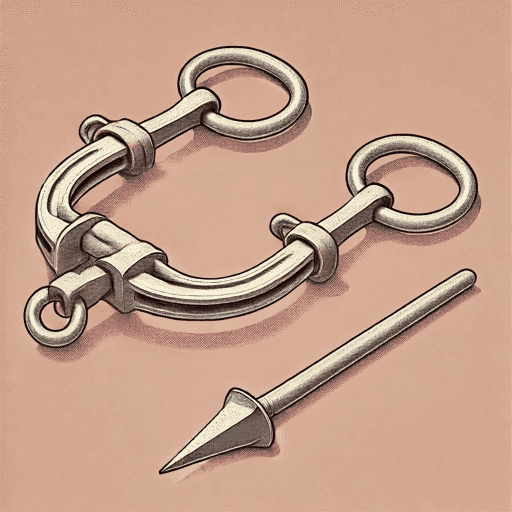
Dysart turns to the sleeping Alan. The boy may never gallop again, he says, but he will be “without pain” (125). Dysart admits to the audience that he is still haunted by Equus’s voice. He demands an explanation for Equus, but relents, knowing that he has no idea what the purpose of his life is. Stunned by the irrational nature of humanity and his own work, Dysart suggests that he is standing in the dark, striking at people’s heads “with a pick in [his] hand” (125). He sits on a bench to think. He needs something to guide him through the dark, he believes. He feels the “sharp chain” (125) like a bit in his mouth; he knows that he will not be able to free himself of it. Dysart stares out into the dark as the play ends.
Act II, Scenes 29-35 Analysis
The climax of the play brings Jill Mason to the forefront. While she shares Alan’s love of horses, she is his antithesis in terms of character. For all Alan’s rebellions and refutations of social expectation, Jill seems well-adjusted. She is sure of herself and what she wants, to the point where she pressures Alan into doing things that make him uncomfortable. At first, this thrills Alan. He cannot completely disguise his excitement at visiting the pornography theater, suggesting that he allows himself to be cajoled by Jill as a way of navigating his repressed desires. Yet the incident in the theater with his father is brutal return of his sense of shame. Equus, once the outlet for Alan’s longing, now becomes the instrument of his undoing. What began as a private theology of freedom—midnight rides, whispered liturgies—has turned into a doctrine of omnipresent judgment. Alan’s ritual, which once gave him purpose, now mirrors the very forces of repression he meant to escape. The more he tries to merge with Equus, the more Equus watches him. In the face of real intimacy, his god transforms into a moral warden. This collapse reveals that Alan’s invented religion was never purely a rebellion; it was also a defense, a way to contain urges he was never allowed to explore.
When Jill initiates sexual activities, he feels judgement. This time, his father is not the figure of judgement, but Equus. The brutal, tragic culmination of Alan’s invention of a private religion suggests that Equus was never a comprehensive tool for the management of desire and shame. Alan’s worship, however destructive, offers a glimpse into a world where passion and belief have not been extinguished—a clear embodiment of The Role of Religion and Worship in Modern Society. Equus is both savior and tormentor, echoing the contradictions of religious ecstasy in a secular world. In this moment, Equus becomes the embodiment of all that Alan cannot reconcile: purity and lust, devotion and disgust, freedom and control. Instead of liberating him, Alan’s god enforces a stricter law than the one he sought to escape. The voice of Equus does not offer comfort, only surveillance that strips Alan of agency the moment he tries to claim it. What Alan created to resist shame ultimately reinforces it, transforming his longing into transgression and his worship into punishment.
At the same time, the incident in the movie theater nearly has a therapeutic effect on Alan. Frank is ashamed at being seen in the theater, fearing that his son will judge him. To navigate this shame, he develops an elaborate excuse as to why he was visiting the manager. After the initial awkwardness of the encounter, however, Alan has a moment of emotional realization. His father is not unique, he realizes. Frank is just like everyone else. He is a man with desires, just like all other people. Alan is on the cusp of a moment of unleashed empathy. In this realization, he may be about to see himself as just like other men. The denial of his sexual desires and the repression of his passion via the religious framework of Equus the horse-god can be put in the past. He is nearly free of the inherited binary between sacred and profane, between purity and desire. Yet Alan misses this opportunity. Jill leads him away and, after he fails to perform sexually, he unleashes his rage on the horses. Rather than accepting sex as a regular part of his existence, Alan experiences his most intense bout of shame yet. The tragedy of Alan’s crime is made all the more pronounced by the missed opportunity for growth and resolution. This collapse reflects the devastating cost of a society that suppresses the individual in the name of stability, highlighting The Conflict Between Societal Norms and Individual Desires.
Alan’s epiphany about his father offers a rare emotional softening that could have allowed him to accept his own desires as ordinary, not aberrant, but the sudden, embodied experience of sexuality with Jill proves too overwhelming. Faced with the chance to become fully human, Alan instead retreats into the only structure he knows: punishment masked as devotion. The trauma of this collapse is immediate and absolute. In blinding the horses, Alan attempts to erase the witnesses to his shame, but also to obliterate the very part of himself that dared to reach for connection. It is not the act of sex that destroys him, but the internal war between what he wants and what he has been taught to fear.
By the end of the play, Alan is not in a position to say that he has recovered. The narrative of the play is not about this recovery, however, but about Dysart’s realization of the truth of what has happened to Alan. Dysart is on a journey of self-discovery. Vicariously through Alan, he comes to see the many ways in which he is unhappy. He comes to loathe his complete inability to do anything about this. Alan’s spirituality and repression may not be a sustainable coping pattern, Dysart knows, but it is at least something. Dysart hates himself for failing to do anything at all, even with the many tools he has available to himself. He begins to see psychiatry not as a path to wholeness but as a form of mutilation—Psychiatry and the Search for Meaning in Life emerges as his personal crisis. By the end of the play, however, Dysart is honest with himself. He is not happy, but he can now trace the contours of his unhappiness. He is not free, but he understands the outline of his imprisonment. He feels the “sharp chain” in his mouth, unable to escape the constraints of professional detachment and societal duty. Rather than making Alan more like him, Dysart has succeeded in making himself more like Alan. Neither of them can ever really return to what is considered “normal.” In the final image, Dysart stands alone in the dark, unable to justify the very work that defines him—a haunting testament to a world that suppresses passion, punishes difference, and leaves even its healers lost in doubt.

Unlock all 59 pages of this Study Guide
Get in-depth, chapter-by-chapter summaries and analysis from our literary experts.
- Grasp challenging concepts with clear, comprehensive explanations
- Revisit key plot points and ideas without rereading the book
- Share impressive insights in classes and book clubs