41 pages • 1-hour read
Evidence of the Affair
A modern alternative to SparkNotes and CliffsNotes, SuperSummary offers high-quality Study Guides with detailed chapter summaries and analysis of major themes, characters, and more.
Symbols & Motifs
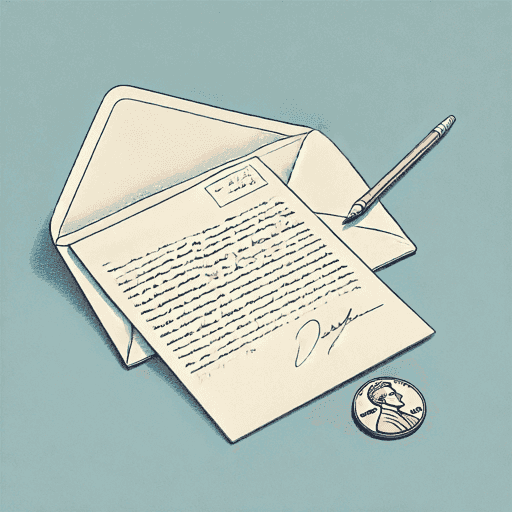
Letters
Letters are a motif that shape the novella’s structure as well as its symbolism. As the narrative progresses, their meaning shifts: They initially serve as the titular “evidence” of Janet and Ken’s affair, but they eventually become the vehicle for Carrie and David’s emotional survival, emphasizing the theme of The Cathartic Power of Honest Communication.
For Janet and Ken, letters embody secrecy and betrayal. Their correspondence reveals how effectively they have deceived their spouses. For the unfaithful couple, their letters are a space where they can express the illicit thoughts and feelings that they must conceal in their everyday lives. Reid uses the epistolary form to mirror the clandestine nature of infidelity.
At the same time, the letters illustrate how intimacy can develop through words alone. Janet and Ken write to each other to maintain their connection when they cannot be together. Their written exchanges fuel their clandestine relationship as; when they are physically apart, they reflect on their feelings for each other. Janet’s letters in particular reveal not only her desire for Ken but also his emotional effect on her. She writes, “With you, anything is possible” (19), conveying the sense of potential she experiences in his company as she can escape her prescribed role as a wife and mother.
The intimacy of letter writing is also demonstrated through Carrie and David’s relationship. They begin their correspondence as strangers, but slowly develop a close bond. The gradual shift of register in their letters, from restrained formality to increasing emotional openness, is reflected in the closings, which progress from “Sincerely” to “All my love” (54) and “All yours.” Before they even meet in-person, David admits, “I know you only as handwriting on a page, and yet you might be my closest friend” (25). This conveys how the distance of letter writing can paradoxically generate profound intimacy. Writing enables Carrie and David to confess their hurt, confusion, and humiliation in ways that face-to-face communication would inhibit. Their correspondence becomes a safe confessional space where they can allow themselves to be vulnerable and build trust. Eventually, their bond becomes one of the most honest and profound relationships in their lives. David’s writes, “I wish I could tell you how often your name comes to the tip of my tongue, how many times a day I find myself thinking of something you said” (58), illustrating how their correspondence increasingly resembles love letters. Carrie and David move on from discussing their spouses to focusing on their profound admiration for each other.
Music
Music is a multifaceted motif throughout Evidence of the Affair. References to popular music from the 1970s enhance the narrative’s atmosphere, underscoring its historical setting. Allusions to bands and singers also serve as Easter eggs connecting the novella to Reid’s full-length fiction. The author references real-life artists of the era alongside her fictional creations, Daisy Jones and Mick Riva, blurring the boundaries between historical fact and fantasy.
Musical taste is an indicator of character in the novella. Carrie reveals that Ken listens to just two artists—Simon & Garfunkel and Mick Riva—while he compares the music of David Bowie to “screeching cats.” Both Simon & Garfunkel and the fictional Mick Riva are artists who began their careers in the early 1960s. Ken’s loyalty to them over new and experimental artists such as David Bowie suggests his preference for the tried and tested and his aversion to change.
Reid also uses Ken’s musical taste to illustrate how other people’s inner lives are mysterious and unknowable. Carrie’s affectionate summary of his unadventurous listening habits conveys her perception of her husband as a safe and predictable partner. However, Janet’s description of Ken dancing to Simon & Garfunkel in his bathrobe during their illicit weekend together undermines this assessment. The other woman associates Simon & Garfunkel with a side of Ken that Carrie does not recognize: lighthearted, unpredictable, and adventurous. This illustrates how little his wife really knows him.
Carrie’s favorite music is also a barometer of her character. Her allusion to the fictional Daisy Jones, whose singing career begins in the 1970s, indicates that she is open to new experiences. Although Carrie has adopted the traditional role of wife and homemaker, her taste hints at a receptiveness to societal and cultural change. Further, Carrie likes the singer-songwriters Joni Mitchell and Carly Simon, illustrating her sensitivity and emotional honesty. Both Simon and Mitchell wrote openly about love, heartbreak, and betrayal from a female perspective, and Carrie’s descriptions of listening to these artists while crying after reading Ken’s letters to Janet convey the cathartic properties of music. Meanwhile, Ken’s critical observation that listening to these artists makes Carrie “schmaltzy” represents his discomfort with these feminine expressions of heartbreak, suggesting that he would rather his wife avoid examining her feelings too closely. In Carrie’s final letter to David, she states, “I listen to Joni Mitchell whenever I want” (85), signaling her liberation from a marriage that stifled her self-expression.
Carrie and David’s shared musical taste is underscored by their visit to a record store together and through David’s observation that Carrie resembles Carly Simon. This affinity is also expressed through the extended metaphor of dancing. Carrie confesses, “I feel like the girl at the party nobody wants to dance with” (45), expressing feelings of loneliness and rejection. David responds that he will dance with her “for as long as [they] want to get groovy” (47), articulating the solace, joy, and enduring nature of their relationship.
Marriage
Marriage functions as a dual symbol of stability and entrapment in Evidence of the Affair. Carrie and David’s correspondence illustrates how both characters initially feel that their marriages define their identities and provide structure to their lives. Their letters often highlight how marriage carries the weight of shared experiences, memories, and promises. It also represents the security of fulfilling expected societal roles as opposed to the more frightening prospect of carving a new identity. When Carrie reveals the infidelity, she says, “I’m hoping this entire thing just goes away on its own” (12), illustrating how she fears dismantling her marriage even after her spouse’s betrayal is exposed. Despite the emotional turmoil that the affair causes, she and David continue to perceive their marriages as sources of stability in an uncertain world.
By contrast, Janet’s letters to Ken present marriage as an imprisoning structure. Her declaration that none of her everyday duties “are for [her]” (19) conveys how her role as a wife and mother subsumes her identity, needs, and desires. Ironically, as Carrie and David process their spouses’ affair, they realize how they, too, are trapped in maintaining the appearance of contentment while being denied transparency or agency by their partners’ choices. Carrie’s ultimate decision to leave Ken acknowledges that the “safety” of her marriage was a carefully constructed illusion.

Unlock the meaning behind every key symbol & motif
See how recurring imagery, objects, and ideas shape the narrative.
- Explore how the author builds meaning through symbolism
- Understand what symbols & motifs represent in the text
- Connect recurring ideas to themes, characters, and events