Fahrenheit-182: A Memoir
52 pages • 1-hour read
Mark HoppusFahrenheit-182: A Memoir
A modern alternative to SparkNotes and CliffsNotes, SuperSummary offers high-quality Study Guides with detailed chapter summaries and analysis of major themes, characters, and more.
Chapters 1-10Chapter Summaries & Analyses
Content Warning: This section of the guide includes discussion of physical abuse, cursing, suicidal ideation, and illness.
Chapter 1 Summary
Mark Hoppus opens his memoir by describing the place he was born and raised: Ridgecrest, California. He was born in 1972. Ridgecrest is a small town in the Mojave Desert located on a military base, where Hoppus’s father worked, and Hoppus recalls jets rushing by and causing the whole earth to quake. One pilot, Ted Faller, experienced engine failure and died while crashing his plane in the fields to avoid hitting the school. Hoppus recalls the extreme heat, often reaching 120 degrees Fahrenheit, and how the slides, car seats, and door handles were always too hot to touch. Hoppus remembers playing with scorpions outside the trailer where he lived. He thinks of himself as a rarity, because while most things cannot survive, let alone thrive, in such conditions, Hoppus did. Hoppus also includes several black-and-white photographs of himself as a baby; one photo depicts Mark crawling out into the desert sand.
Chapter 2 Summary
Hoppus grew up in the 1980s as part of Generation X. His father was an aerospace engineer for the US Navy, while his mother worked hard raising the children. Hoppus remembers happily spending time with his parents in simple moments, including running garbage to the dump with his dad or learning to cook from his mother. His parents, like many of the era, left him and his younger sister, Anne, to play on their own most of the time. Hoppus befriended many other kids in the town, though they often moved away because of military associations. Hoppus fondly recalls his maternal grandmother, Nana, and paternal grandparents, who each had their own ways of making him and his sister feel loved. Hoppus did well in school and spent his free time with his friends or listening to music and comedy records. He remembers formative voices like The Beatles, to John Denver, to Richard Pryor and George Carlin. He credits these early experiences with fueling his love of music and comedy. He felt he had a happy childhood until his third-grade year.
Chapter 3 Summary
Hoppus remembers sitting outside his parents’ bedroom door and listening to them yell hateful things at each another. He felt confused, like his quiet life had fallen into chaos. His focus waned at school, and he constantly worried about whether his parents would divorce. When his father moved into an apartment, that fear was realized. Soon, his parents were dating new people. Hoppus and his sister were expected to adjust. Hoppus became the peacekeeper during his parents’ divorce, which turned him into “a lifelong peacekeeper” (24), always working to ensure everyone is happy and getting along. He considers this both a strength and a curse: While his compassion for others is a positive, his “anxiety, hypervigilance, and the constant need for reassurance” became cruxes (24). He notes that these facts are at the heart of who he is, saying there’s no need to read further.
Chapter 4 Summary
Hoppus’s mother started dating a man he refers to only as “Absolute Fucking Asshole” (28). He looks back on how dismissive and rude the man was, and how shocked Hoppus felt when his mother announced they would be living together. While living with the man, Hoppus witnessed the man severely attacked his mother; he choked, hit, and pushed her while Hoppus told him to stop. Hoppus’s mother wanted to take her kids and leave but had nowhere to go. The following day, she showed up at her new job on the base. Upon seeing her bruises, her coworkers helped her leave the situation.
Chapter 5 Summary
Hoppus’s mom started dating a kind man named Glenn. One day, at Disneyland, she announced that she was officially divorcing Hoppus’s father. Hoppus and his sister, Anne, were asked who they wanted to live with, and because Anne chose their mother, Hoppus chose his father out of guilt. Hoppus’s father was often away working, so Hoppus took care of himself, but their bond slowly improved, lifting the tension. Hoppus also became lighter in mood, becoming the class clown by middle school. He recalls dressing in an exotic outfit on the first day of eighth grade. His peers laughed at him, and he realized that he had no idea what “cool” meant.
Chapter 6 Summary
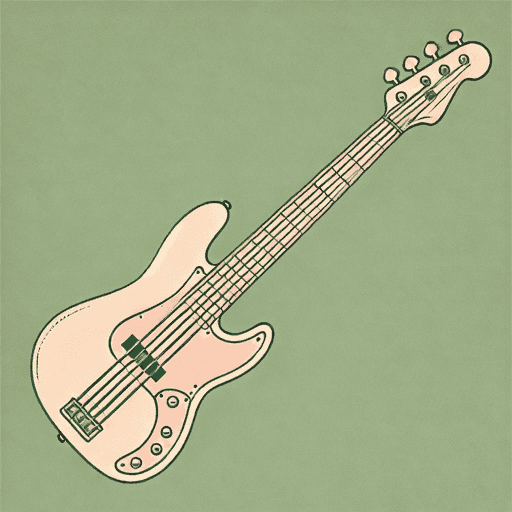
Hoppus and many of his friends got into skateboarding and the underground scene, and in 10th grade, Hoppus was introduced to The Cure. He was inspired by their bassist, Simon Gallup, who seemed cool and collected. For his 16th birthday, Hoppus attended his first concert, They Might Be Giants. Seeing the band and hearing the music live changed Hoppus, and he knew that he wanted to be a musician. Hoppus also began smoking. He adopted the goth aesthetic, wrote lyrics, and dated a girl named Heather, who soon introduced him to punk artists like Descendents and inspired him to write punk music. Hoppus wanted a bass guitar of his own, as he wanted to be that same constant beat behind the music. His dad bought him one, and Hoppus taught himself how to play.
Chapter 7 Summary
By senior year, Hoppus was disengaged from his school and spent most of his time with two boys from the high school for youth with behavioral issues. They formed a band called Of All Things and began playing parties. Hoppus got into risky and dangerous situations (a photo shows him jumping off the roof of a friend’s house into their pool), and at was unknowingly slipped LSD before a show. He lacked direction after high school and went to community college, but Hoppus didn’t know what he wanted to do with his life. He saw bands like Nirvana in their early days.
Chapter 8 Summary
When he was 20, Hoppus was asked by his father to move out. He was accepted to a college in San Diego, where his mom and sister lived. On the way there, he suddenly wondered what he was doing and why he was going to college without a plan. On his first day in San Diego, Anne introduced him to a friend of her boyfriend: Tom Delonge. Tom already played guitar and had big ambitions for his future as a musician. Hoppus and Delonge wrote their first song together on the day they met. They both liked skateboarding and getting into trouble.
Chapter 9 Summary
The next summer, Hoppus worked at a music store and spent most of his free time with Delonge. They wrote songs, pulled pranks, and stayed up all night skateboarding. Hoppus describes Delonge as a “middle-class hoodlum” (65) who was always looking for trouble. Delonge was also persistent, and when he decided that he and Hoppus should form a band, Delonge found a drummer right away. Scott Raynor was a few years younger than them but a skilled drummer and songwriter. The band went through several names before Delonge suggested “blink,” which Hoppus thought was perfect.
Chapter 10 Summary
Delonge started making calls and getting the band into venues. These were small at first, but the band was soon playing in a local club called SOMA. SOMA had a smaller stage in the basement called The Dungeon, and a bigger stage above. Smaller bands played the basement, while bigger names played the main stage. Blink made it their goal to get to the main stage one day, using the shows practice. Hoppus felt like his dreams were coming true.
Chapters 1-10 Analysis
Mark Hoppus frames his life story through a lens of unlikely survival and persistence, creating the theme of Resilience and Defying the Odds. He opens his memoir with a symbolic description of the desert: “To survive in the desert is a one-in-a-million shot. In this environment, nothing grows. Nothing lasts. Nothing makes it out or thrives. But somehow, I did. One-in-a-million happens to me all the time” (7). This sentiment establishes the idea of Hoppus’s resilience despite harsh environments, both literal and emotional. The memoir immediately signals survival against expectation as central and invites readers to read the narrative as both autobiography and testimony. This resilience is first tested in childhood when his seemingly stable family life falls apart after his parents’ divorce. The separation leaves him lost, confused, and hyper-aware of tensions between people, leading to Hoppus’s tendency to mediate and avoid conflict. His role as a bassist mirrors his personality: “As a bassist, it was my job to bridge the space between the rhythm of the drums and the melody of the guitar… laying the foundation” (49-50). Here, Hoppus’s musical role functions as a metaphor for his relational identity—quietly foundational, emotionally attuned, and often underappreciated.
Hoppus’s story takes place within the cultural backdrop of 1980s and 1990s Southern California, which helps to situate his experiences over a shifting cultural landscape. Hoppus explains, “We were Generation X. Our parents left us to play on our own” (13), capturing the era’s mix of independence and emotional turmoil. This generational framing allows Mark’s personal trauma to resonate with broader cultural disaffection and detachment, connecting the personal to the collective. His psychological development is shaped by the trauma of divorce, with parents whose animosity was “palpable” and emotionally overwhelming: “Everything was beyond our understanding and out of our control, and it was changing our lives drastically and forever” (23). This instability contributed to Hoppus’s struggle with self-worth and lack of direction before discovering music. Attending live shows by bands like Nirvana, Nine Inch Nails, and Sonic Youth gave him a newfound sense of purpose and drive. These concerts serve as rites of passage and symbolic awakenings, with live music becoming a gateway to personal reinvention.
Music is depicted as both an emotional refuge and a driving force in Hoppus’s life, encapsulating the idea of Life as a Pursuit of Passions. Hoppus’s discovery of The Cure, and especially bassist Simon Gallup, proved formative: Gallup was “constant. Solid. Holding it down, while also pushing the song forward” (41). Hoppus soon picked up a bass and started practicing. The Cure was one of the early formative goth-rock bands that defied expectations of music, gender, and aesthetic. Hoppus’s early draw to subversive music cultures thus foreshadows his later embrace of irreverent performance and emotional authenticity. With no clear direction after high school, he found himself in San Diego, but this turn of events led to his meeting Tom Delonge. Hoppus regularly commends Delonge’s go-getter attitude: “When Tom wants something, he is relentless in his pursuit. He sees where he wants to be and simply starts walking toward it, confident in the knowledge that nothing can stop him” (67). Delonge’s persistence was essential in launching their band, and their early goal was to “crawl our way out of The Dungeon” (76), a symbol of their humble beginnings and aspirations for something greater. The Dungeon emerges as a physical and symbolic setting for transformation, underscoring the memoir’s investment in success through self-made effort and drive.
The theme of The Search for Belonging is tied to Hoppus’s personal and musical journey. His parents’ divorce created a lasting feeling of disconnection and disorientation. In adolescence, with no clear path, music became not just a passion but a source of identity and belonging. Bands, bandmates, and the punk scene itself provided structure and community. These alternative spaces—garage shows, record shops, basements—function as countercultural havens where emotional and creative validation flourish. As blink-182 gained momentum, the band became a new family and a place where Hoppus felt he could be himself. This emotional substitution of the band for a stable family unit speaks to how chosen bonds offer redemption and belonging. Music is an ever-present motif, recurring through Hoppus’s discovery of punk, his practice with the bass, and the foundation of his identity as both a performer and a mediator in relationships. The bass guitar, particularly, becomes a literary symbol—grounding, connective, and often understated—mirroring how Hoppus crafts harmony amid conflict.
Hoppus writes in a conversational, casual tone, treating the reader like a close friend: “I can say that, right?” (15). His voice is laced with humor and personality, as when he writes, “Nana also gave me what is, without a doubt, the best Christmas gift I ever received. An Atari 2600 video game console, along with a Space Invaders cartridge. Fuck yeah” (11). His enthusiasm and cultural references add energy to the narrative. He often uses vivid, humorous metaphors: “Your legs would sear like a McDonald’s grill, back when they had grills” (6), capturing childhood pain with comedic exaggeration and cultural throwbacks. These moments of levity serve not only as comic relief but as tonal strategies that make the heavier material—like abuse and suicidal ideation—more accessible and digestible for readers. He also frequently breaks the fourth wall, telling readers, “You didn’t. I warned you” (24), when joking about skipping the rest of the memoir. The use of first- and second-person narration, combined with cliffhangers, like ending Chapter 2 with “then in third grade everything fell apart” (16), pulls readers in while reflecting Mark’s engaging, lively personality. This meta-narrative style thus mirrors his musical persona—irreverent, emotionally honest, and always aware of his audience.
These early chapters also establish the memoir’s hybrid tone and structure: part bildungsroman, part oral history, and part love letter to music. Hoppus’s voice—direct, disarming, and emotionally sincere—models how humor and honesty can coexist on the page. This section introduces all three of the memoir’s central themes—Resilience and Defying the Odds, Life as a Pursuit of Passions, and The Search for Belonging—while laying narrative and emotional groundwork for the memoir’s future explorations of illness, reconciliation, and creative legacy.

Unlock all 52 pages of this Study Guide
Get in-depth, chapter-by-chapter summaries and analysis from our literary experts.
- Grasp challenging concepts with clear, comprehensive explanations
- Revisit key plot points and ideas without rereading the book
- Share impressive insights in classes and book clubs