Fairest
50 pages • 1-hour read
Gail Carson LevineFairest
A modern alternative to SparkNotes and CliffsNotes, SuperSummary offers high-quality Study Guides with detailed chapter summaries and analysis of major themes, characters, and more.
Chapters 1-10Chapter Summaries & Analyses
Chapter 1 Summary
Content Warning: This section of the guide includes discussion of bullying, suicidal ideation, and animal death.
Aza lives in the village of Amonta in the kingdom of Ayortha. She was abandoned at the Featherbed Inn when she was only a month old, and the innkeepers adopted her. She has a sister named Areida and two older brothers named Ollo and Yarry. Ayortha places great importance on song and beauty. Although Aza possesses the best singing voice in her village, she is considered ugly because of her pale skin, black hair, red lips, and “large boned” frame. In an attempt to shield her feelings, her parents assign her chores that keep her out of sight of rude guests, and the girl longs for a fairy godmother or a magic spell that will make her pretty.
Chapter 2 Summary
Sometimes, gnomes visit the inn, and they are the only guests who don’t mind Aza’s appearance. Some gnomes can see glimpses of the future, so she asks a kindly gnome named Master zhamM if she will ever be pretty. He explains that she is much prettier than other humans by gnomes’ standards and predicts, “[W]e’ll meet again in Gnome Caverns. You will be in danger” (10). He adds that her appearance will have changed when they next see one another. Master zhamM praises Aza’s hair as htun, a color that appears black to humans but is actually “deeper than scarlet, more serene than cerulean, gayer than yellow” (11).
When Aza is 12, the Duchess of Olixo and her companion Dame Ethele stay at her family’s inn. The peevish duchess is dissatisfied with the inn’s food and demands that a hot beverage be brought to her room at precisely 9 pm. To Aza’s chagrin, her mother asks her to deliver the drink.
Chapter 3 Summary
The duchess adores cats, and she becomes a regular guest at the inn after Aza introduces her to her cat Imilli. Two years later, the 14-year-old Aza teaches herself to throw her voice, a skill she calls illusing. She is also able to mimic people’s voices and other sounds.
One night, an intoxicated guest calls Aza an ogress. She takes her wounded feelings out on her little sister by saying that she hates Areida. Aza immediately apologizes and starts to cry. Areida tries to comfort her by saying that appearances aren’t important, but Aza knows that Areida only thinks that because she’s pretty. To make amends, Aza shows Areida how she illuses. Despite her family members’ attempts to learn the skill, only Aza can manage it. They encourage her to demonstrate illusing to the other villagers, but she decides to keep it a secret.
Chapter 4 Summary
A few months later, Aza’s parents send Areida to finishing school. Aza suspects that she doesn’t receive this opportunity because she’s “the ugly sister” (25), and this experience intensifies her self-hatred.
When Aza is 15 years old, the 41-year-old King Oscaro of Ayortha announces his betrothal to a 19-year-old commoner named Ivi from the nation of Kyrria. According to a villager who’s seen Ivi, she is “nothing extraordinary to look at, merely pretty” (27). Aza imagines that she and Ivi are friends because they are both outsiders. When the duchess’s companion falls ill before the wedding, the duchess asks Aza to attend the royal event with her. Her family is thrilled for her, and her father gives her four copper coins. During the carriage ride to the castle, the duchess comments, “With your voice, if you were pretty, this trip might be the making of you” (30).
Chapter 5 Summary
Aza and the duchess arrive at Ontio Castle, and the teenager is awed by the courtiers, performers, lavish guest chambers, and songbirds flitting freely about the castle. Aza dresses herself in the cumbersome and hideous layers of Dame Ethele’s clothes and bursts into tears when she sees her reflection.
Chapter 6 Summary
Although Aza wants to hide when the other guests stare at her, she reminds herself that her family is looking forward to her account of the royal wedding. Seventeen-year-old Prince Ijori and his loyal boarhound Oochoo stand on the ceremonial stage, and Aza blushes when she feels the handsome prince’s eyes on her.
As Ivi walks down the aisle, the Ayorthians are astonished by her surpassing beauty. However, their awe turns to alarm when they realize that the woman won’t sing her part of the ceremony as is tradition. Sir Uellu, the kingdom’s choirmaster, officiates the wedding. He compares the bond between the king, queen, and Ayortha to the Three Tree, which symbolizes the kingdom and is composed of “the white obirko, the red almyna, and the black-barked umbru” growing so closely that their branches and roots mingle (40). The king sings a song about all the reasons he loves Ivi, but she remains silent.
After the ceremony, Aza reluctantly joins the receiving line at the duchess’s insistence. She hears Lady Arona sing a lovely song graciously congratulating the couple, even though many had expected her to marry the king. As the prince introduces the duchess to the king and queen, Aza feels “uglier than a hydra” (47).
Chapter 7 Summary
Oochoo wags her tail at Aza, and petting the hound soothes the girl. Prince Ijori and King Oscaro try to put the young woman at ease, and Ivi gives her a genuine smile and whispers, “I know how you feel” (49).
Aza awakens early the next morning and explores the castle by herself. She tries to join in the kitchen staff’s song, causing a serving maid to bump into her and break a stack of gold-rimmed plates. Aza apologizes to the cook, a woman called Frying Pan, who orders her to leave.
Chapter 8 Summary
The serving maid reassures Aza that the servants won’t have to pay for the broken plates and gives her some breakfast. Aza encounters a group of people playing the composing game, and Lady Arona insists on teaming the girl up with the prince. The teenager is too embarrassed to correct him when he introduces her to the courtiers as Lady Aza. Back home in her village, she excels at the composing game, which involves improvising humorous songs based on passages in books, but she feels so anxious among the courtiers that she struggles to find her voice.
Chapter 9 Summary
Aza regains her composure and soon has the couriers laughing uproariously at her humorous composition. She gives the prince an encouraging smile and helps him to be more creative during their duet. This is the first time that Prince Ijori has ever won the composing game, and he thanks her. Aza blushes and excuses herself. Her joy is soured by a cruel comment about her appearance from one of the courtiers, and she takes refuge in an empty courtyard. To cheer herself up, she illuses her family members’ voices. Queen Ivi overhears and applauds her.
Chapter 10 Summary
To Aza’s astonishment, Ivi says that she had hoped to see her again. Sir Uellu approaches, and the queen cries, “Oh, no! He mustn’t catch me. Do something!” (69). Aza carries the queen down a series of corridors. Ivi explains that the king has asked the choirmaster to give her singing lessons and reveals that she’s jealous of Lady Arona’s voice.
The queen asks Aza to be her lady-in-waiting because she values her kindness. Aza is anxious about leaving the home where she’s loved, but she accepts the position because the wages would greatly help her family. Ivi commands Aza to bring her outside, and the girl becomes stuck while trying to exit through a window. The queen leaves to find help.
Chapters 1-10 Analysis
The novel’s first section introduces readers to Aza and her struggles with low self-esteem. Levine quickly establishes The Impact of Beauty Standards on Self-Worth by depicting the exacting emphasis that the protagonist’s culture places on looks: “We Ayorthians are sensitive to beauty, more sensitive than the subjects in other kingdoms, I think” (5). The protagonist’s appearance subverts the fairytale convention of beautiful heroines; the striking color combination of white, black, and red features that is prized in Snow White is deemed ugly in Ayortha. As a child, she faces harsh criticism and rude stares from guests at her family’s inn, and her parents’ well-intentioned efforts to keep her out of the guests’ sight as much as possible only reinforce her belief that she is unsightly and shouldn’t interact with people. These early experiences have a long-lasting impact on her self-worth. Aza comes to hate herself because she thinks that she’s “almost as ugly as an ogre” and that her looks will always limit her options in life (20). Her childhood wish for “fairy intervention” or “a magic spell to make [her] pretty” foreshadows the drastic risks she undertakes to alter her appearance with magic later in the story (4).
Beauty standards impact Aza’s relationship with others as well as herself. The first-person narration is filled with self-reproach, revealing that she habitually compares herself to others and criticizes herself when she inevitably decides that she doesn’t measure up. For example, Aza denigrates herself upon seeing Ivi’s beauty for the first time: “She and I could have belonged to different species. She was ethereal, and I was base. I’d been a fool to imagine the slightest connection between us” (39). Aza’s certainty that she is “uglier than a hydra” makes her reluctant to interact with people (47), and her shyness and fear make it harder for her and Ijori to get to know one another during these early chapters. Over time, the prince helps her challenge her ingrained negative self-perceptions and build self-worth.
The kingdom’s love of song and Aza’s enchanting voice develop the theme of The Power of Music. For Ayorthians, this power extends beyond the domain of art into the realms of politics and medicine: “Our ceremonies are conducted in song. We hold monthly Sings, and we call Sings for healing, for guidance, for settling arguments” (27). The kingdom prizes music as much as physical beauty, and the quality of Aza’s voice offers a source of pride despite her insecurities with her appearance. The protagonist’s skill with music allows her to hold her own among the courtiers and bond with Ijori during the composing game. In addition, Aza’s unique ability to illuse sets her apart even in a nation of fine singers and becomes central to the story’s plot in the next section.
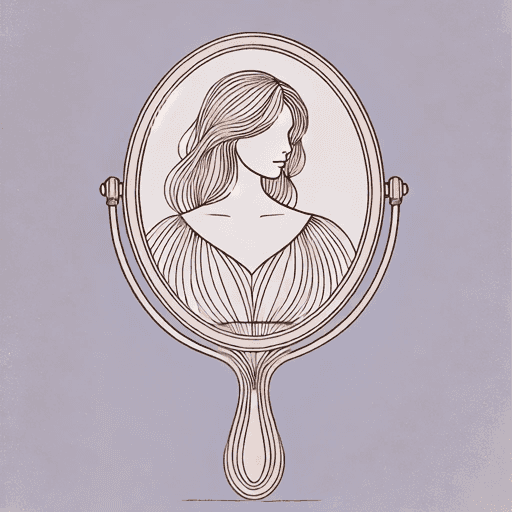
The novel’s symbols and motifs support the protagonist’s journey towards self-worth. Aza’s voice symbolizes her inner strength and identity. Her name is the Ayorthian word for “lark,” emphasizing the importance of song to her identity. Aza further reinforces how important her voice is to her when she observes, “Singing was the best part of me” (58). The gnomish color htun represents the beauty that people fail to appreciate. Just as most of the people around Aza overlook the kind girl’s inner beauty, human eyes can’t detect that her hair is not black but the color Master zhamM considers the most beautiful of all. The gnome’s compliments about Aza’s hair move her deeply because “[n]o one had ever before said that anything about [her] looked beautiful” (11). This reflects how Aza needs the supporting characters’ help to recognize her worth. Mirrors also serve as a motif for the theme of beauty standards’ impact on self-worth. Levine builds up the motif’s connection to the theme in the scene in which Aza cries when she looks in the mirror after dressing herself in Dame Ethele’s unflattering clothes: “Hundreds of people were going to see me, and I looked even uglier than I truly was” (36). At this point in the novel, seeing her reflection in a mirror is torment for Aza, and mirrors become even more perilous for her as the story continues.

Unlock all 50 pages of this Study Guide
Get in-depth, chapter-by-chapter summaries and analysis from our literary experts.
- Grasp challenging concepts with clear, comprehensive explanations
- Revisit key plot points and ideas without rereading the book
- Share impressive insights in classes and book clubs