Fairest
50 pages • 1-hour read
Gail Carson LevineFairest
A modern alternative to SparkNotes and CliffsNotes, SuperSummary offers high-quality Study Guides with detailed chapter summaries and analysis of major themes, characters, and more.
Chapters 11-20Chapter Summaries & Analyses
Chapter 11 Summary
Content Warning: This section of the guide includes discussion of bullying.
When Ivi doesn’t return with help, Aza manages to extricate herself from the window. A man hears her struggling and offers to come to her aid, but the mortified young woman uses illusing to send him away. She hurries to the arena, where the royal family and their guests have gathered to watch centaurs perform. Aza notices Ivi in the stands looking as though she completely forgot about her lady-in-waiting’s predicament. The queen looks furious when the king looks at Lady Arona. During the performance, a centaur slips and accidentally tosses a heavy iron ring into the audience. The king and the prince leap to protect Ivi, and the ring strikes the king’s head.
Chapter 12 Summary
The king is alive but seriously injured, and the prince weeps as he helps to carry his uncle to Sir Enole, the physician. The queen throws herself into Aza’s arms and wails, “Don’t leave me alone, Oscaro. Who will love me now?” (85). Sir Enole tells the gathered crowd that the king will live but may never awaken. The Ayorthians kneel and profess their loyalty to the new queen, who is now their ruler. Aza and the prince help the queen to her chambers and explain to Ivi that they believe holding a Sing will help the king heal, but she considers canceling the event because she wants to rest and grieve.
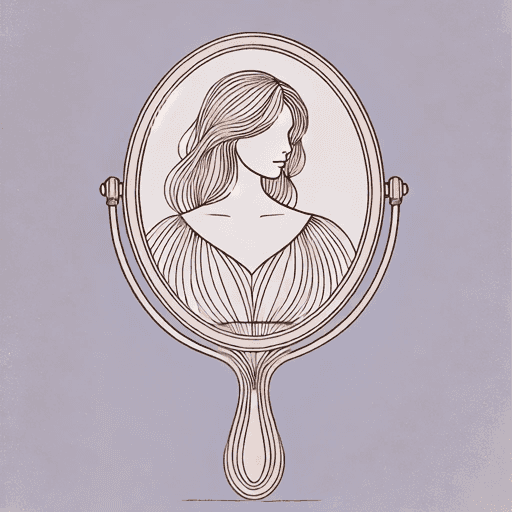
Aza informs the duchess that the queen has chosen her as her lady-in-waiting and will make her a noblewoman. When she returns to the queen’s chambers, she notices a hand mirror and a golden flute among Ivi’s belongings. Ivi will only agree to hold the Healing Sing if Aza uses her illusing to make it seem that she has a beautiful singing voice. The idea horrifies Aza, who fears, “If I illuse for you, your song won’t help the king, and the deception may harm him” (91). The queen forces the girl to obey by threatening to throw her in prison and shut down her family’s inn.
Chapter 13 Summary
Ivi makes Aza swear to illuse for her as long as she needs and tell no one about this deception. The queen gives Aza a letter to sing at the event, but the queen’s words are more about herself and her wardrobe than the king, which is inappropriate for a Healing Sing. Aza tells Prince Ijori that the queen will allow the Sing and confesses that she’s a commoner. The prince is upset at her deceit, but he’s grateful that she persuaded Ivi.
As Aza dresses for the Sing in another of Dame Ethele’s hideous gowns, her emotions are “a muddle of fear and fury and sadness” (97). She pens a song expressing her hope for the king’s recovery and then prepares the queen for the event. While Ivi bathes, Aza looks into the queen’s hand mirror and is astonished to see her reflection transformed to be “beautiful beyond any hope [she’d] ever had” (101).
Chapter 14 Summary
The word “Skulni” is carved into the back of the hand mirror. Aza is disappointed that the mirror didn’t actually change her appearance, and the magical vision distracts her as she prepares the queen for the Sing. At the event, Aza sings beautifully, and Ivi is jealous of her. Aza is moved to tears when the prince expresses his sorrow in song: “I wish my head had borne / The blow that felled a king” (107). When the time comes for Ivi to perform, Aza illuses to give the queen her mother’s bell-like voice, but she can’t change the queen’s offensive words. Ivi’s song focuses on herself and her intention to rule Ayortha with “a firm hand and a stern heart” rather than on the wounded king (108). Her words anger her subjects, but she smiles confidently.
Chapter 15 Summary
After the Sing, Ivi blames Aza and Ijori for not editing her song, and the queen weeps after she retires to her chambers. The prince informs Aza that she will be paid 10 gold coins a month and receive 50 acres of land as the queen’s lady-in-waiting. This is a life-changing sum for Aza’s family. She makes the prince laugh by reciting a humorous song from her home. Aza promises that she will try to serve the queen honorably, and the prince asks her to call him Ijori since they’ll be attending to the queen together.
Chapter 16 Summary
Aza accompanies Ijori to visit the king’s bedside, where she learns that he was agitated during the Sing. The next morning, she writes a letter telling her family about the king’s injury and her elevation to a lady-in-waiting. After bidding goodbye to the duchess, her “last tie to home” (118), Aza reports to Ivi’s chambers. When Aza sneaks a glance into the magic mirror, she sees only her usual reflection. Ivi apologizes for her behavior after the Sing and thanks Aza for illusing for her. The girl is silently outraged when Ivi mentions that her advisor has counseled her to marry Ijori if the king doesn’t recover.
Sir Uellu the choirmaster praises Aza and Ivi’s voices and asks them to sing a duet. Ivi promises to prepare a piece, not realizing that Aza cannot illuse two voices at once. The queen orders the royal tailor to prepare a costly new wardrobe for Aza, and the girl is embarrassed when a seamstress takes her measurements and remarks, “Milady, you are vast” (125).
Chapter 17 Summary
Mistress Audra the seamstress assures Aza that her new wardrobe will help her to blend in at court. The clothes should be ready in time for the following month’s Sing. Next, Aza goes to the royal library, where she finds a book called Court Life: Habits, Rules, and Manners. The library keeper also helps her locate a book about a magic mirror. The volume says that a creature named Skulni lives in the mirror, and one must drink a magic potion to speak with him. Aza wonders if the potion and the mirror are responsible for Ivi’s resplendent looks.
Chapter 18 Summary
About a week later, the castle’s inhabitants are mournful because the king remains in a coma. Aza receives a letter from her sister Areida congratulating her on her new title and enthusing, “I knew eventually someone would truly see you” (145). A letter from her mother reveals that the family is using their newfound wealth to replace the inn’s roof and add a new wing. The letter also reveals that Aza is of noble and perhaps even royal blood because her parents found her wrapped in velvet blankets trimmed with gold thread. Her parents kept this secret because they worried that she would be dissatisfied with her life if she knew about her high birth. They hope that this information will boost her confidence at court. Although Aza is grateful for her loving adoptive parents, the abandonment of her biological parents still pains her.
As Aza helps Ivi dress for dinner, the queen says that her advisor has counseled her not to send aid to southern Ayortha, which is experiencing a drought. Aza tries to reason with the queen, but Ivi silences her. The queen has armed guards accompanying her, which goes against Ayorthian custom. In a brave act of protest, the castle’s cook serves Ivi, Aza, and Ijori “a mound of leavings—potato peel, picked-over bones, bread crusts, eggshells, fruit rinds” (151). Lady Arona bursts into laughter. Ijori makes the queen think that this is a joke so that she won’t punish Frying Pan.
That night, Aza’s guilt over facilitating the queen’s misrule keeps her from sleeping, so she goes to the library in the hope of finding a spell or potion that can alter her appearance. In No Harm Done: Safe and Simple Spells, she finds a beauty spell written in a language she doesn’t recognize. Aza sings the spell and is turned to stone.
Chapter 19 Summary
Aza thinks longingly of the prince and wonders if he will miss her. After a few hours, the spell wears off, but her right pinky toe remains white marble. Ivi has Lady Arona and Frying Pan imprisoned, and Aza is appalled by this abuse of power. Ivi confides to Aza, “Being a powerful queen is tiresome […] I like much better to make Oscaro laugh and cry” (162). Aza receives a letter from her father. He mentions that several former guests send their apologies for being rude to Aza, which surprises and pleases her. He also asks his daughter to intercede on the people’s behalf, but she doesn’t think she can change Ivi’s mind.
Chapter 20 Summary
Aza thinks longingly of the prince and wonders if he will miss her. After a few hours, the spell wears off, but her right pinky toe remains white marble. Ivi has Lady Arona and Frying Pan imprisoned, and Aza is appalled by this abuse of power. Ivi confides to Aza, “Being a powerful queen is tiresome […] I like much better to make Oscaro laugh and cry” (162). Aza receives a letter from her father. He mentions that several former guests send their apologies for being rude to Aza, which surprises and pleases her. He also asks his daughter to intercede on the people’s behalf, but she doesn’t think she can change Ivi’s mind.
Chapters 11-20 Analysis
In the novel’s second section, the king’s injury and Aza’s appointment as Ivi’s lady-in-waiting lead to parallels with “Snow White.” In Chapter 12, Ivi turns on Aza, demonstrating a capacity for cruelty at odds with her earlier promises of friendship: “If you’re not my friend, you’re my enemy and an enemy of the kingdom” (92). This plot twist reveals that she is the evil queen figure in this “Snow White” retelling. Although Ivi is vain and envious like the fairytale queen, Levine does not portray the character as pure evil: “I found pity mixing with my fear of Ivi. Yes, she was ruthless, but she was also fretful and discordant. How did she endure herself?” (123). Aza’s sympathy for the mercurial queen foreshadows that Ivi is capable of redemption.
Aza’s continued struggles with self-worth in these chapters illustrate the damaging impact of beauty standards. The supporting characters often make her embarrassed of her body type, including the seamstress who exclaims over her height and dimensions. Degrading experiences like this are a common occurrence for Aza, which explains why she finds it so difficult to understand Ijori’s genuine regard for her: “He seemed unaffected by my ugliness, but it gnawed at me” (139). The revelation that Aza was abandoned by highborn biological parents only deepens her conviction that her appearance precludes most people from loving her, and her pursuit of beauty escalates in Chapter 20 as a result. The beauty spell that turns Aza to stone provides a clear example of the deleterious effects of beauty standards on the protagonist’s self-regard and foreshadows her use of the beauty potion.
The Power of Music is abused in this section, creating inner conflict for the protagonist. Aza violates Ayorthians’ beliefs and her own conscience by using her voice to fool people into thinking that Ivi sings beautifully. Further demonstrating the connection between music and power, Ivi uses Aza’s illusing to bolster her political authority: “I was essential to the queen’s misrule. I was an instrument of every step she took” (153). As a result, Aza’s deception causes her to experience severe guilt and damages her already fragile relationship with herself. Ivi’s threats place Aza in the difficult position of participating in deceit that endangers the kingdom or risking her freedom and her family’s livelihood.
Aza’s budding romance with Prince Ijori develops the theme of The Importance of Authenticity. In Chapter 13, deceit hurts their relationship after Ijori learns that she’s a commoner and allowed him to think otherwise: “His face reddened. ‘You lied?’ A lump rose in my throat. ‘Everyone thought—I was embarrassed. I should have said’” (97). In Chapter 18, Ijori’s backstory helps to explain why he’s particularly wary of lies: “An ogress almost killed me when I was fourteen. [….] Ogres are the ultimate deceivers” (141). This conversation foreshadows the rift in their relationship after Aza’s illusing is revealed and Sir Uellu accuses her of being part-ogre.
Skulni’s introduction marks a key development for the plot and the motif of mirrors. The magic mirror is one of the classic elements of the “Snow White” story, and Levine reinvents the mirror by making it the prison of “a creature of unspecified abilities” rather than a mere tool (132). In Chapter 13, the queen’s magic hand mirror renders Aza’s reflection “stunningly beautiful” by Ayortha’s beauty standards. This experience only heightens the protagonist’s longing to become pretty and preys on her low self-worth. Skulni emphasizes the dangers of allowing one’s self-worth to be contingent on beauty standards because he exploits humans’ vanity and insecurities, and he emerges as Ivi’s mysterious advisor and the novel’s true antagonist in later sections.

Unlock all 50 pages of this Study Guide
Get in-depth, chapter-by-chapter summaries and analysis from our literary experts.
- Grasp challenging concepts with clear, comprehensive explanations
- Revisit key plot points and ideas without rereading the book
- Share impressive insights in classes and book clubs