Fairest
50 pages • 1-hour read
Gail Carson LevineFairest
A modern alternative to SparkNotes and CliffsNotes, SuperSummary offers high-quality Study Guides with detailed chapter summaries and analysis of major themes, characters, and more.
Themes
The Impact of Beauty Standards on Self-Worth
Levine reinvents the classic story of “Snow White and the Seven Dwarfs” to warn readers of the harmful impact of beauty standards on self-worth. In the original fairy tale, the princess’s pale skin, red lips, and black hair are admired, but the same features are deemed hideous in Aza’s home of Ayortha. This premise establishes the kingdom’s demanding beauty standards and lays the foundation for much of the protagonist’s inner conflict. Throughout the novel, other characters’ perspectives instill in Aza the idea that her appearance makes her lesser: “It had caused people—guests at the Featherbed, villagers in Amonta, courtiers and servants here in the castle—to be rude and cruel” (281). To emphasize the damaging effects of beauty standards, this pattern stretches back to Aza’s infancy, when her biological parents abandoned her because of her unconventional looks. This mistreatment escalates until she’s accused of using supernatural powers to manipulate Queen Ivi and Prince Ijori because her “ugliness had persuaded Sir Uellu [she] was part ogre” (281). Aza’s cultural context and personal experiences lead her to believe that her failure to meet beauty standards dooms her to a life of loneliness and hardship.
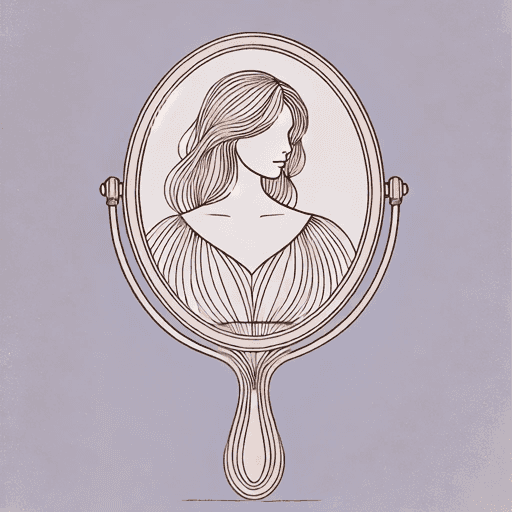
The author uses Aza’s desperate endeavor to change herself to show how people harm themselves by trying to conform to arbitrary beauty standards. In a key development for the theme, drinking the beauty potion causes her to be confined in the magic mirror. Both symbolically and literally, her subscription to beauty standards traps her. Experiences like this prompt Aza to realize that her “pursuit of beauty […] had been disastrous” and that her health and happiness matter far more than her appearance (281). Other factors that help Aza discover her self-worth include the positive recognition she receives for her skill with music and the unconditional support of her human and gnomish relatives. Her love story with Ijori is especially important to this theme because the prince disproves her fear that her appearance makes her unlovable: “You have grandeur and dignity. I was sorry when you became beautiful in a commonplace way” (304). By the end of the novel, Aza realizes that she has been “as hard on [her]self as [her] worst critics” (315), and she learns to appreciate her unique traits instead of despising herself for the ways that her appearance diverges from arbitrary trends. Levine’s treatment of beauty standards subverts the “Snow White” fairy tale and teaches her young audience an important lesson about self-worth.
The Power of Music
Ayorthians’ beliefs and the events of Ivi’s reign demonstrate the power of music in the story. Song has tremendous importance in Ayorthian culture: “We believe singing has power—to call forth a tree, to heal the sick, even to move the stars” (27). The Sing held after the king is injured illustrates another of music’s powers—the ability to unite people and offer hope in a time of crisis: “Participants in a Sing, especially a Healing Sing, are wrapped in an embrace of fellow feeling, neighborliness, kinship, love” (103). However, this power can be abused, as shown when Ivi commandeers the Healing Sing for her husband to declare that she will “expect obedience, loyalty, and respect from [her] subjects” (108). Ivi knows that she needs her subjects to think she has a good voice for them to view her reign favorably, making Aza’s illusing “essential to the queen’s misrule” (153). Music also gives the Ayorthian people the strength to rebel against tyranny. The choirmaster leads the revolt against the queen after she attempts to ban singing. Music’s importance extends into every facet of life in Ayorthian culture and even holds political power.
Over the course of the novel, Aza harnesses the power of music for herself. In Chapter 8, her beautiful voice and skill at composing songs allow her to bond with the prince, presenting an example of music’s ability to foster connection. Levine sets the protagonist apart from the other characters not only in terms of the quality of her voice but also in her unique ability to illuse. While Ivi tries to use this power for her own gain, Aza’s musical gifts establish her innate power, which she can only harness when she begins acting on her principles rather than capitulating to Ivi’s demands.
This theme reaches its culmination when Aza shatters the mirror and defeats Skulni with her voice: “As I sang, I felt strong enough to fly” (283). Previously, she was forced to use the power of music in a way that betrayed her sense of self and values, but she reclaims this power and puts it to positive use. Levine’s novel argues that people place too much importance on physical appearances, while music offers a more meaningful form of beauty, allowing people to express their individuality and emotions. Aza’s voice symbolizes her inner strength and identity, so it’s fitting that her musical abilities help people understand her true character after she’s falsely accused of manipulating Ivi and Ijori: “[P]assersby stopped to listen too, and to join in, and to enter and sing more. Castle opinion mounted in my favor” (311). The novel’s happy ending reinforces Aza’s command over her musical prowess when she uses her illusing to defend her kingdom from ogres in the Epilogue, leading to greater safety and prosperity for her people. Aza’s story celebrates music’s power to bring people together and help individuals express themselves.
The Importance of Authenticity
Levine uses Aza’s story to demonstrate the importance of authenticity. At first, the protagonist’s illusing is associated with authenticity because only she possesses this unique skill. However, Ivi twists Aza’s talent into a tool of deception by forcing her to fool the kingdom into thinking Ivi has a beautiful voice. The performances when Aza sings for Ivi hinder the king’s healing, underscoring deceit’s harmful effects. Aza describes herself as “an instrument of every step [Ivi] took” while she’s illusing for the queen (153). The phrasing illustrates how Aza feels as though she’s been reduced to a tool when she compromises her values in service to the tyrannical Ivi. The deception harms the kingdom by allowing Ivi to remain in power and abuse her office. After the queen’s ruse is exposed, Aza uses illusing to work towards her own goals and advance the greater good: “I began to accompany Ijori on raids against the ogres. In time they discovered the trick of illusing, but they couldn’t stop being fooled by it. Thus we made our roads and even the mountains safer for our subjects who traveled—a boon to the kingdom’s innkeepers” (324). By reclaiming illusing as an aspect of her unique and authentic self, Aza turns the skill from a tool used for deception into a force for good.
The author further develops the theme by showing how preoccupation with physical appearances can interfere with individuals’ authenticity. Lucinda articulates one of the novel’s main takeaways when she tells Ivi that “everyone is beautiful in her own way” (274). Proving the truth of the fairy’s words, both Aza and Ivi are deeply concerned with beauty standards, but their love interests cherish them for their authentic selves, not their magically enhanced looks. Aza begins to see the value in her natural appearance after the prince writes to her: “I never thought you ugly. I should have told you long ago. No one has eyes like yours. Or an aroma like yours. I loved the size of you from the first” (254). Similarly, Ivi is anxious about facing Oscaro after her beauty potion wears off, but her genuine presence does him more good than pretending to have a beautiful voice ever did, and his love for her is undiminished: “After he saw Ivi, King Oscaro’s recovery resumed. A week later he spoke to her, his first halting words. ‘My…dear…beautiful…love’” (311). By highlighting the dangers of deception and the importance of honesty in relationships, Levine encourages her readers to be their authentic selves.

Unlock every key theme and why it matters
Get in-depth breakdowns of the book’s main ideas and how they connect and evolve.
- Explore how themes develop throughout the text
- Connect themes to characters, events, and symbols
- Support essays and discussions with thematic evidence