Fallen
Fallen
A modern alternative to SparkNotes and CliffsNotes, SuperSummary offers high-quality Study Guides with detailed chapter summaries and analysis of major themes, characters, and more.
Summaries & Analyses
Quizzes
NEWReading Tools
Symbols & Motifs
The Shadows
The shadows are dark, amorphous, shifting visions that Luce has seen since she was a kid. They symbolize the mysteries of Luce’s past and the danger that lurks within those mysteries. The dangerous nature of the shadows is established in the Prologue when Daniel watches as the shadows descend upon him and Luce’s predecessor as they share their first and final kiss in that lifetime.
After Luce arrives at Sword & Cross, she notices that “[t]he shadows ha[ve] been popping up at an increasingly alarming rate” (112). This is a representation of Luce coming closer to the truth about her past and the danger that comes with it by being at Sword & Cross. The shadows continue to appear and become more aggressive with Luce the closer she gets to the truth. In Chapter 9, the shadows attempt to steal a note from her pocket that contains clues about her link to the fallen angels at Sword & Cross. In Chapter 10, Luce and Penn visit the library in search of Daniel’s book, The Watchers, which is later revealed to hold truths about Luce’s past lives. Before she can track down the book, the shadows appear, and a mysterious fire starts, forcing Luce to clear out of the library. The shadows appear whenever she gets close to discovering truths about her past and her relationship with Daniel, making them a symbol of The Past’s Influence on the Present, as the mysteries in Luce’s past follow her and impact her life.
In Chapter 20, Luce spies “three small but seething shadows hanging upside down like bats” in a tree overhead (435). These shadows symbolize the questions that remain unanswered for Luce and the dangers that still lurk in her pursuit of self-discovery.
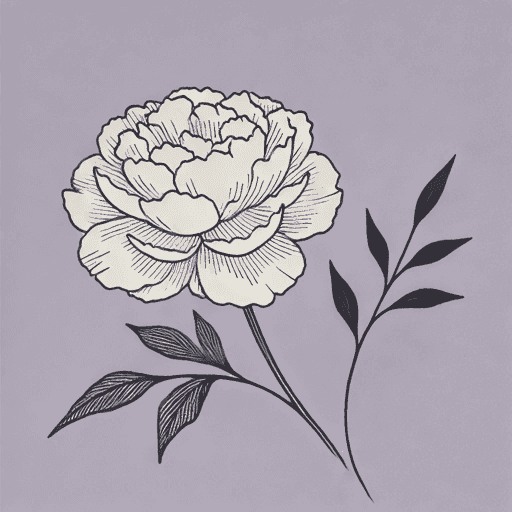
White Peonies
White peonies are a symbol of Daniel’s everlasting love for Luce. These flowers are first mentioned in the Prologue when Luce’s predecessor finds Daniel sketching her in the parlor. Daniel considers their attraction leading up to this moment and how she “cre[eps] up on him, a fistful of white peonies in her hand” (2-3). The significance of the white peonies isn’t explored until Chapter 11, however, when Daniel brings them to Luce in the hospital after the library fire. When she first sees the white peonies, she thinks it’s “[s]trange. They [a]re [her] favorites. And it [i]s so hard to find them in bloom around here” (233). Later, as she assesses the gift, she notes that “these d[o]n’t look like any peonies [she] ha[s] ever seen before. The blooms [a]re as large as cupped palms, and the smell remind[s] her of something she c[a]n’t quite put her finger on” (239). Daniel’s choice of peonies hints at his existing knowledge of Luce and the love he feels for her.
In Chapter 17, after Daniel tells Luce about the cyclical nature of their love, Luce observes that the peonies have “sat in their vase for a week now, and not a single petal ha[s] withered”; she also considers how “[t]here had always been something so unusual about them, yet so familiar” (363). The white peonies function not only as a symbol of Daniel’s love but also as foreshadowing for the undying nature of this love.
The Watchers
The Watchers is a book written by Daniel, published in 1755. The book’s title is an allusion to the Watcher angels, a kind of fallen angel in Hebrew texts who mate with mortal women and share forbidden knowledge. Luce spends several chapters trying to hunt down this book, which has gone missing from the school library. The elusive nature of the book combined with its allusions to angel mythology creates a symbolic link between the book and forbidden knowledge.
In Chapter 16, Daniel tries to give Luce as much information as he can without overwhelming her: “It’s just a very, very delicate subject. Sometimes, in the past, just talking like this has…” (354). Daniel implies that sharing specific knowledge with Luce has killed her in past lives, further developing the idea that some knowledge is forbidden to Luce.
When she finally gets her hands on The Watchers in the following chapter, she discovers the photograph of herself from a previous life alongside Daniel. The weight of this discovery is overwhelming for Luce, who “c[an]not catch her breath” and feels “[h]er whole life toss[ing] in the rolling sea of her mind” (367). The information that Luce obtains from The Watchers helps her come to terms with the harder-to-accept information, like the fact that Daniel is an angel. After she tells Daniel to his face that she knows he’s an angel, a stunned Daniel replies, “It’s just that you’ve never—we’ve never…gotten this far,” and he asks her, “Will you say it again […] Will you tell me…what I am?” (391). With the help of The Watchers, Luce is able to accept truths that have, in previous lives, killed her. This develops The Watchers as a symbol of what was previously forbidden knowledge.

Unlock the meaning behind every key symbol & motif
See how recurring imagery, objects, and ideas shape the narrative.
- Explore how the author builds meaning through symbolism
- Understand what symbols & motifs represent in the text
- Connect recurring ideas to themes, characters, and events