Feathers
46 pages • 1-hour read
Jacqueline WoodsonFeathers
A modern alternative to SparkNotes and CliffsNotes, SuperSummary offers high-quality Study Guides with detailed chapter summaries and analysis of major themes, characters, and more.
Character Analysis
Frannie Wright-Barnes
Content Warning: This section of the guide includes discussion of child death, pregnancy loss, racism, ableism, bullying, and mental illness.
Frannie is the novel’s narrator and protagonist. She is highly observant, considering herself “more of a listener than a talker” (8). This personality trait facilitates Frannie’s role as the narrator by giving her insight into her fellow characters’ motivations and struggles. Woodson also uses Frannie’s gift for observation to provide humor through her witty remarks, such as when she comments that one of the hearing girls who is rude to Sean “seems dumber than a broken stick” (82). Another of Frannie’s primary character traits is the deep empathy that leads her to care even about her class’s bully. While the other students laugh about Trevor breaking his arm, she feels concern: “[I]t was hard for me not to imagine Trevor falling through the air—how scared he must have been, reaching and grabbing at nothing” (20). Frannie’s insight, empathy, and wit help her fulfill her roles as the story’s main character and narrator.
Frannie’s choices and dynamic growth reinforce the novel’s themes. At first, the 11-year-old is dejected because she feels as though she is growing up too quickly for her liking, reflecting, “Some days, it felt like the times when I got to make handprints and flowers and stuff just slipped away from me before I even got a chance to figure out how much fun being a little kid was” (19). As part of her journey toward maturity, Frannie must confront issues like how people treat one another based on racial differences and how to hold onto hope when faced with adversity. Frannie becomes the first to forge a friendship with the Jesus Boy even though her other classmates are wary of or even overtly hostile to him because he appears white. The bond between the two characters is at the heart of the novel and also advances the theme of The Search for Belonging. Frannie empathizes with the Jesus Boy’s isolation because she knows how it feels to be the new student, and she offers him acceptance and understanding.
Frannie’s character arc also illustrates The Role of Faith and Hope in Facing Challenges. Initially, she struggles to have hope and doesn’t feel a strong connection to religion, largely due to her mother’s health concerns. By the end of the novel, she achieves an epiphany about everyone having “a little bit of Jesus inside” that helps them live with hope and compassion (109). Frannie’s character arc offers an encouraging message about fostering connection across differences and holding onto hope in the face of challenges.
The Jesus Boy
The Jesus Boy is the new student in Frannie’s sixth-grade class at the Price School. He stands out from his peers at the all-Black institution because he looks white to them: “The boy was pale and his hair was long—almost to his back” (1). The Jesus Boy’s light skin and long, curly hair remind Trevor of white artists’ depictions of Jesus, leading to the nickname he’s known by throughout the story. In addition to omitting the character’s birth name, Woodson enhances the boy’s enigmatic nature by providing little information about his past, choosing not to specify his birth parents’ ethnicities, and allowing the Jesus Boy to remain silent on the question of whether or not he is Jesus Christ during the class’s debate on the subject in Chapter 4: “‘I don’t think that’s what Jesus is saying about himself, everyone, are you?’ Ms. Johnson and everybody else looked at the Jesus Boy. He didn’t move or shake his head or anything, just sat there, staring off” (26). One of the first things that Frannie notices about the Jesus Boy is his otherworldly tranquility, observing, “I had never seen such a calm look on a kid. Grown-ups could look that way sometimes, but not the kids I knew” (2). Woodson depicts him as wise and mature for his age, qualities he demonstrates by observing that his fellow students would laud him as “some kind of hero” if he attacked Trevor while the bully was down but choosing not to do so (92). The Jesus Boy’s mystery, tranquility, and wisdom shape the novel by prompting the other characters to reflect on questions of faith.
The Jesus Boy’s transfer to the Price School represents the novel’s inciting incident, and his confrontation with Trevor in Chapter 14 marks the climax. For most of the novel, the Jesus Boy acts with such gentleness, particularly through his silent endurance of Trevor’s bullying, that some of his classmates feel that there is something supernatural about him. The novel’s tone and examination of spirituality shift when Samantha suggests, “What if that boy really is Jesus? What if Jesus did come here, to where we live?” (32). The Jesus Boy disproves his hypothesized divinity by deliberately hurting Trevor, forcing the other students to reckon with his humanity in the process.
The Impact of Perceived Racial Differences on Community Dynamics gives rise to the tension between Trevor and the Jesus Boy, leading to their climactic confrontation and the resulting shifts in the sixth-grade classroom’s dynamic. The Jesus Boy repeatedly states that he isn’t white, but the bully and the rest of the class continue to base their ideas of him on his appearance. Woodson connects the theme of perceived racial differences to the search for belonging by depicting the isolation that the Jesus Boy experiences on both sides of the highway, which marks a racial divide in the city. Frannie perceives the boy’s loneliness when she realizes that “he’d always had to walk through the world this way, push[ing] through” people’s assumptions about his race and his family (88). The Jesus Boy’s emotional exhaustion at others’ appearance-based judgments leads him to hurt Trevor, who also knows what it’s like to be judged because of his perceived race. The Jesus Boy’s friendship with Frannie and his budding acceptance among his classmates give a happy ending to his search for belonging and the story as a whole. In addition, the Jesus Boy is instrumental to Frannie’s growth since meeting him sets the protagonist on the path to her epiphany that anyone can embody Jesus Christ. The Jesus Boy’s story urges people to act with compassion and build community rather than exacerbate divisions based on perceived differences.
Trevor
Trevor, the novel’s antagonist, is a bully in Frannie and the Jesus Boy’s sixth-grade class. He has blue eyes and is “lighter than most of the other kids” at the Price School (4). Trevor’s estranged father is white, which fills Trevor with shame and anger. Frannie describes the bully as “always [having] been on the evil side” (89), and she often observes him taking his rage and pain out on others. In particular, he antagonizes the Jesus Boy not only because his status as the new student makes him an easy target but also because he reminds Trevor of the judgment and rejection he faces due to others’ perceptions of his race. Despite his negative traits, Woodson portrays Trevor as a round character in keeping with the novel’s message about humanity’s beauty and complexity. The protagonist catches a glimpse of someone calmer and kinder under Trevor’s angry facade when one of his friends makes him smile in Chapter 10 and he looks “almost normal—soft and happy” (68). In a key scene for his characterization, Trevor shows vulnerability by crying in front of his classmates in Chapter 14, and Frannie observes that Trevor “look[s] smaller and weaker and more human” than the rest of the class in that moment (90). The author presents Trevor as an angry and hurtful yet vulnerable character.
Trevor serves as both the novel’s antagonist and a foil character to the Jesus Boy. He plays an essential role in the theme of the impact of perceived racial differences on community dynamics due to the anger he feels because of his estranged white father and people’s perceptions of his interracial identity. Like the Jesus Boy, Trevor faces speculation and judgment because of others’ perceptions of his ethnicity. The boys are foil characters because, although they both experience the pain of othering, they respond to this pain differently. Trevor tries to ease his hurt by attacking others, including the character whose situation most closely resembles his own, while the Jesus Boy calmly endures cold stares and hurtful remarks for many chapters before retaliating. The scene in which the Jesus Boy tells Frannie that he and the bully could swap places in the class’s social hierarchy underscores the foil characters’ similarities. As the Jesus Boy notes, “I could be the new Trevor around here—with people being scared of me and all. […] Trevor would be the Jesus Boy” (92). Trevor also contributes to the story by giving the Jesus Boy the nickname that defines him throughout the novel. The nickname strongly influences how the Jesus Boy’s classmates perceive him and contributes to the text’s examination of faith.
As the story progresses, the author provides some hopeful signs of growth and change in Trevor. For example, his insults toward his classmates in his last appearance are less biting than they were at the start of the novel, lending some credence to the Jesus Boy’s hope that Trevor’s inner pain will become “a little bit less and a little bit less until it’s finally all gone” (103). Trevor’s antagonistic actions advance the novel’s plot and themes, and his carefully constructed similarities to and contrasts with the Jesus Boy define the boys’ traits more clearly.
Samantha Brown
Samantha is Frannie’s best friend. The narrator admires her “delicate” and “ladylike” manners and the way “she dresse[s] nice” (11, 105). Samantha is one of the novel’s most devout characters. She often reads the Bible at recess, and she views going to church as “a treat, like getting a second dessert” (74). Her father is Reverend Joseph H. Brown, the preacher of a church that Frannie’s mother dislikes because of its tendency to condemn others. Despite OnePeople’s Baptist’s “fire-and-brimstone” reputation (33), Samantha is a kindhearted character. She becomes Frannie’s first friend at the Price School and is even sweet to Maribel, whom Frannie finds irritating. Samantha’s gracefulness, kindness, and devotion earn Frannie’s admiration and contribute to the girls’ bond.
As the protagonist’s closest friend, Samantha advances Frannie’s characterization and the novel’s themes. She develops the novel’s thematic exploration of the search for belonging since she offered Frannie friendship and acceptance when the main character was isolated during first grade. This act of kindness inspires Frannie to reach out when she witnesses individuals like the Jesus Boy and Trevor experiencing loneliness or pain. Additionally, Samantha serves as a conversational partner in several dialogues that help Frannie dig into the story’s messages about faith and hope. For example, in Chapter 6, she voices the idea that the Jesus Boy could be Jesus Christ, and her example makes Frannie yearn to share her friend’s belief in the “[b]ig and surreal things that t[ake] up [Samantha’s] mind and g[e]t her thinking deep and smiling that secret I-know-some-things smile” (38).
Samantha also models The Role of Faith and Hope in Facing Challenges in her own life, noting, “When I go to church, it’s like there’s always some chicken there, you know. Or steak or roast beef or pork chops or fried fish” (77). Because her family is in poverty, the use of food as a metaphor for the sustenance that Samantha finds in her faith is powerfully rooted in her lived experiences rather than an abstract figure of speech. Samantha facilitates the protagonist’s development by encouraging Frannie to engage with questions of faith and hope.
Mama Wright-Barnes
Mama is Frannie’s mother. Her daughter has great respect and admiration for her, reflected in her laudatory descriptions of her mother’s “perfect nose” and “long and dark and beautiful” eyelashes (44). Mama has lost three children and experiences physical and mental health challenges as a result. As Frannie observes, “[S]ome mornings, I’d find her sitting holding the framed picture of Lila she kept at her bedside, a sadness on her face so deep, it seemed like no one would ever be able to break through it” (41). Although she is sorrowful at times, Mama is also resilient. Woodson depicts her as a loving and responsive parent to Sean and Frannie, which is demonstrated in how she studied sign language as soon as she learned that her son was deaf and also seeks to soothe her daughter’s worries.
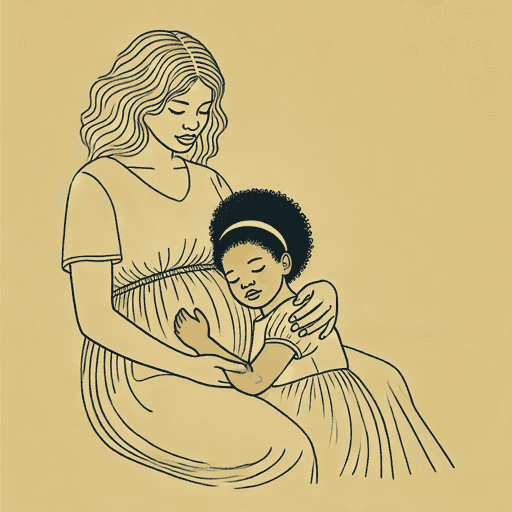
Mama’s interactions with Frannie round out the protagonist’s characterization. Even though Frannie is mature and insightful among her peers, she likes being the baby of her family and seeks comfort by sitting on Mama’s lap. Woodson also uses Mama’s health concerns to examine the role of faith and hope in facing challenges. By far, Frannie’s greatest source of concern throughout the novel is her mother’s well-being. For Mama, faith and hope are expressly intertwined; as she reflects, “I feel hopeful. Church makes me remember that tomorrow’s always going to be just a little bit better than today” (78). Her character arc demonstrates how faith can help people face challenges through the example of her own attempts to heal after the loss of her infants and to hold onto hope during her current pregnancy. Woodson leaves the novel’s resolution open-ended by not revealing the outcome of Mama’s pregnancy, an authorial decision that emphasizes the story’s message about maintaining hope in the face of uncertainty and difficulty.
Sean Wright-Barnes
Sean is Frannie’s older brother. She describes him as “tall and dark with pretty eyes and a nice big-brother smile” (42). At multiple points in the story, girls are drawn to Sean because of his handsome appearance but then become dismissive and rude when they learn that he is deaf. In this way, Woodson uses Sean’s character to further the novel’s examination of societal divides and to criticize people’s tendency to make hasty judgments of one another. Sean’s longing for recognition from hearing girls is one example of the wistfulness that sometimes brings a “faraway look” to his eyes (19). While the young man has big dreams about seeing more of the world someday, he also attends to practical matters in his present. For example, he shows responsibility by preparing dinner for the family when Mama isn’t feeling well and by looking after Frannie. Sean is a caring brother, a responsible son, and a wistful young man who longs for more out of life.
Woodson uses Sean to develop the theme of belonging and define the Wright-Barnes family dynamics. The siblings’ banter provides humor in a story that handles serious topics such as pregnancy loss, and Frannie and Sean draw comfort and strength from their relationship. As Frannie observes, “For some strange reason, it was enough for both of us, just to be standing side by side” (56). Sean’s intersectional identities as a Black person with a disability make him particularly aware of the ways that society divides and excludes people. He introduces the symbol of the bridge, which represents connections across societal divides—a symbol he discusses in terms of his desire for recognition from girls who can hear: “The hearing girls are the bridges. They’re the other worlds. They’re the worlds I can’t just walk across and into” (83). Sean’s presence in the novel allows Woodson to challenge ableism and enriches the novel’s exploration of diversity and shared humanity.

Unlock analysis of every major character
Get a detailed breakdown of each character’s role, motivations, and development.
- Explore in-depth profiles for every important character
- Trace character arcs, turning points, and relationships
- Connect characters to key themes and plot points