Fight Club
45 pages • 1-hour read
Chuck PalahniukFight Club
A modern alternative to SparkNotes and CliffsNotes, SuperSummary offers high-quality Study Guides with detailed chapter summaries and analysis of major themes, characters, and more.
Chapters 11-15Chapter Summaries & Analyses
Chapter 11 Summary
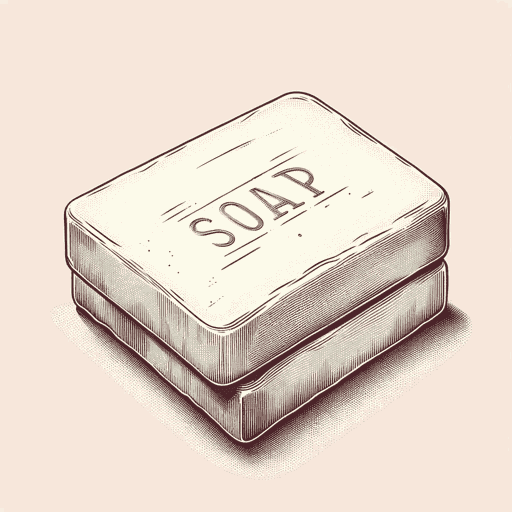
Tyler’s Paper Street Soap Company begins bringing in money. Nordstrom orders 200 bars of a facial soap. Each bars retails at 20 dollars, and the Narrator estimates they can do some much-needed repairs on their house and still be able to go out on a Saturday night. The Narrator sees the potential for the soap company, and speculates that if business keeps picking up, he could quit his office job for good. Tyler and the Narrator decide to park their car in an abandoned car lot strewn with other discarded material goods.
They eat dinner and discuss Tyler’s manipulation of Marla and her mother. Tyler has been impersonating Marla in Western Union telegrams so her mother will send fat from her liposuction procedures. He stockpiles the fat in his freezer and uses it to make more soap. Marla found their backstock and discovered what they had been doing with it, and she physically attacked the Narrator despite his insistence that Tyler had done it, not him. The Narrator runs out of the Paper Street house, leaving Marla alone to tear the place apart, and he runs until he finds Tyler.
Chapter 12 Summary
At work, the Narrator leads a recall campaign. His insomnia has returned. He feels like he is watching his life from a distance, “a copy of a copy of a copy” (97). Tyler asks him to type up and make ten copies of the Fight Club rules, and the Narrator accidentally leaves the original on the copier. His boss finds it and begins asking questions. The Narrator tells his boss to be cautious because the rules were probably typed up by someone unhinged enough to shoot up their offices. As he threatens his boss, the Narrator becomes acutely aware of just how much he sounds like Tyler. The Narrator attends a Remaining Men Together meeting and finds its membership severely depleted; it is just himself and Bob, who has undergone a surprising physical transformation. Bob is now muscular and quite fit. He tells the Narrator that the support. group has disbanded because its members have joined Fight Club. The Narrator is surprised when Bob lists meeting locations the Narrator did not know about, and he starts trying to reconcile these new meeting dates with what he knows of Tyler’s work schedules. Bob asks the Narrator if he knows Tyler Durden, because Bob has not ever seen him himself.
Chapter 13 Summary
Marla asks the Narrator to come see her at the Regent Hotel because she has discovered a lump in her breast during a self-examination. Marla does not have health insurance and she does not want to scare her family. She says she will forgive the Narrator for stealing her mother’s fat if he helps her double-check her breast for lumps. As the Narrator feels Marla’s breast, he tries to make her laugh with medical stories from his own life—he once had a wart on his penis, a medical student thought his Australia-shaped birthmark was a rare kind of cancer, and his grandmother had a partial mastectomy—but Marla does not laugh. The Narrator wants to cheer her up, for her to forgive him, and to tell her that whatever lump she found that morning was a mistake. He wants very badly for her to be all right. He notices she has a scar on the back of her hand, a chemical burn of Tyler’s kiss, just like his own.
Chapter 14 Summary
Marla begins attending support groups again, but this time she has a legitimate health issue. The Narrator confirms he found a second lump, in addition to the one Marla found on her own. Marla had initially sought treatment at a free clinic, but when she saw the sorry state of the other patients there, she decided she would rather not know if she was going to die. She tells the Narrator about her work at a funeral home, selling urns and service plans to relatives of the recently deceased. The first time Marla filled an urn with human cremains, she did not wear a mask to cover her face. When she blew her nose later, the ashes came out in a snotty black mess on the tissue. A detective calls the Paper Street house to ask the Narrator questions about his apartment. The detective informs him of the investigation’s discovery of homemade dynamite in the residence, and that the front door lock was shattered with Freon. Tyler stands behind the Narrator while he is on the phone, and he urges him to confess to blowing up his own apartment. The Narrator denies it to Tyler and the detective simultaneously, saying that the apartment and everything in it was his whole life. He says, “It was me that blew up” (111). The detective tells the Narrator to not leave town.
Chapter 15 Summary
Tyler loses his job as a film projectionist, but he is unbothered. He had been working for three years in this industry and had handled hundreds of film reels in that time at different theaters, so his pornographic inserts had gone back to the studios still intact in their doctored reels. Some were re-released with the close-ups of human anatomy still undetected. Tyler reveals to the union president what he has done to the films and encourages them to buy his silence. The Narrator confronts his manager at the banquet venue with the revelation of every bodily fluid he has ever put into meals there, and he vows to leave in exchange for a regular stipend to guarantee his silence. The union president beats up Tyler, and although the venue manager initially tries to call the Narrator’s bluff, he ends up savagely beaten as well. Tyler and the Narrator have nearly identical facial injuries, but the Narrator’s are self-inflicted. He pulverizes his own face during the private meeting with his manager, terrifying the man into agreeing to buy his silence. The security guards arrive just as the Narrator begs the manager not to hit him again.
Chapters 11-15 Analysis
A compelling character trait of Tyler’s is that he always has a plan in the works. In this case, he gets in on the plastic surgery trend of the late 1990s in order to make more soap and increase his personal wealth. He sends Marla’s mother gifts of food because he knows she will get liposuction, and he knows she will send the fat to Marla, and he further knows Marla will store that fat in his freezer in the Paper Street house. Tyler engineers the whole thing to get more materials for his business, and he steals Marla’s identity to do it with as little hesitation as stealing her mother’s fat to make soap. The massive order placed by Nordstrom, an upscale department store, fuels the need for finding materials at as little to no cost as possible. The store sells Tyler’s soaps for twenty dollars a bar; the only people likely to buy such expensive soap are the same wealthy people whose stolen fat is used to make the soap in the first place. Much in the same way that Tyler humiliates rich people by ejaculating into their soup at the hotel, he further humiliates them by selling them their own rejected body parts repackaged as beauty products. Only Tyler knows this, however. The customers do not know how the soap is made, or what is in their food. They see only the final product and praise its beauty, as they are entirely ignorant to its origins—which may prompt the reader to wonder what Tyler’s little rebellions really accomplish beyond a private joke.
When Marla discovers that Tyler has been selling her mother’s fat as soap, she trashes the Paper Street house. The men dismiss her behavior, treating any legitimate feelings she has as little more than a passing phase that will end when she finally runs out of steam. Ironically, the Narrator cares little for anything destroyed in Tyler’s house, but when his own apartment was destroyed, he tells the detective that he felt like he himself was blown up in the explosion along with all his things. Tyler and the Narrator regularly talk about how far they can fall, likening themselves to tragic heroes in Greek dramas who fall from a pedestal in a compelling transformation. In their society it is success, status, and material possessions which create a height from which to fall. When the Narrator’s apartment was destroyed, all outward signs of his social value were destroyed too, and that marked the beginning of his transformation. When Tyler urges the Narrator to tell the detective he was responsible for destroying his own apartment, the reader wonders whether this transformation was the result of chance or was self-engineered.
The Narrator’s return to a Remaining Men Together meeting leads him to discover that the group has essentially been absorbed by Fight Club. The testicular cancer survivors now pursue physical pain in a celebration of their life and their masculinity. This negates the significant emotional work of the support group, implying that any emotional maturity a man found in that space is less vital to masculinity than the physical violence and degradation of Fight Club. These beatings, injuries, and brushes with death are portrayed as more attractive, more essential to the male experience than any emotional growth.
In Marla’s case, the legitimate possibility of cancer brings her closer to her death than she ever felt before. Instead of making her feel more alive, however, it only makes her sad. She does not wish to know if the lumps she found are deadly, or when she might die, but she does express that she sometimes wishes she would die at any moment. Marla’s body is in a more precarious state than Tyler’s or the Narrator’s because her (feminine) body is put at risk by a force she cannot control while the novel’s masculine bodies do damage to one another in otherwise avoidable conflicts.

Unlock all 45 pages of this Study Guide
Get in-depth, chapter-by-chapter summaries and analysis from our literary experts.
- Grasp challenging concepts with clear, comprehensive explanations
- Revisit key plot points and ideas without rereading the book
- Share impressive insights in classes and book clubs