Finding Chika: A Little Girl, an Earthquake, and the Making of a Family
49 pages • 1-hour read
Mitch AlbomFinding Chika: A Little Girl, an Earthquake, and the Making of a Family
A modern alternative to SparkNotes and CliffsNotes, SuperSummary offers high-quality Study Guides with detailed chapter summaries and analysis of major themes, characters, and more.
Important Quotes
Content Warning: The source material and this guide include extensive discussion of terminal illness in a child.
“You are Haitian. Although you lived in America and died in America, you were always of another place, as you are now, even as you sit here with me.”
(Part 1, Chapter 4, Page 12)
Albom reflects on Chika’s Haitian cultural heritage and how much this heritage defined her even as she traveled around the world, demonstrating his acceptance of her. This foreshadows Albom’s decision to have Chika buried in Haiti despite his deep desire to keep her near him in Michigan.
“There are many kinds of selfishness in this world, but the most selfish is hoarding time, because none of us know how much we have, and it is an affront to God to assume there will be more.”
(Part 1, Chapter 6, Page 26)
Albom lived most of his life averse to Sharing Time because he was always afraid he would not have enough. Chika, on the other hand, had little time but freely shared it all, changing Albom’s perspective and inspiring him to devote his time to others, rather than just himself.
“Like walking into a swarm of bees, the more you swat at dangers, the more of them seem to appear.”
(Part 2, Chapter 12, Page 36)
Albom uses a simile to describe the uphill climb toward making the mission a safe and stable place for the children. He compares the challenge to a swarm of bees because it always seemed like when one problem was solved, another presented itself.
“It seemed less a diagnosis than a surrender.”
(Part 2, Chapter 13, Page 39)
The Haitian doctor whom Albom and Chika first consulted, while empathetic, resigned himself to being unable to help. This deeply saddened Albom because it was a single example of a much wider problem that was only exacerbated by the effects of the earthquake.
“It was adults who brought me to Haiti, Chika, but it was children that brought me back.”
(Part 2, Chapter 16, Page 50)
Albom became determined to help the children of Haiti after meeting them because of their unfettered optimism and lust for life despite everything they had been through. He felt he could truly help and sensed a change beginning within himself.
“You were smaller than me, yes. But what if this challenge was bigger than both of us?”
(Part 2, Chapter 18, Page 57)
In this play on words, Albom points to the irony of Chika’s being a small child facing the largest challenge either of them ever had to face. He worried he would not be able to handle it or that Chika would not survive.
“So you might think the journey of my life, twenty years earlier, was part of the Lord’s brilliant plan for handling Chika’s prognosis, arming me with a sturdy philosophy, and a heart steeled for the grimmest of news.
Except an old man looking back on his years is not a little girl looking forward to hers.
And, as it turns out, you can have more than one journey of your life.”
(Part 3, Chapter 21, Page 70)
Albom briefly refers to one of his previous memoirs, Tuesdays with Morrie, in which he spent time with a former college professor in the weeks before his death. Albom is always seeking connections in the world, and he looks for one here. Ultimately, he realizes that watching an elderly man pass away after a long life could never prepare him for watching a child die.
“The most precious thing you can give someone is your time, Chika, because you can never get it back. When you don’t think about getting it back, you’ve given it in love. I learned that from you.”
(Part 3, Chapter 24, Page 78)
Albom always struggled with sharing time as a younger man; it was a major reason why he and his wife did not have biological children. Being with Chika, a young child who needed special care, taught Albom that sharing his time was worthwhile. Additionally, Chika was never worried about keeping time to herself, despite having far less of it than Albom did. This taught him that sharing time is an act of love.
“One of the best things a child can do for an adult is to draw them down, closer to the ground, for clearer reception to the voices of the earth.”
(Part 3, Chapter 28, Page 89)
Chika was a deeply observant and vivacious child and had an intense curiosity about the world around her. Being with Chika reminded Albom of The Wonder of Childhood, something he had long forgotten, as his own childhood was far in the past. Being with Chika brought a sense of clarity to Albom’s life, which he expresses in the seven lessons he writes.
“I never saw it as a choice. And whose child she was really didn’t matter.”
(Part 3, Chapter 33, Page 104)
Similar to his experience taking over the orphanage, Albom saw Chika as a child in need and himself as someone in a position to help. For him, there was no alternative but to do so. He suggests a belief that any decent human would do the same thing if they could.
“I can only say that it made me feel like a father, and nearly all of what I learned about that role, I learned from the man who raised me, and the rest I learned from you.”
(Part 4, Chapter 35, Page 115)
The more that Albom took care of Chika, the more he believed that Parenting and Familial Bonds are complex and come in all different forms. He learned the values of parenthood from his father, but he learned what it felt like to be a parent from Chika.
“You wore a bathing cap and goggles and looked like a pint-size aviator from the 1920s.”
(Part 4, Chapter 38, Page 124)
Albom uses tiny moments of humor to bring a touch of levity to an otherwise wrenching story of loss. Chika was eager to live and experience everything, and certain images of her, such as when she would go swimming, remain pure and vivid in Albom’s memory.
“I have been to many children’s hospitals, and every visit pays witness to the word resilience.”
(Part 4, Chapter 39, Page 131)
Albom bore witness to the wonder of childhood every day in Chika and in the orphanage and children’s hospitals. All around him, children were experiencing hardship and suffering, but they were smiling and filled with hope. This was inspiring to Albom and changed his perspective and approach to life.
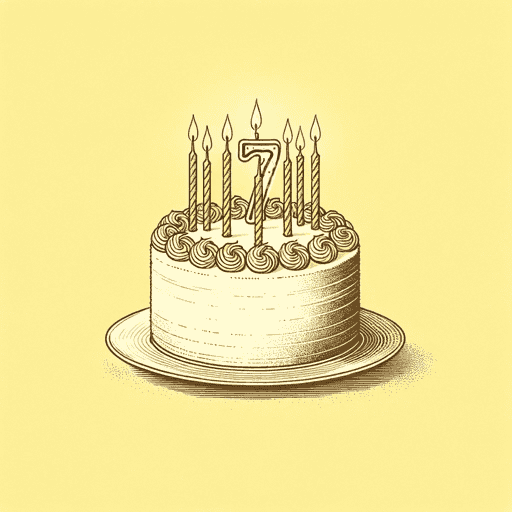
“That’s not a lot of Christmases for a little girl.”
(Part 4, Chapter 40, Page 135)
Chika’s ghost is often brutally honest when she visits Albom as he writes her story. When Chika asks Albom how many Christmases she had, he answers seven, and she notes how few that is. She is unafraid to say out loud what Albom does not wish to confront.
“Yours, not yours. We wrestled with this question many times, Chika. Remember what you once asked? How did you find me? I promised myself you would never feel lost again. I hated the idea that you—or any of our children—might ever feel unwanted.”
(Part 4, Chapter 45, Page 154)
Albom wonders what defines someone as a parent. Running the orphanage, Albom and the other staff acted and felt like parents who care for their children, devoting themselves to making the children feel valued.
“We could not shield Chika from the tumor, or the pain, or even her own mortality. But we tried to project an aura of positivity, that we—the doctors and the nurses—all knew what we were doing, that life was still full of undiscovered treasures.”
(Part 4, Chapter 46, Page 167)
Before Chika, Albom had an impression of fatherhood as requiring a man to protect his family at all costs. With Chika, Albom learned that he could not protect against all things. Nevertheless, Albom knew that Chika deserved to hope for a future like anyone else, even if she was very unlikely to have one; allowing her to feel this became its own form of protection.
“We were running out of vines to swing from.”
(Part 5, Chapter 47, Page 172)
In this metaphor, Albom describes running out of treatment options for Chika in the final months of her life. Shortly after this point, Albom and Janine had to accept that Chika was going to die.
“Mister Mitch? Next time we go to Haiti, can I stay there?”
(Part 5, Chapter 48, Page 176)
Chika’s connection to her homeland remained strong no matter how much time she spent in the United States. Reflecting on this memory, Albom laments that Chika was not able to stay or experience growing up in the place she was born.
“You, as usual, saw the world differently.”
(Part 5, Chapter 49, Page 177)
Chika never let her disease prevent her from experiencing life, and she did not experience the same pessimism and rollercoaster of hope and despair that Albom and Janine experienced. Upon being given a wheelchair, Chika considered it a grand convenience and a way to make her life easier.
“Chika surrendered many things during her battle with DIPG. Her will to fight was never one of them.”
(Part 6, Chapter 51, Page 191)
Chika’s resilience was a hallmark of her character and a large reason why she remained so happy during her illness. Albom reiterates many times throughout the memoir that Chika exhibited the joy of childhood; her ability to smile and laugh on the most difficult days is an example of this.
“But your arrival, Chika, triggered something new, a sense of discovery that happens for most couples, I guess, much earlier than it did for us. It was a splash of new color on an otherwise familiar canvas.”
(Part 6, Chapter 52, Page 196)
In this metaphor, Albom describes the wonderful changes that occurred within his family unit when Chika came into the picture. While Albom and Janine were happy in their love before, Chika brought an entirely new kind of happiness and redefined what family meant to them.
“We were unlikely to have encountered you in Haiti. You were unlikely to be in our care. We were too old. You were too young. The tumor was supposed to take you fast. We were supposed to accept that.
Nevertheless, here you were.
Nevertheless, here we were, too.”
(Part 6, Chapter 54, Page 211)
Albom uses the word “nevertheless” repeatedly in relation to Chika’s life, as she survived a massive earthquake and far outlived her original prognosis. Albom sees Chika as a rare treasure and credits Chika with teaching him true persistence and resilience.
“Can you see the influence you still have, even being gone?”
(Part 6, Chapter 55, Page 213)
Chika was a child when Albom and Janine took her in and a child when she passed away, but the length of her life had no relation to her impact. Albom remembers how many people came to see Chika before she died and knows that she touched many lives simply by being herself. He asks this question directly to Chika in the hope that she understands her importance.
“You made us a family, Chika.”
(Part 7, Chapter 61, Page 231)
Albom gives his memoir a thesis statement, summarizing his feelings toward Chika and her impact on his life in one short phrase. Through Chika, Albom became a father and learned that family comes in all different forms.
“The world is an amazing place.”
(Epilogue, Page 234)
Now that two of Chika’s siblings live at the orphanage, Albom considers the connections between people, events, and times. Despite his sorrow at Chika’s death, Albom concludes on a positive note because Chika would have and because he considers knowing Chika a gift.

Unlock every key quote and its meaning
Get 25 quotes with page numbers and clear analysis to help you reference, write, and discuss with confidence.
- Cite quotes accurately with exact page numbers
- Understand what each quote really means
- Strengthen your analysis in essays or discussions