For the Wolf
50 pages • 1-hour read
Hannah WhittenFor the Wolf
A modern alternative to SparkNotes and CliffsNotes, SuperSummary offers high-quality Study Guides with detailed chapter summaries and analysis of major themes, characters, and more.
Symbols & Motifs
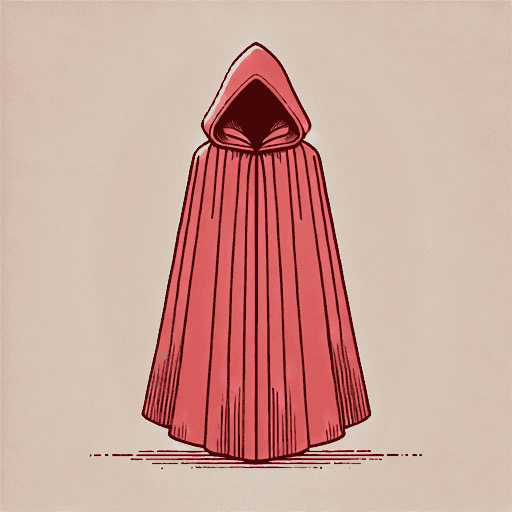
The Crimson Cloak
Red’s scarlet cloak serves, along with her name, as a primary indicator of and connection to the fairy tale upon which the story draws. The cloak becomes a further symbol of her identity in the way its appearance changes in the course of the story.
Initially, when she first enters the forest, the cloak is a symbol of Red’s childhood and her knowledge of herself as the Second Daughter and thus a sacrifice to the Wolf. Crimson, as indicated by the candles used in the shrine and the color of the dress Red wears at her presentation ceremony, is associated with this myth of their religion. The cloak’s tearing by thorns in Red’s first flight through the Wilderwood represents how she initially finds the forest a terrifying, indeed devouring place. Once in her room at the Keep, she treasures the cloak as her single remaining connection to Neve, and that is the reason Red rescues the garment when the forest devours her room.
When the cloak is repaired and returned to Red, it has the appearance of a bridal cloak, woven with golden threads that tell their own story. The cloak marking Red as a sacrifice is transformed into a gift from Eammon, the man she loves, and is a representation of their bond and her new status as Lady Wolf. When she leaves Valleyda behind for the second time, Red also leaves behind her red cloak, which helps indicate that her identity has been transformed again, this time through her own choosing, and she is no longer defined by how anyone else sees her.
The Bargainer’s Mark
The Bargainer’s Mark that appears on a person’s skin serves as a physical indication that they have entered a pact with the Wilderwood, with the characters’ various Marks becoming a motif for The Power of Sacrifice. The Mark indicates that the bearer can manipulate or affect the forest, but in return they are bound to live within its borders. Red anticipates a Mark will emerge on her forearm somewhere around her 20th birthday, marking her status as the Second Daughter and the expectation of sacrifice that entails. When Red’s Mark first appears, it is small and faint, representing how her early understanding of her relationship with the forest is hesitant and incomplete. She notes that Eammon’s Mark is more intricate than hers (182), which signifies, to her, the deeper relationship he has from being the Wolf and the child of the original guardians.
Lyra and Fife have Marks also, which they gained when they make their own bargain with the Wilderwood. Their bargains do not grant them the use of the magic that Eammon possesses, because their respective bargains, it is suggested, were made by a blood pact. This means that their blood can offer a stabilizing influence on the sentinel trees that are infected by rot, though it takes Eammon’s magic to truly heal or move the trees. Eammon’s bargain, as evidenced by his Mark, involves his taking in the roots of the Wilderwood, and the more elaborate indication on his skin confirms his powerful role.
When Red takes the roots for the first time, her Mark grows and develops of its own accord, confirming her new status as a Wolf. The battle with Solmir and Eammon’s resulting action of taking all the power of the Wilderwood into himself—becoming, in essence, a god-like figure—breaks the terms of these Bargains, as evidenced when the Marks disappear from Lyra, Fife, and Red. The bargains they strike with Eammon will be under new terms, reflecting the changed identity of the Wilderwood at the end of the story when the magic is lodged in its two guardians rather than in the forest itself.
Kiri’s Pendant
Kiri’s pendant is initially described as a symbol of her status as a priestess in the shrine of Valleyda, which is considered one of the more holy because of Valleyda’s proximity to the Wilderwood. Neve first associates the white wooden shard as simply another artifact of Kiri’s faith, like the white branches housed in the shrine. The dark veins of shadow within the wood serve as an image of the shadow taking over the sentinels of the Wilderwood, alluding to the antagonistic force that is at work but which Red does not yet understand.
As Neve is drawn into the work of the Order of the Five Shadows, she, like the other participants, is given a pendant of her own, but Neve instinctively dislikes the piece, showing how her motivations are not, ultimately, to do harm—she only wishes to weaken the Wilderwood enough so Red can escape. Once Red and Neve fully realize Kiri’s ambitions, the pendant takes on its full resonance as her symbol of service to the Shadowlands and her wish to draw power from its dark magic and to release the Five Kings. Kiri’s shadowed pendant, like the inverted sentinels they install in the shrine, becomes a symbol of the monstrosity and evil that Red and Eammon are working with the Wilderwood to contain.

Unlock the meaning behind every key symbol & motif
See how recurring imagery, objects, and ideas shape the narrative.
- Explore how the author builds meaning through symbolism
- Understand what symbols & motifs represent in the text
- Connect recurring ideas to themes, characters, and events