67 pages • 2-hour read
Forty Autumns: A Family's Story of Courage and Survival on Both Sides of the Berlin Wall
A modern alternative to SparkNotes and CliffsNotes, SuperSummary offers high-quality Study Guides with detailed chapter summaries and analysis of major themes, characters, and more.
Important Quotes
Content Warning: This section of the guide features discussions of physical abuse and emotional abuse.
“It would be several years into my childhood before I would discover that the Iron Curtain was not a simple panel of cloth that could easily be pushed aside by those on either side of it, but rather a symbol of something much bigger and more sinister than anything that childhood innocence could conceive.”
(Preface, Page xxiv)
This passage from the preface establishes the contrast between a child’s literal interpretation of the “Iron Curtain” and the “sinister” political reality, framing the story as a journey from innocence to understanding. Creating pathos through the naive childlike perspective, this device grounds the grand scale of Cold War politics in its personal, familial context from the outset.
“‘The world is infinitely vast and full of wonder,’ he had said. Then, paraphrasing Mark Twain, his favorite American author, he told them to ‘träumen, entdecken, erforschen’—explore, dream, and discover it.”
(Part 1, Chapter 1, Page 14)
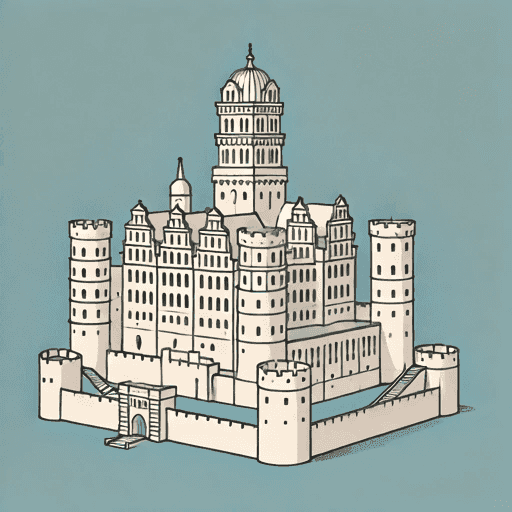
Here, Opa instills in his children a philosophy of curiosity and intellectual freedom that will later clash with the confinement of the Soviet regime. The choice of Mark Twain—an icon of American literature—underpins the family’s identification with Western ideals. This moment defines the family’s core values and foreshadows Hanna’s motivation to escape a system that seeks to limit the human spirit. The introduction of the Heidelberg Castle model, which prompts this speech, establishes the castle as a primary symbol of aspiration and a world beyond their village.
“But that idea was dashed when Mayor Boch showed up to inform Opa that the building formerly known as the church was no longer available for such ceremonies, adding, ‘Communism is our religion now.’”
(Part 1, Chapter 2, Page 25)
This quote demonstrates the new regime’s swift and totalizing ideological replacement of all existing social and spiritual structures. The blunt finality of Mayor Boch’s declaration, delivered without debate, illustrates the uncompromising nature of Soviet authority as it systematically dismantles community traditions. The line “Communism is our religion now” is a stark statement of the state’s ambition to become the sole source of meaning and morality, a core tenet of Authoritarianism Versus the Human Spirit.
“Looking up he said resolutely, ‘If you want to get out, do it soon.’ Then, reaching for another brick, he continued, ‘In less than a year, this place will be one big prison.’”
(Part 1, Chapter 3, Page 39)
Spoken by Hanna’s grandfather, Kallehn, this line is a pivotal moment in the narrative, expressive of quiet, intergenerational resistance. His prophetic warning, delivered with simple, declarative authority, validates Hanna’s desire for freedom and provides the impetus for her escape plan. The quietness of his statement, made while performing an everyday task, underscores the dangers of living in a police state and the necessity for secrecy.
“Oma quietly entered. She stopped short and stood motionless when she saw the suitcase on the bed instead of a simple satchel, which is all that would be needed for a daylong excursion. Neither moved as they both stood there, Hanna looking at Oma, who stared at the suitcase. Then, as quickly as she had entered, Oma turned and walked out of the room, closing the door behind her.”
(Part 1, Chapter 4, Page 54)
This silent exchange conveys a the unspoken understanding between mother and daughter, embodying the theme of Family as a Site of Security and Resistance. Oma’s recognition of the suitcase—signifying a permanent departure—and her subsequent wordless exit are a tacit blessing and an act of maternal sacrifice. The scene’s absence of dialogue adds pathos and prefigures how familial love can exist even when communication is impossible.
“Once just a child’s chimerical fascination, it was far bigger than she had ever imagined.”
(Part 2, Chapter 5, Page 71)
This quote marks the culmination of Hanna’s escape, when Heidelberg Castle is changed from a childhood dream into a tangible reality. The term “chimerical fascination” highlights the dreamlike quality of Hanna’s aspiration, while the statement “far bigger than she had ever imagined” applies to both the physical castle and the broader concept of freedom she has just attained. This moment fulfills the promise of the symbol established in the book’s opening chapters and signals the start of a new, more complex phase of Hanna’s life.
“What will become of a country, Oma wondered, when a mother cannot even trust her own children, and they, in turn, cannot trust their own families?”
(Part 2, Chapter 6, Page 86)
Oma’s internal monologue articulates the central conflict of the family as a site of security and resistance theme. Its presentation as a rhetorical question invites the reader to engage with it on an ethical or philosophical level. Her thoughts reveal one of the regime’s most insidious tactics: weaponizing the intimate family unit by encouraging children to inform on their parents. This moment establishes Oma as the family’s moral anchor, who understands that the security of the family unit is intrinsically threatened by the GDR police state’s network of informants.
“Like a scene in a dream, Hanna looked like a graceful angel floating toward her. It was a vision Heidi would carry with her for the rest of her life.”
(Part 2, Chapter 8, Page 101)
Narrated from five-year-old Heidi’s perspective, this description uses angelic, dreamlike imagery and simile to establish Hanna as a role model for hope and an idealized vision of life in the West. The hyperbole of a “graceful angel” captures the impact of the brief meeting between Hanna and Heidi on the younger sister. The final sentence functions as direct foreshadowing, indicating that this single memory will become a formative ideal for Heidi, shaping her identity and aspirations for decades.
“You are like stale beer!
There is no need for you any longer.”
(Part 2, Chapter 9, Page 118)
Quoted directly from a propaganda pamphlet, this excerpt demonstrates the regime’s crude and dehumanizing methods for controlling its populace by belittling intellectuals like Opa. The blunt simile “like stale beer” is an example of the state’s anti-intellectual rhetoric, designed to invalidate education and critical thought in favor of ideological conformity. By embedding this text, the author directly reveals the psychological tools used to break down figures of authority and integrity, directly fueling Opa’s internal crisis. This is an example of Willner’s explicit use of historical sources to give her memoir historical authority.
“You made the right decision. I am happy you are free.”
(Part 2, Chapter 10, Page 132)
Oma’s final words to Hanna confer a maternal blessing, resolving years of unspoken tension and validating Hanna’s choice. The direct, simple language contrasts with its emotional weight, which acknowledges The Price of Freedom for both mother and daughter. This declaration confirms Oma’s understanding that Hanna’s personal liberty is worth the family’s pain of separation, cementing Oma’s role as the quiet, enduring center of the family.
“Watching the workers stacking concrete blocks, armed guards in the background, she was heartbroken as she realized that the regime had taken final desperate measures to break from the West. A wall would seal off the country and pull the people of East Germany even further into isolation and, she knew, would take her family with it.”
(Part 3, Chapter 11, Pages 142-143)
This passage uses visual imagery (“stacking concrete blocks, armed guards”) to establish the physical and ideological reality of the Berlin Wall. The sentence structure emphasizes a cause-and-effect progression, moving from the physical act of building the wall to its devastating personal consequence for Hanna, directly illustrating the price of freedom. The passage implies the tension felt by Hanna who, in America, can freely watch the wall’s construction while knowing that her family in the GDR will be unaware of it and unable to act.
“The safe haven she had begun to create the day the Soviets stepped foot in Schwaneberg, to shelter her family from the suffocation of the regime, now had a name. She declared the Family Wall a sanctuary, a refuge where the family would preserve their souls by keeping the good in and the bad out.”
(Part 3, Chapter 11, Page 149)
This passage introduces the “Family Wall,” a central symbol that acts as a conceptual protection against the GDR, a positive parallel to the Berlin Wall. Oma’s declaration is an act of creation, establishing a private moral and emotional space in opposition to the oppressive public sphere. The diction, with words like “sanctuary” and “refuge,” elevates the family’s internal loyalty into a sacred principle, embodying the theme of family as a site of security and resistance.
“And so during that first winter in exile, somewhere on the long road between Klein Apenburg and Apenburg, Heidi came to virtually idolize Hanna for her strength and daring. […] She tried to embody what Hanna would think and feel in every situation, how she would react, what she would or would not say.”
(Part 3, Chapter 13, Page 169)
This passage illustrates the enduring power of family connection and personal example in the face of state-imposed isolation. Despite Hanna’s complete physical absence, she is transformed into a moral exemplar for Heidi, an icon of courage that transcends borders and censorship. This act of “patterning her character” shows how the family sustains its identity and values against the regime’s efforts to control individual thought, a core concept in the theme authoritarianism versus the human spirit.
“Now shaking with anger, his wild expression boring through her, he said, ‘You are a troublemaker, just like Hanna!’”
(Part 3, Chapter 13, Page 174)
In this moment of confrontation between a banished Opa and his daughter Heidi, the dialogue reveals the price of defiance and the concern of family members for each other. Recognizing Hanna’s role as Heidi’s role model, Opa conflates Hanna’s escape with Heidi’s principled refusal to join the party, using the same “troublemaker” label. The quote demonstrates how the regime’s pressures have broken his previous sense of resistance, forcing him to condemn the dangerous strength and integrity of his daughters.
“Finally, on the other end, someone picked up. We all looked at one another. My mother was stunned silent. Then almost inaudibly, in German, she uttered, ‘Mutti? Mutti, it’s me.’ ‘Who?’ Oma called back in German, through the static interference.”
(Part 3, Chapter 14, Page 186)
The narrative employs fragmented dialogue and sensory details to capture this emotional and fragile moment of reconnection after 15 years. The “static interference” connotes the political and physical barriers separating the family, while Hanna’s “inaudible” whisper and Oma’s confused reply convey the shock of the moment. This brief, broken exchange dramatizes the immense emotional distance that must be overcome, highlighting both the pain of separation and the resilience of the mother-daughter bond.
“I am angered that the USSR and the USA can manage a joint space trip in the cosmos, but a visit of a US citizen to Klein Apenburg is not possible. Who can understand that? Maybe you should make contact with the office of Erich Honecker to complain.”
(Part 3, Chapter 15, Pages 207-208)
This passage uses sarcasm to critique the absurdity of the GDR’s restrictions and the hypocrisy of its international posturing. By juxtaposing a collaborative superpower space mission with the impossibility of a simple family visit, Opa exposes the illogical and inhumane nature of the regime’s control. This written act of defiance illustrates the theme of authoritarianism versus the human spirit and foreshadows the state’s retaliation for his dissent.
“No one can say what will happen or if things will change, but all I know is, justice will win. Truth will prevail and justice will win.”
(Part 3, Chapter 16, Page 215)
Delivered with prophetic authority, Oma’s declaration establishes a moral framework that transcends the political reality of the GDR. Her certainty that “justice will win” functions as a core tenet of the family’s endurance, opposing the state’s narrative of never-ending control with a sense of hope and change. This moment is a verbal cornerstone for the “Family Wall,” a symbolic structure of hope that sustains the family through decades of separation.
“They were in utter shock. They stood rooted in place, staring at Albert as if he were an alien from outer space.”
(Part 3, Chapter 17, Page 220)
The simile comparing Albert to an “alien from outer space” illustrates the extreme isolation imposed by the East German state. This literary device conveys the psychological chasm created by 30 years of separation. The family’s shock underscores how effectively the regime has severed connections to the outside world, rendering the familiar foreign and surreal.
“‘Would you like to travel to America to see your aunt?’ She lifted her head and looked at him. ‘No.’ ‘Do you love your parents?’ ‘Yes.’ Satisfied, he smiled.”
(Part 3, Chapter 17, Page 225)
This stark, minimalist dialogue reveals the state’s psychological manipulation of its citizens, starting in childhood. The questions are designed to test political loyalty over familial affection, forcing Cordula to perform a disavowal of her aunt to secure her future in the elite sports program. The exchange demonstrates the price of freedom, showing how personal ambition within the system requires the sacrifice of honest family connection.
“A victory not just in the physical sense, their little paradise stood as a symbol against the limitations imposed by communism, against all that their government had denied its people, and in fact against everything the regime stood for.”
(Part 3, Chapter 18, Page 240)
The narration explicitly defines the “Paradise Bungalow” as a site of private defiance against the communist state. By creating a private space through their own labor and ingenuity, Heidi and Reinhard engage in a personal act of rebellion. This physical manifestation of independence represents a tangible counter-narrative to the regime’s collectivist ideology and embodies the theme of family as a site of security and resistance.
“Who were they? Who were they really? What were their lives like? […] Did they ever confront the regime or did they survive by lying low and avoiding attention, toeing the Party line? I wondered if any of them were true communists or if they just played the game to survive.”
(Part 4, Chapter 19, Pages 249-250)
Flying into Berlin for her intelligence assignment, the author reflects on the maternal family she has never met. The passage uses a series of rhetorical questions to frame her uncertainty and highlight the central conflict of the narrative: the internal struggle for integrity under an oppressive state. These questions explore the moral ambiguity of compliance versus resistance, highlighting the psychological complexity of life in the GDR that Willner, as an outsider, must speculate about.
“‘Cordula has been given a chance at a good life,’ she wrote, ‘so this will be our last contact. I know you will understand.’”
(Part 4, Chapter 21, Page 282)
In a letter to Hanna, Heidi severs communication to protect her daughter Cordula’s burgeoning athletic career. The stark brevity of the message, written with the awareness of Stasi surveillance, encapsulates the painful sacrifices demanded by the regime. This decision illustrates the theme of the price of freedom, showing how one family member’s opportunity within the system necessitates severing ties with another who exists outside it.
“We turned our engine off. […] Someone was taking his chances and tuning in to music from the West. And the song he was listening to was John Lennon’s ‘Imagine.’”
(Part 4, Chapter 22, Pages 301-302)
During a tense, late-night intelligence mission, Willner and her team hear music from a nearby hut. The scene creates situational irony by juxtaposing the high-stakes reality of Cold War espionage with the relaxed idealism of John Lennon’s anthem for global unity. This personal act of rebellion is a moral example and incentive for Willner, showing that the human desire for peace and connection persists even in the most militarized and repressive conditions.
“‘Gorby, Gorby!’ With the support of the leader of the Soviet Union seemingly now on their side, the crowds were suddenly unafraid of their own leader and they continued to drum in unison, as some voices cut above the din, yelling, ‘Gorby! Save us!’”
(Part 4, Chapter 24, Page 320)
During Mikhail Gorbachev’s 1989 visit to East Germany, citizens openly appeal to him over their own leader, Erich Honecker. The chant encapsulates a significant moment of political change, demonstrating the collapse of the East German government’s legitimacy. The repetition of the chant conveys a sense of momentum, underpinning the historical foreknowledge that the GDR’s collapse is imminent.
“When the sound system began to blare an old German folk song they instantly recognized from their childhood, they quickly locked arms, linking themselves in a chain, beaming at one another and giggling like little children as they began to sway animatedly from side to side in rhythm to the music.”
(Part 4, Chapter 27, Page 338)
At the family reunion after the Wall falls, Hanna and her siblings share a moment of spontaneous joy. This scene is the narrative’s emotional climax, as the physical “chain” of linked arms highlights the theme of family as a site of security and resistance—a bond that has endured despite decades of forced separation. Their childlike behavior signifies the recovery of a shared past and innocence that predates the trauma of division, affirming the resilience of familial and cultural identity over political ideology.

Unlock every key quote and its meaning
Get 25 quotes with page numbers and clear analysis to help you reference, write, and discuss with confidence.
- Cite quotes accurately with exact page numbers
- Understand what each quote really means
- Strengthen your analysis in essays or discussions