67 pages • 2-hour read
Forty Autumns: A Family's Story of Courage and Survival on Both Sides of the Berlin Wall
A modern alternative to SparkNotes and CliffsNotes, SuperSummary offers high-quality Study Guides with detailed chapter summaries and analysis of major themes, characters, and more.
Part 2Chapter Summaries & Analyses
Content Warning: This section of the guide features discussions of graphic violence, physical abuse, and emotional abuse.
Part 2, Chapter 5 Summary: “Two Castles: Out of the Whirlwind”
Hanna emerges from the forest in the West Zone, weary and shaken. Having flagged down a cart, he she is struck by panic and visions of her family overwhelm her. She resolves to hide for a few months until she turns 21, when she can legally register as a West German citizen. After a day of travel, Hanna reaches the village of Dettum and sleeps on the floor of a vacant building. The next day, a village matron feeds her soup and introduces her to the Schneiders, a farming family who need a housekeeper and nanny and are willing to overlook her illegal status.
In Schwaneberg, the newly formed East German police, the Volkspolizei or “VoPo,” inform Opa that his job and family are in jeopardy because of Hanna’s flight. The family does not know whether Hanna is safe; many attempting to cross are shot or arrested. East German prisons and concentration camps fill with dissenters who face brutal conditions and a lack of legal justice.
In the West, after nearly three months with the Schneiders, a disgruntled farmhand reports Hanna to authorities. A sympathetic West German policeman visits and, moved by her plea that she will be 21 in two weeks, says he will return later, giving her the time she needs. Two weeks later, the East German authorities and Hanna’s parents receive an official cable stating she has become a West German resident. The VoPo commandant summons Oma and Opa to express his disappointment. Fearing repercussions, Opa throws himself into work to regain favor. The family lies low, even forgoing Christmas.
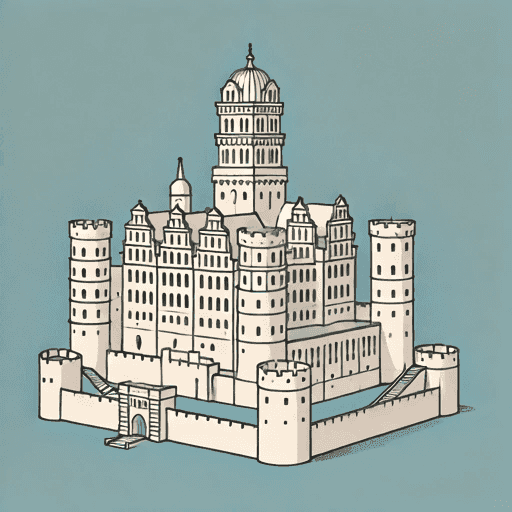
On Christmas Eve, a homesick Hanna attends church with the Schneiders and sobs during “Silent Night.” After the New Year, Hanna cuts off her braids, collects her wages, and takes a train to Heidelberg, arriving at sundown. After spending the night at the station, she goes to find the Heidelberg Castle. Standing before the massive red sandstone structure she once assembled as a model kit, she is awestruck. From the hillside, she looks over the city and feels at peace, buying a postcard of the castle.
The narrator details how Western powers form NATO in response to growing tensions with the Soviets, though East German citizens remain unaware due to state-controlled media. The Soviet regime launches a youth movement—the FDJ and Young Pioneers—led by Erich Honecker, a hardline communist who will later become East Germany’s leader. Teachers like Opa are forced to promote these groups, as participation becomes necessary for acceptance and security. Opa and Oma direct their older children to join while keeping the youngest at home.
The narrative contrasts Heidelberg Castle with Hoheneck Castle in the East, which is being converted into a women’s prison. Women and girls accused of crimes against the state, many innocent, are subjected to horrific conditions and torture.
Part 2, Chapter 6 Summary: “A Sister Born in the East: The Stasi Takes Control”
Oma and Opa warn their children not to attempt escape. Months earlier, their cousin 19-year-old Klemens had tried to flee from Seebenau but was caught. His maternal grandfather, Kallehn, stormed into the Soviet Kommandatura, slapped Klemens, and dragged him out, saving him from prison.
In Heidelberg, Hanna is barred from university enrollment because she lacks a high school diploma. She enrolls in community college English classes and works various low-paying jobs, often going hungry to afford rent and tuition. After she faints from hunger in class, classmates begin anonymously leaving food in her schoolbag. She learns to type and buys a typewriter that she pawns each month for rent money.
Six months after Hanna’s escape, the family has no further word from her, and Opa forbids them from speaking of her. Eight months after her escape, a postcard arrives from Heidelberg, saying that that she is safe and well but with no return address. Opa tells the children she will surely return because life in the West is too hard. Oma, knowing otherwise, secretly applies to travel to Heidelberg but is denied. Aged 44, she learns she is pregnant again.
The author explains how, in April 1949, the Berlin Airlift ends when Stalin lifts the blockade in the face of Allied efforts. In August, the Soviets test an atomic bomb, igniting the nuclear arms race. On October 7, 1949, East Germany is officially established as the GDR, with Walter Ulbricht as leader. The secret police, or “Stasi” is formed under Erich Mielke, is tasked with preserving regime security and manipulating the population. It recruits agents and builds a network of citizen informants.
The GDR state begins forcing farmers to surrender their land for agricultural collectives. Opa speaks out at a town meeting but the authorities ignore him. Taking Ulbricht’s public call for feedback literally, Opa writes directly to the leader proposing a compromise. Authorities warn Opa and Oma; he argues back and is labeled a “troublemaker.” Some villagers shun him out of fear. Oma begs Opa to control his criticisms.
In 1950, Hanna sends a letter with a return address, and correspondence begins. Hanna learns that she has a new sister, Heidelore, called Heidi, born in July 1949.
The GDR regime makes small concessions to win support, but participation in youth programs becomes effectively mandatory for advancement. The FDJ and Young Pioneers use propaganda to indoctrinate children and encourage them to inform on family members. Manni joins the FDJ, and seven-year-old Kai joins the Young Pioneers. Oma is deeply troubled by the manipulation of her children and Opa and Oma instruct their children that family loyalty comes first.
As millions continue to flee, creating a “brain drain” effect, the regime seals the main border in 1952 with “Operation Vermin,” erecting fences, guard towers, and ordering deadly force. Berlin is the only remaining escape route. In the popular imagination, this physical barrier becomes the defining symbol of the Cold War.
In late 1952, Oma applies again to travel to the West. In Heidelberg, Hanna secures a job as a bilingual secretary at US Army headquarters. She writes home about her work and travels. The Stasi continue to monitor the family and censor their mail. Opa is now a marked man with two strikes against him. Young Heidi is described as unusually happy and adored by the family. She learns about Hanna from photographs and begins referring to her as Hanna-who-went-to-the-West. Oma watches as Heidi studies Hanna’s image.
Part 2, Chapter 7 Summary: “‘We Want to Be Free’: A Workers’ Uprising”
In March 1953, Stalin, the dictator of the USSR, dies. By June, protests have erupted in East Germany. Despite propaganda portraying the GDR as a workers’ paradise, conditions remain dire. The regime increases Stasi surveillance and directs citizens to inform on one another. Moscow advises Ulbricht to ease conditions, but he ignores this, imposing impossible production quotas on workers without raising their meager pay. Workers’ frustration grows.
In mid-June, workers’ demands are met with silence. On June 16, workers in East Berlin walk off their jobs. By June 17, protests swell to nearly a million people across East Germany. Demonstrators chant for freedom, attack government buildings, and free political prisoners. President Eisenhower decides not to intervene for fear of war with the Soviets. Resistance spreads as demonstrators take over radio stations and newspapers. Soviet forces violently crush the uprising, leaving hundreds dead, thousands injured, and about 10,000 detained. Nearly 100 protesters are executed. The regime falsely blames the uprising on Western instigators and gives the Stasi increased powers.
Schwaneberg remains quiet during the uprising but Hanna receives a letter from her sister Tiele, now a kindergarten teacher in Naumburg an der Saale. She describes witnessing the demonstrations and repeats the state’s official narrative.
A month later, police summon Oma and approve a two-day visit to Hanna under two conditions: Oma must promise not to remain in the West, and she must persuade Hanna to return, or to spy for East Germany. Oma accepts, prioritizing seeing her daughter, and bargains to take five-year-old Heidi.
Part 2, Chapter 8 Summary: “The Visit: Sisters Meet”
The East German regime spins the 1953 uprising as an attack by West Germany. Stories from escapees into the West describe the GDR as brutal and oppressive.
Oma tells Heidi about her planned visit but conceals the authorities’ conditions from Opa. At the train station, the family sees Oma and Heidi off as Opa notices secret police observing. On the train, Heidi excitedly tells the ticket examiner she is visiting her sister. They arrive in Heidelberg that night. At the station, Oma and Hanna have an emotional reunion. Heidi sees Hanna for the first time, a moment she will remember forever. At Hanna’s flat, Heidi is fascinated by the modern flushing toilet.
Over the two days, Heidi becomes inseparable from Hanna, whom she idolizes. Heidi, Oma, and Hanna enjoy the freedoms and leisure activities of the West together. On their last evening, an emotional silence hangs between Oma and Hanna as they sit on the Philosophers’ Walk.
At the train station, farewells are emotional. Hanna embraces Heidi and tells her to take care of their mother. As the train pulls away, Heidi presses her palm against the window. The meeting between 26-year-old Hanna and five-year-old Heidi is the only time the sisters will see each other during the GDR’s 40-year existence.
Back home, Heidi excitedly tells her siblings about the trip; Opa remains silent. The authorities do not follow up with Oma. They likely assume she failed in her task, as future travel applications will be denied. Heidi places Hanna’s photo by her bed and begins to emulate her sister. At night, she wonders what Hanna is doing.
Part 2, Chapter 9 Summary: “Life Normalizes in a Police State: A Courtship”
In 1955, East Germany declares its sovereignty as a nation. The Ulbricht-led regime expands the Stasi and intensifies censorship. West Germany joins NATO while the Soviet Union agrees the Warsaw Pact. Both Germanys establish militaries.
At US Army headquarters in Heidelberg, Hanna meets Lieutenant Eddie Willner, an intelligence officer who greets her daily. Initially cool toward him, she is drawn in when he speaks fluent German. They begin dating. He eventually reveals he is a German Jew and Holocaust survivor, the only one of his family to survive. Hanna feels a deep connection. Refugees continue to arrive from East Germany, primarily through Berlin.
As life normalizes in the GDR, paranoia about Stasi informants grows. Oma becomes suspicious of everyone. Opa stays silent during weekly card games, assuming he is being watched, but secretly tries to listen to Western radio despite the risks. Heidi’s teacher tells Opa she asks too many questions. Heidi joins the Young Pioneers and, at her first meeting, an older girl corrects her salute. Heidi takes the oath but soon questions the anti-West propaganda. When she asks her parents about it, Opa gives a dismissive, state-approved answer. Oma gently dissuades Heidi from writing to Hanna. Kai, at 14, participates in the Jugendweihe, a ceremony of dedication to communism. Oma watches with sadness.
In the West, Hanna and Eddie become inseparable, traveling frequently. His boundless energy exhausts her, but he urges her to keep up with his relentless pace. By December, they are engaged.
Opa confides to Oma that he struggles to tolerate the regime’s demands at school. Heidi’s teacher declares that those who leave East Germany are traitors. Heidi is deeply disturbed, wondering if her image of Hanna is a fantasy.
The global spread of communism accelerates. The Soviets brutally suppress the 1956 Hungarian Uprising while the West stands by. Khrushchev, the Soviet dictator, threatens to “bury” the West. The Soviets launch Sputnik, starting the space race.
In East Germany, intellectuals who challenge the system are punished. Opa is forced to distribute propaganda pamphlets. He retreats into his books and his lack of enthusiasm is noticed by officials. Police visit and confiscate many books. Oma finds solace in her garden. In Seebenau, Kallehn struggles as the state requisitions his crops. After 10 years under Soviet-led rule, East Germans have little choice but to submit.
Part 2, Chapter 10 Summary: “The Fur Coat: Last Meeting”
Most of Hanna’s correspondence to her family is confiscated by East German authorities. A postcard from Venice makes it through but Opa hides this. Heidi retrieves the postcard and daydreams about the outside world. In school, Heidi observes that West Germany is depicted as a blank space on maps. Her teacher tells the class the West is a dangerous wasteland from which they are protected. Heidi resolves that there must be good in the West, which Hanna becomes emblematic of.
Hanna sends Oma a horse-hair fur coat. The package arrives partially opened but intact. Oma collapses onto a chair, overwhelmed. After initial hesitation, Opa allows her to wear it. In spring 1958, Hanna writes that she is marrying Eddie and invites the family, though she doubts permission will be granted. Oma’s application to attend is rejected.
Eddie’s superiors try to dissuade him from the marriage, but he stands firm. After an investigation into Hanna, her citizenship is expedited. In summer 1958, they marry in Heidelberg with no family present. They are surprised with a large reception attended by colleagues and friends. Oma is heartbroken she could not attend. Opa writes a letter welcoming Eddie into the family. Hanna and Eddie honeymoon at the 1958 World’s Fair in Brussels. On an intelligence mission, Eddie secretly cuts a fabric sample from a Soviet Army uniform on display. Hanna becomes an American citizen, and Eddie becomes a liaison officer to the West German BND, the federal intelligence service.
Four months later, Oma and Opa are granted permission to visit Heidelberg. At the police station, a Stasi officer instructs Opa to gather intelligence on Eddie. In December, Oma and Opa arrive in Heidelberg for a two-day visit and are welcomed by Hanna and Eddie. Hanna and Opa embrace, their first meeting in 10 years; she sees a wounded look in his eyes. Opa is fascinated by Eddie’s car and modern appliances.
Oma brings messages from all the children. Roland’s is brief and formal, paining Hanna. She sees photos of her siblings, now grown. Heidi sends a drawing of two girls at the Heidelberg Castle. Hanna shows Opa the real castle. The four spend a festive evening together and Opa feels respect for Eddie’s character and resilience. On their last evening, Opa admits things at home are getting worse. Saying goodbye, Opa appears to have made peace with Hanna’s life choice and Oma tells Hanna she made the right decision. Hanna sees her parents for the last time.
On his return, Opa tells the Stasi he learned nothing from his son-in-law. The Stasi adds another black mark to Opa’s file, and all future travel requests are denied.
Part 2 Analysis
This section traces the increasing physical and experiential division between Hanna and her family on either sides of the Wall. The narrative mirrors this through the juxtaposition of the Heidelberg and Hoheneck Castles. For Hanna, arriving at Heidelberg Castle is the culmination of a lifelong dream, a tangible symbol of her quest for freedom that was first triggered by a miniature model. Her arrival at the real structure signifies the transformation of an abstract hope into a physical reality, representing a triumph of individual aspiration and self-determination. The text creates an immediate contrast with Hoheneck Castle, a fortress of similar historical grandeur that the East German state converts into a brutal women’s prison. Its description—dark cells, torture, and the coercion of prisoners—positions it as the nightmarish counterpart to Heidelberg. The two castles represent the binary of Authoritarianism Versus the Human Spirit. The juxtaposition also encapsulates the physical division of Germany—including its cultural, historical and patriotic elements—by Cold War territorial and ideological hostility.
The theme of The Individual Versus the State is explored through a range of defiant acts in these chapters, from Hanna’s physical escape to Opa’s intellectual resistance. The regime immediately frames Hanna’s flight as a political crime, classifying her as having “deprived the state” of a healthy, able-bodied worker (65). Willner makes explicit that the Soviet regime considers the individual person to belong to the state and its service, rather than the reverse in the democratic world. Hanna’s defiance is absolute in these terms, signifying a complete rejection of the system’s stated right to claim her life. Opa’s resistance in this section is more complex, reflecting his personality and experience as an intellectual and community leader. By taking Walter Ulbricht’s public call for feedback literally and writing a letter protesting the collectivization of farms, he attempts to engage with the system on its own terms. The regime’s response—labeling him a “troublemaker” and subjecting him to surveillance—reveals the hypocrisy of its claim to be a citizen-led movement. His struggle is used by Willner to explore the dangerous position of the intellectual under a regime that criminalizes independent or empirical thought. The state’s violent put-down of the1953 Workers’ Uprising frames these personal acts of defiance within a wider social context, giving the East German passages an increasing sense of oppressive dread. This growing darkness contrasts increasingly with Hanna’s experiences of growing prosperity, freedom, and marriage to Eddie Willner. Her job with the US Army and Eddie’s military role show Hanna being increasingly pulled away from the traditions of her upbringing into America’s modern, commercial sphere of influence.
The separation of sisters Hanna and Heidi is used to dramatize the impact of Germany’s division over a generation of young people, the eponymous “Forty Autumns.” As a much-older sister, Hanna’s identity has been forged in a pre-GDR world and developed by her flight, while Heidi is a child of the new state, born the year it was founded. Inside the propaganda-controlled GDR, Heidi’s only connection to an alternative world view is the idealized image of “Hanna-who-went-to-the-West” (90). Their brief meeting is the only time these two worlds intersect, allowing the memoir to explore the huge gap in quality of life between the East and West from a human perspective. For five-year-old Heidi, Hanna becomes a living embodiment of the wealth and freedom she sees in the West, allowing Heidi to internally identify the falsity of Soviet propaganda in light of her own real experiences. For Hanna, fast-growing Heidi is a poignant reminder of the family and life she left—a family living under hardships that she has escaped. This sisterly dynamic personalizes the political and personal schism, demonstrating how totalitarian regimes build not only physical walls but also psychological and experiential ones that can threaten a family’s bonds. The memoir shows how the threat of bitterness, guilt, and division is overcome by the family’s love and generosity of spirit. Opa’s visit culminates in a quiet reconciliation with Hanna and acceptance of her new life and husband, moving away from the anger and acrimony of their interactions in the last half of Part 1. Similarly, Oma’s parting words to Hanna affirm Hanna’s choice of individual freedom: “You made the right decision. I am happy you are free” (132). Willner makes this parting episode more resonant by breaking the chronology to tell the reader that Hanna won’t see her parents again.
Amid the state’s efforts to control society by fostering paranoia and turning neighbors into informants, the narrative increasingly asserts the Family as a Site of Security and Resistance. When the regime’s youth programs are engineered to supplant familial bonds with allegiance to the state by encouraging children to report on their parents, Opa and Oma instruct their children that family loyalty is paramount, establishing a private moral code in defiance of the state’s demands. Oma’s dangerous negotiations with the Stasi to visit Hanna are a continued refusal to accept forced separation along political division. In a world where the state demands total fealty, the family’s insistence on its own primacy is political act, part of the narrative’s argument that innate human connection can endure and resist state-sponsored ideology.

Unlock all 67 pages of this Study Guide
Get in-depth, chapter-by-chapter summaries and analysis from our literary experts.
- Grasp challenging concepts with clear, comprehensive explanations
- Revisit key plot points and ideas without rereading the book
- Share impressive insights in classes and book clubs