67 pages • 2-hour read
Forty Autumns: A Family's Story of Courage and Survival on Both Sides of the Berlin Wall
A modern alternative to SparkNotes and CliffsNotes, SuperSummary offers high-quality Study Guides with detailed chapter summaries and analysis of major themes, characters, and more.
Preface-Part 1Chapter Summaries & Analyses
Content Warning: This section of the guide features discussions of graphic violence, rape, physical abuse, emotional abuse and illness or death.
Preface Summary
In 1966, The author-narrator, Nina Willner, aged five, attends her kindergarten Grandparents Day in the USA. Admiring the other children’s grandparents, she wonders about her own. At home, her father explains that his German Jewish family died during World War II. Her mother reveals that her own mother, Oma, is alive but lives in East Germany with the rest of the family, behind the “Iron Curtain.” Willner sees a photograph of Oma and longs to meet her. She is confused by the “curtain” metaphor and wonders privately why Oma can’t simply be freed by pulling it aside. The next day, Willner tells her teacher that she has grandparents: The teacher’s somber reaction to the news that they live in East Germany makes Willner realize that this barrier is greater than she imagined. Years later, Willner understands that the Iron Curtain symbolizes a physical and political division and that, while her mother left East Germany before the Wall was built, the rest of the family were unable to leave the GDR.
The narrative shifts to 1985 East Berlin, where the East German women’s national cycling team trains intensely in a velodrome. A few miles away, the narrator’s intelligence team drives an olive-drab Ford through an East German forest. Armed Soviet soldiers ambush the car. An officer orders the window rolled down, pressing his gun to the glass.
Part 1, Chapter 1 Summary: “The Handover: End of War (1945)”
When World War II ends, 40-year-old Oma, pregnant with her seventh child, emerges from the cellar in Schwaneberg, Germany, with her children. She and other village women speculate about when their men will return and what the future will hold. Oma focuses on restaging the household while waiting for her husband, Opa, a school headmaster. He and their oldest son, Roland, aged 17, were pressed into service in the war’s final days.
As the men fail to come home after several weeks, the women fear that approaching Soviet forces will rape and kill them. When a convoy arrives in mid-May, it is spotted by Oma’s children—Manni, Klemens, Tiele, and little Kai—and the village rejoices that it is American. They are mostly friendly but a few soldiers commit looting. Oma returns home one day to find Opa’s desk broken into and a swastika carved into his chair.
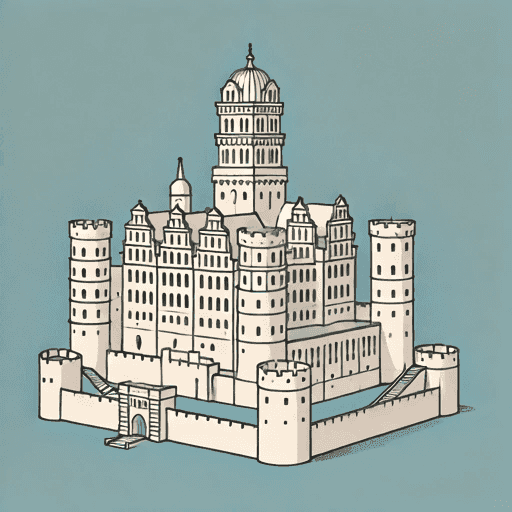
Weeks later, the Americans prepare to leave. Germany has been divided into occupation zones: The Western Allies will control the West and the Soviets the East, including Schwaneberg. The Americans offer to take a few villagers west, but most refuse to leave. That night, Oma sits on 17-year-old Hanna’s bed, reminiscing. She recalls that young Hanna was restless and impish, unlike her obedient brother Roland. Opa educated his children in world culture. When Hanna was about 11, the family built a model of Heidelberg Castle, marveling that such a building could exist in real life. Opa says the vast world is there to be explored and discovered. The castle became Hanna’s symbol of a world beyond Schwaneberg.
Before dawn, Oma packs a small bag. As the Americans prepare to leave, Oma wakes Hanna and takes her to the Americans, who pull the stunned Hanna into a truck. As the convoy leaves, Oma watches while Hanna cries out. Several miles down the road, Hanna panics at the thought of leaving Oma, jumps from the moving truck, and runs home.
Part 1, Chapter 2 Summary: “An Iron Curtain Descends: Cold War Begins (1945-1946)”
Willner states that she joined US Army Intelligence in the 1980s, by which time East Germany has become a hardline communist state with massive Soviet forces facing against NATO in West Germany. In 1945, this Soviet Zone is undefined. On July 2 the Soviets arrive, claiming to come in peace. They impose a curfew and requisition all food, threatening to shoot anyone who keeps food, attacks soldiers, or disobeys orders. They promise that German women will be safe. By mid-July, the villagers are trying to go about their normal lives. The Soviets install Herr Boch, a 70-year-old with communist leanings, as the new mayor.
As America makes plans to improve conditions in the West, the Soviets strip the East zone of resources in “reparations.” People begin migrating west. Schwaneberg women and children, including Hanna, work the fields. They begin to suffer from starvation. Oma, seven months pregnant, travels to her parents’ farm in Seebenau. Her father, Kallehn, and mother, Ama Marit, struggle under harsh new farm laws. Kallehn shows Oma a stash of forbidden food. On her return trip, a guard confiscates Oma’s packages and she arrives home empty-handed. Hanna erupts in anger and Oma warns that rebellious behavior is dangerous. Hanna resolves not to be part of the communist system.
In September, Roland returns from a Soviet prisoner-of-war camp. He is lucky to be released as 90% of Soviet-held POWs are sent to the USSR as forced labor. A week later, Opa returns from an American internment camp. With the village midwife’s help, Oma gives birth to Helga, her seventh child. Mayor Boch forbids a church baptism, declaring communism the new religion. Opa quietly accepts this to protect his teaching job. Opa undergoes a “de-Nazification” assessment and returns as headmaster, ordered to teach communist ideology. He studies Soviet doctrine and the Russian language at night. Roland starts teacher training.
By mid-1946, Soviets fortify the border with troops and watchtowers. They institute an interzonal pass system with slow processing; approvals favor the infirm over healthy young adults. After about a year, authorities seem pleased with Opa, but he feels the strain of trying to appear loyal and keep the family safe. Hanna urges leaving but Opa says it is too late. The Heidelberg Castle model takes on a poignancy as the real castle lies in the American Zone. Across the East, Germans join security forces, the Socialist Unity Party and the Soviet-run police, the Volkspolizei or VoPo. Opa joins the Communist Party. As family hardship worsens, Oma and Opa send 18-year-old Hanna to live with Kallehn and Ama Marit in Seebenau, near the border.
Part 1, Chapter 3 Summary: “‘If You Want to Get Out, Do It Soon’: Close Calls and Escapes (1946-1948)”
Hanna settles in at Kallehn and Ama Marit’s farm, attending the local high school. While harvesting, she notices Kallehn’s dismay at being forced to hand over crops. He jokes they have done their part for “the People” and gives Hanna a bag for gleanings. On Saturdays, Hanna visits the local Gasthaus (inn), where she meets Sabine, whose home is in the British Zone. Sabine crosses into the East for work and secretly brings Hanna scarce Western goods.
Border security tightens with physical barriers and a shoot-on-suspicion policy. Curfews are enforced, and speaking against the regime can lead to imprisonment. Alarmed by public acceptance of repression, Hanna secretly begins observing guard shifts and surveying escape routes. Kallehn warns her not to go near the border.
One afternoon, Hanna attempts escape. A Soviet guard shouts to stop or be shot. Hanna bolts as a bullet cracks past. She hides but is caught and detained. Kallehn is summoned, and the guard releases Hanna with a warning. Kallehn fears for Hanna’s safety and considers sending her home. Hanna begs him to keep the attempt secret. Later, Hanna tells Kallehn she wants to be free. Kallehn tells her to get out soon and predicts the place will become “one big prison” (39).
Winter makes escape impractical. Hanna returns to Schwaneberg for December. Oma decorates for Christmas despite prohibitions, and the family finds warmth despite privation. Opa continues outward conformity but sleeps poorly and becomes moody. Hanna confronts him about whether he believes what he teaches; he dismisses her as too young to understand. After the new year, Hanna returns to Seebenau. Opa has told her she will train for a vocation after graduation, which alarms her by its finality. Hanna tells Kallehn she wants to go and Kallehn agrees to help. Oma’s sister, Frieda, visits, and she and Kallehn devise an escape plan.
In May, Kallehn takes Hanna by wagon to Frieda’s farmhouse in Hestedt. A young man leads Hanna over the border to Sabine’s house in the West. Kallehn informs Oma and Opa that Hanna has fled, hiding his involvement. Opa reacts with anger and Oma worries about Hanna’s safety.
Weeks later, a Soviet Zone messenger delivers a letter to Hanna claiming Opa is ill and urging her return. The letter is obviously dictated by the authorities. West German police arrive with a Soviet Zone arrest warrant stating Hanna is underage and illegally in the West. Sabine’s father, a West Zone official, deflects the situation. When threats against Opa’s job escalate, Oma arrives at Sabine’s door and says that Opa has ordered Hanna home. Hanna leaves with Oma. On the road, they meet Frieda, who has admitted her role to the family and helps retrieve Hanna in apology. The three women cross back east. Soviet guards intercept them and order Hanna be detained separately. Oma declares she will go where her daughter goes. A soldier violently tries to separate them, but Oma clings to Hanna and screams until the guards curse and wave all three women off.
In Schwaneberg, Opa meets Hanna with silence. He says she shamed and endangered the family, forbids contact with Kallehn and Frieda, and orders her siblings to keep their distance. He restricts Hanna’s movements and she works under surveillance. After months, Opa allows sibling relationships to resume and Hanna reconnects through games, talking, and baby care. Nearly a year passes with Hanna under virtual house arrest.
In spring, Opa calls Hanna to his study to plan her future, suggesting teaching. Roland, who has embraced Soviet ideology, urges Hanna to help “make Germany great again” (48). Hanna says nothing.
Willner explains the concurrent reforms in West Germany under the Marshall Plan, America’s investment in German redevelopment. Seeing post-war Germany as a threat, the Soviets undermine these efforts. In June 1984 they sever supply routes into the Allied-occupied zones of Berlin, located inside Soviet-occupied territory. The Allies respond with the Berlin Airlift, a huge aerial resupply of West Berlin. Hanna interprets the blockade as proof the Soviets intend a permanent separation. In July 1948, Hanna resolves to leave again. To conceal this, she tells Opa she wants to become a teacher.
Part 1, Chapter 4 Summary: “Flight: A Small Suitcase and the Final Escape (August 11, 1948)”
Opa arranges for Hanna to attend a teacher registration session in Magdeburg, near the border. The night before departure, Hanna watches Oma and her siblings, committing them to memory. Opa and Roland praise Hannah’s big day tomorrow. Unable to sleep that night, she checks her brown suitcase. It contains a cotton shift, socks, a wool sweater knitted by Oma, a family photograph, an old 10-mark bill, and Lucky Strike cigarettes, to be used for bribes. Oma enters and sees the suitcase instead of a day satchel, but leaves without speaking.
Before sunrise, Hanna leaves with her suitcase. Oma watches from an upstairs window, wondering if she will ever see her again. On the train, Hanna reflects on Opa’s appeasement and rejects his choices. She commits to escaping despite unknown family impact, thinking separation might be temporary.
At a rural stop, Hanna notices a group of passengers who she thinks intends to escape. Hanah follows them to an agricultural train. Everyone avoids eye contact except a woman who confronts Hanna, demanding trafficking money but dismissing her reichsmarks as worthless. When they all get off, the woman instructs Hanna to wait on a station bench and promises to return. Hanna waits briefly, then covertly follows the group through the woods.
Soviet soldiers shout for the group to stop. Shots ring out and someone screams. Hanna hides behind a tree and then runs unseen to the far side of a nearby barn. She finds a frail woman sitting on a woodpile. A Soviet soldier bursts in. The woman says in Russian that she is a poor old woman and Hanna is her niece. The soldier leaves. The woman explains she is a refugee living in the barn with her son, who has a special permit to work at a factory in the West. Hanna watches soldiers take away the survivors of the escapee group.
The son returns, agreeing to help Hanna cross at his daily border point. Hanna gives him reichsmarks and Lucky Strike cigarettes; he gives her 10 West marks and instructs her to pose as his cousin and stay calm. At the crossing, Soviet guards greet the young man familiarly. He claims Hanna is visiting their grandmother in the West and offers the cigarettes. The guards allow them to pass and the man pushes her into the forest, directing her across the buffer zone to the West. Hanna crosses the border.
In Schwaneberg, Opa explodes when Hanna fails to return but Oma grows quiet. In Seebenau, Kallehn hears the news and grins.
Preface-Part 1 Analysis
The narrative structure of the opening chapters establishes a dual perspective, juxtaposing a personal history with factual description of the lead-up of the Cold War. The preface functions as a framing device, by opening with the author’s childhood memory from 1966. The five-year-old narrator’s innocent misinterpretation of the Iron Curtain as a literal divide that someone “simply needed to pull… to the side” (xxiii) contrasts with the 1985 content, where the adult narrator, an intelligence officer, faces a Soviet soldier’s loaded pistol. This Prologue therefore grounds the following historical narrative of Willner’s personal quest for her family roots, humanizing the historical and political conflict. It also creates suspense and foreshadows the high stakes of the family’s story, introducing the pivotal characters of “Oma” (“Grandmother” in German) and “Opa” (“Grandfather”). This personal perspective will run through the narrative, as these characters are always called by these relationship-names, rather than by their given names. The first chapter’s chronology is also significant: By beginning near the end of the Second World War, the narrative connects the consequences of 1985 with its causes in the Allies’ shared occupation of German territory in 1945. The opening emphasizes the human cost of war, showing the effects of WWII on the characters as a means to prefigure the forthcoming impacts of the Cold War.
The memoir’s presentation of Authoritarianism Versus the Human Spirit is embodied in the relationship between Hanna and her father, Opa. In flashbacks to before his wartime experiences, Opa is presented as a cultured educator who inspires his children to “‘träumen, entdecken, erforschen’—explore, dream, and discover” (14) the world, with the model of Heidelberg Castle symbolizing this promise of opportunity. Under the Soviet regime, however, his values are subordinated by the imperative of protecting his family. His shift into a party member who teaches communist doctrine represents a compromise of ideological integrity for physical safety. This internal struggle manifests in his anxiety and anger, particularly toward Hanna, whose defiant spirit is a direct product of the ideals he once championed. When Hanna invokes their shared dream of the castle, he snaps, “[t]he Heidelberg Castle is now in the West!” (41). The narrative leaves the characters’ opposing interpretations of this implicit: On Opa’s side, this ambition is lost, and on Hanna’s, there is a determination to reach it. Increasingly, Opa’s authoritarian discipline of Hanna makes him a domestic personification of state control, especially when his methods involve ostracizing, surveilling and curtailing her movements. This dynamic establishes Hanna and Opa as foils, enacting the tensions of political control in the family sphere, to demonstrate the personal impacts of social fear and control.
Courage is presented by Willner as a varied spectrum of valid responses to oppression, demonstrated through the different approaches of Hanna, Kallehn, and Oma. Hanna’s courage is overt and sometimes reckless; she jumps from a moving truck, confronts her father, and makes multiple high-risk escape attempts. Her grandfather, Kallehn, exhibits a quieter, more subversive form of courage, undermining the regime through small acts of defiance, like hiding a “forbidden stash” of food, and providing the counsel that fuels Hanna’s resolve. His role here is essential, as he warns her that “[i]n less than a year, this place will be one big prison” (39). His willingness to orchestrate her escape, despite the personal risk, represents his belief in her right to self-determination. Significantly, this principle upholds the respect for individuality and equality, even between an 18-year-old girl and her grandfather. Different again, Oma’s courage blends fierce protection with sacrifice. Her initial attempt to send Hanna west is a first act of love and self-denial. Later, Oma’s silence after seeing Hanna’s packed suitcase signifies her consent and understanding. Oma’s relative reticence in the household contrasts with her physical defense of Hanna against the Soviet guards, demonstrating that her courage adapts to the situation. The selflessness of Oma’s decisions in this section establishes her as a key figure in the theme of The Price of Freedom.
As these chapters progress, the memoir develops its presentation of how the physical border between East and West Germany creates both political and familial division. This is provided through a combination of descriptive detail and narrator-led historical exposition. This shows how the border rapidly hardens into a barrier fortified with watchtowers, barbed wire, and a shoot-to-kill policy, foreshadowing the hostilities of the Cold War. This creates suspense and tension, as Hanna’s repeated attempts to breach this line underscore its danger, finality, and the diminishing opportunity to cross. Hanna’s final, successful escape is enabled by a chain of helpers—Kallehn, Frieda, Sabine, Oma, and the refugee mother and son—illustrating that transgressing the state’s ultimate boundary requires a network of shared humanity and clandestine resistance. In this way, the first section lays the foundation of the theme Family as a Site of Security and Resistance which will be developed later. Hanna’s crossing into the West marks a structural break in the narrative, beginning the period of family separation at its center.

Unlock all 67 pages of this Study Guide
Get in-depth, chapter-by-chapter summaries and analysis from our literary experts.
- Grasp challenging concepts with clear, comprehensive explanations
- Revisit key plot points and ideas without rereading the book
- Share impressive insights in classes and book clubs